Journeying from pole to pole, The series 'Frozen Planet II' reveals surprising worlds that exist across the planet and the remarkable animals that make them their home. In a fragile world of beauty and hostility, nature finds a way to survive and thrive. David Attenborough explores a planet on the brink of major change. In the first episode, we begin our journey in the far south, in the most hostile place on earth, the frozen continent of Antarctica. After being raised on the ice in winter, emperor penguin chicks find themselves abandoned by their parents in spring. To survive, they must find their own way across the treacherous sea ice to the rich waters of the Southern Ocean. The waters surrounding Antarctica may be the richest of all, but they are also home to an exceptionally sophisticated predator, the killer whale. To reach their favored prey, Weddell seals, a family of killer whales have learnt to generate their own waves, washing the seals off their ice floes. It’s a technique that has been passed down over generations and is coordinated by the family matriarch, who can be over 100 years old. Leaving Antarctica and travelling north, we discover frozen habitats that are created by altitude. The greatest of these is the Himalaya, the tallest mountain range on earth, which contains so much ice and snow it is known as the third pole. In the shadow of the Himalaya lies a vast frozen grassy plain that is home to the fluffiest cat in the world, Pallas’s cat. It may have extremely dense fur, but if it’s to survive the Mongolian winter, it needs to catch lots of gerbils and voles. Easier said than done when you only have short legs and paws that are sensitive to the cold. North of the Great Steppe lies the boreal forest, which encircles the continents of North America, Europe and Asia, and remains frozen for six months of the year. Prowling these forests in the far east of Russia is the Siberian tiger, the largest cat in the world. In winter, it is on the lookout for black bears hibernating in caves, a high-risk strategy that only a cat of this size would attempt. Above the boreal forest, we cross into the Arctic Circle, where conditions become so extreme that trees can no longer grow. This is the tundra. Living here are relics of the last ice age, musk ox. In spring, their calves face a far greater danger than the cold, grizzly bears. Encounters can be brutal, but if just a few calves survive the gauntlet, the herd’s future is secure. To the north of the tundra is the Arctic Ocean, the only ocean that can completely freeze over. Living here is one of the most peculiar animals on earth, the hooded seal. Males have extraordinary inflatable noses, producing a bright red balloon out of their left nostrils. One male hopes this will make him irresistible. All of the frozen habitats share one thing in common: the threat posed by today’s climate change. Travelling to the island of Greenland, home to the largest body of ice in the northern hemisphere, we witness how global warming is melting its ice cap at faster rates than ever before, with profound consequences for global sea levels. Lastly, we visit the Arctic’s most iconic resident, the polar bear, as a mother bear struggles to provide for her cubs in a world of shrinking sea ice.
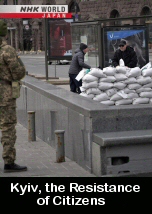
In March 2022, the Russian army was closing in on the Ukrainian capital of Kyiv, and it was expected to fall in a short period of time. But in fact, many citizens chose to remain in their beloved city and provide resistance in whatever way they could. Despite daily missile attacks and the fear of an impending urban war, they were united in their efforts to protect their freedom and democracy. This documentary looks at the people of Kyiv through the eyes of a Ukrainian filmmaker.
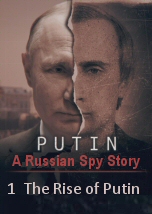
A definitive account of Putin's power and how it changed the modern world. The series is an exploration of how Vladimir Putin brought his knowledge of spy-craft to bear on his leadership of Russia, how his personal experiences have influenced his politics and how modern Russia has been created through an acute sense of betrayal, pride and anger. The first episode takes viewers on a journey into the mind of one of the 21st century's most influential leaders, offering a portrait of a politician who modelled himself on the Russian James Bond and whose presidency reads like a spy thriller. We will see how Putin escapes poverty by joining the KGB, his reinvention as a political fixer in the aftermath of the collapse of the Soviet Union and how he gets into position to take over from President Yeltsin.
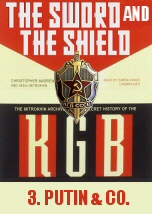
Although the end of the Soviet Union also meant the end of the KGB, it did not mean the end of secret service activities. FSB and the foreign intelligence service SVR took over the tasks. Under the secret service officer Vladimir Putin, the tasks of the secret service were redefined, and digital age with the Internet brought new possibilities for internal and external espionage and for the manipulation of public opinion. Coup d'etats, assassinations, sex scandals, radioactive poisoning....it's the stuff of a Bond movie. But in today's Russia, it's all very real. Under Vladimir Putin, the FSB rules Russia with an iron rod directly from the Kremlin. To challenge its authority, even from apparent safety abroad, means risking your life. The KGB has even managed to outlive communism itself. Today, Russia is no longer a State with a Security Service: instead, the Security Service has a State.
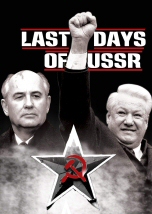
Moscow, 31 December 1991: the Red Flag of the Kremlin is pulled down and replaced by the three-coloured banner of Russia, marking the end of the Soviet Union and of its ideologies. Illustrated with testimonies of top protagonists and Mikhail Gorbachev himself, the documentary recounts, day by day, the critical last two years that led to the fall of the largest and one of the most totalitarian empires of the 20th century.
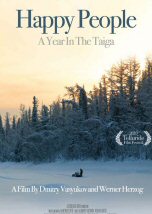
In the center of the story is the life of the indigenous people of the village Bakhtia at the river Yenisei in the Siberian Taiga. The camera follows the protagonists in the village over a period of a year. The natives, whose daily routines have barely changed over the last centuries, keep living their lives according to their own cultural traditions. Werner Herzog and Russian co-director Dmitry Vasyukov takes viewers on yet another unforgettable journey into remote and extreme natural landscapes. The acclaimed filmmaker presents this visually stunning documentary about indigenous people living in the heart of the Siberian Taiga. Deep in the wilderness, far away from civilization, 300 people inhabit the small village of Bakhtia at the river Yenisei. There are only two ways to reach this outpost: by helicopter or boat. There's no telephone, running water or medical aid. Follow the Siberian trappers through all four seasons of the year to tell the story of a culture virtually untouched by modernity.







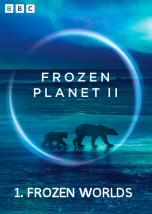






In the first episode, we begin our journey in the far south, in the most hostile place on earth, the frozen continent of Antarctica. After being raised on the ice in winter, emperor penguin chicks find themselves abandoned by their parents in spring. To survive, they must find their own way across the treacherous sea ice to the rich waters of the Southern Ocean.
The waters surrounding Antarctica may be the richest of all, but they are also home to an exceptionally sophisticated predator, the killer whale. To reach their favored prey, Weddell seals, a family of killer whales have learnt to generate their own waves, washing the seals off their ice floes. It’s a technique that has been passed down over generations and is coordinated by the family matriarch, who can be over 100 years old.
Leaving Antarctica and travelling north, we discover frozen habitats that are created by altitude. The greatest of these is the Himalaya, the tallest mountain range on earth, which contains so much ice and snow it is known as the third pole. In the shadow of the Himalaya lies a vast frozen grassy plain that is home to the fluffiest cat in the world, Pallas’s cat. It may have extremely dense fur, but if it’s to survive the Mongolian winter, it needs to catch lots of gerbils and voles. Easier said than done when you only have short legs and paws that are sensitive to the cold.
North of the Great Steppe lies the boreal forest, which encircles the continents of North America, Europe and Asia, and remains frozen for six months of the year. Prowling these forests in the far east of Russia is the Siberian tiger, the largest cat in the world. In winter, it is on the lookout for black bears hibernating in caves, a high-risk strategy that only a cat of this size would attempt.
Above the boreal forest, we cross into the Arctic Circle, where conditions become so extreme that trees can no longer grow. This is the tundra. Living here are relics of the last ice age, musk ox. In spring, their calves face a far greater danger than the cold, grizzly bears. Encounters can be brutal, but if just a few calves survive the gauntlet, the herd’s future is secure.
To the north of the tundra is the Arctic Ocean, the only ocean that can completely freeze over. Living here is one of the most peculiar animals on earth, the hooded seal. Males have extraordinary inflatable noses, producing a bright red balloon out of their left nostrils. One male hopes this will make him irresistible.
All of the frozen habitats share one thing in common: the threat posed by today’s climate change. Travelling to the island of Greenland, home to the largest body of ice in the northern hemisphere, we witness how global warming is melting its ice cap at faster rates than ever before, with profound consequences for global sea levels. Lastly, we visit the Arctic’s most iconic resident, the polar bear, as a mother bear struggles to provide for her cubs in a world of shrinking sea ice.