In just half a century, the human population has doubled to 7.4 billion, and during that time, astronaut and satellite photos have been capturing the startling changes on our planet. See how humans have made their mark reshaping the planet in our quest for new sources of food, power, and shelter. From glimmering new megacities like Shenzhen, China to areas affected by climate change like Mt. Kilimanjaro and Florida, witness Earth's changing look--the spectacular and the shocking--from 250 miles up.
Dan Snow uncovers the lost Vikings in America with space archaeologist Dr Sarah Parcak. Sarah uses satellites 383 miles above the earth to spot ruins as small as 30cm buried beneath the surface. As Sarah searches for Viking sites from Britain to America, Dan explores how they voyaged thousands of miles when most ships never left the shoreline. He also tracks their expansion west, first as raiders and then as settlers and traders throughout Britain and beyond to Iceland and Greenland. In North America they excavate what could be the most westerly Viking settlement ever discovered.
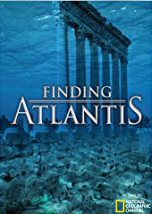
Could the fabled lost city of Atlantis have been located? Professor Freund explained how he led a pursuit to find the lost civilisation, believed by many to be an ancient Greek myth, by using deep-ground radar, digital mapping and satellite imagery. He contends that Atlantis, described by Plato in 360BC, in Spain's Donaña National Park, north of Cadiz, and was wiped out by a giant tsunami. Plato wrote it had been destroyed by a natural disaster in 9,000BC. Experts are now surveying marshlands in Spain to look for proof of the ancient city.
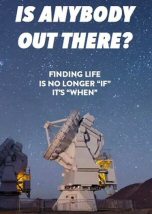
In August 1977, the Big Ear Radio-telescope in Ohio received a strange signal from the Sagittarius constellation while searching for intelligent extra-terrestrial life. It had a duration of 72 seconds and an intensity 30 times higher than usual. Named the Wow signal, it is still being considered as one of the best examples of having being sent by intelligent extraterrestrial life. But, nothing has revolutionised the search of extra-terrestrial intelligent life as much as the recent discovery by the Kepler Satellite, of thousands of Earth-like planets where life could be possible. Join the debate with this stunning documentary, as we ask Is Anybody Out There?
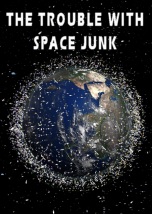
As of 5 July 2016, the United States Strategic Command tracked a total of 17,852 artificial objects in orbit about the Earth, including 1,419 operational satellites. Take a look at the mounting threat of debris in Earth's atmosphere, the potential dangers of such 'junk' and what can possibly be done to avoid a crisis. The film is a visually explosive journey of discovery that weighs the solutions aimed at restoring our planet's orbits.
In 2014, the International Space Station had to move three times to avoid lethal chunks of space debris and there is an increasing problem of satellites mysteriously breaking down. With first-hand accounts from astronauts and experts, know the scale of the problem of space junk. Our planet is surrounded by hundreds of millions of pieces of junk moving at 17,000 miles per hour. Now the US government is investing a billion dollars to track them, and companies around the world are developing ways to clear up their mess - from robot arms to nets and harpoons. Learn the science behind the hit film Gravity and discovers the reality is far more worrying than the Hollywood fiction.















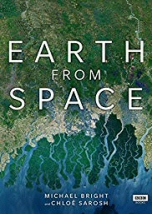







From glimmering new megacities like Shenzhen, China to areas affected by climate change like Mt. Kilimanjaro and Florida, witness Earth's changing look--the spectacular and the shocking--from 250 miles up.