As artificial intelligence accelerates at a breathtaking pace, filmmaker Daniel Roher sets out to understand whether humanity is approaching an extraordinary new era or a catastrophe of its own making. What begins as a personal investigation becomes far more urgent when he and his wife learn they are expecting a child. Faced with predictions ranging from revolutionary medical breakthroughs and powerful new tools for creativity to mass unemployment, deepfakes, autonomous systems and even existential risk, he asks some of the world’s leading AI thinkers a deceptively simple question: should we be excited about the future, or terrified of it? The film explores how generative AI works, why its capabilities are advancing so quickly and what could happen if increasingly powerful systems become difficult to control. Experts debate AI safety and alignment, the race between competing companies, the possibility of machines seeking greater power, and the social consequences of automation and concentrated wealth. At the same time, the documentary confronts the technology’s remarkable promise, from personalized education to scientific discovery and potential cancer treatments. Moving between anxiety and hope, Roher ultimately searches for a way to face an uncertain future not as a pessimist or a blind optimist, but as something in between: an “Apocaloptimist.”
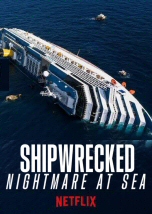
What begins as a dream Mediterranean holiday turns into an unimaginable fight for survival. On the night of January 13, 2012, passengers aboard the luxurious Costa Concordia are dining and putting children to bed when the ship sails dangerously close to the Italian island of Giglio and strikes underwater rocks. As the vessel loses power and begins to flood and tilt, confusion spreads through its glittering corridors. Passengers are initially told there is only an electrical problem, while precious minutes pass before an evacuation is ordered and lifeboats become increasingly difficult to launch. Through extraordinary footage recorded by those on board, black-box communications and deeply personal survivor testimony, the disaster unfolds almost minute by minute: Families desperately searching for a way off the ship, crew members risking their lives to help strangers, passengers trapped as corridors become walls, and rescuers entering the enormous wreck while it threatens to shift beneath them. Behind the terrifying struggle to survive emerges an equally disturbing question—how could a modern cruise ship carrying thousands of people end up on its side just metres from shore? The deaths of 32 people, the actions of Captain Francesco Schettino and the investigation that followed transform one catastrophic night at sea into a gripping story of human courage, fatal decisions and the consequences of failure when every second matters.
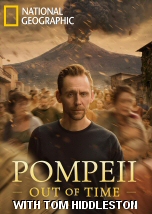
Tom Hiddleston returns to the ancient city that first awakened his fascination with the Roman world, determined to uncover a story far more human than the familiar tale of sudden destruction. Drawing on new archaeological evidence, expert analysis and vivid dramatic reconstruction, he follows three real Romans through the final hours before and during the eruption of Mount Vesuvius: Avianius, a headstrong young apprentice searching for his mother; Julia Felix, a wealthy and independent businesswoman responsible for an entire household; and a veteran soldier who risks everything to help others escape. As earthquakes intensify, ash begins to fall and burning avalanches race towards Pompeii and Herculaneum, every decision becomes a struggle between fear, loyalty and survival. Who understood the warning signs? Who fled, who stayed behind—and whose courage gave others a chance to live? Presented here as one uninterrupted feature containing all three episodes, this extraordinary journey allows viewers to experience the complete disaster from its first tremors to its devastating final surge, revealing Pompeii not simply as a city of death, but as an unforgettable story of ordinary people facing the end of their world.
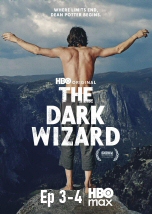
In the final two episodes, Dean Potter’s dream of pushing free solo climbing beyond anything seen before collides with the arrival of Alex Honnold, a younger climber capable of taking the sport into terrifying new territory. As both men circle the impossible challenge of El Capitan, Dean is forced to confront not only a rival, but the fear that his place at the edge of climbing history may be slipping away. What begins as a battle for greatness becomes something far more personal: A struggle with ego, identity, isolation and the dangerous need to keep proving himself when the world is already watching. As Dean’s mental health declines and some of his closest supporters begin to drift away, he takes a risky job in China and seems to move even closer to the edge. But a new relationship gives him a fragile sense of grounding, and his lifelong dream of flight finally comes into focus through the radical world of wingsuit flying. The final chapters become both breathtaking and haunting, following a man who searched for freedom in the air, in the mountains and in the spaces where fear becomes almost spiritual. Intimate, tense and deeply emotional, they reveal the beauty and tragedy of a life lived in pursuit of the impossible.
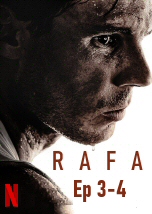
In the final two episodes, Novak Djokovic’s sudden rise changes everything, forcing Rafael Nadal into a new and even more demanding era: the age of the Big Three. What was once a rivalry defined by Roger Federer becomes a three-way battle for history, greatness and survival at the top of tennis. As Djokovic grows stronger and the pressure intensifies, Rafa is pushed to the limits of his body and mind, fighting through pain, doubt and exhaustion while trying to protect the place he has earned through years of sacrifice. But these episodes are not only about trophies, rankings or legendary matches. They reveal the deepest part of Nadal’s character: the refusal to surrender, even when injuries, age and time begin to close in. From the physical punishment of his greatest victories to the emotional weight of knowing that the end is coming, Rafa keeps searching for one more comeback, one more fight, one more reason to believe. Powerful, intimate and deeply moving, the final chapters become a portrait of a champion who built his legend not simply by winning, but by never giving up.
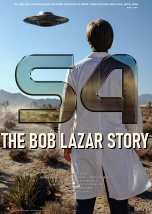
For years, reports of unidentified aerial phenomena have remained hidden behind secrecy, speculation, and official denials. This gripping documentary follows investigative journalist and filmmaker Jeremy Corbell as he gains extraordinary access to witnesses, classified information, and sources connected to one of the most controversial mysteries of modern times. As new evidence emerges and long-held assumptions are challenged, the search for answers begins to reveal a story far more complex than many imagined. What starts as an investigation into unexplained sightings soon becomes a high-stakes journey into a world of government secrecy, whistleblowers, intelligence networks, and hidden information. With rare footage, firsthand testimony, and exclusive access to key figures at the center of the debate, the documentary explores the growing effort to uncover what may be one of the most significant discoveries of the modern era—and why some people believe the truth has remained hidden for so long.









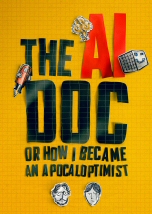

The film explores how generative AI works, why its capabilities are advancing so quickly and what could happen if increasingly powerful systems become difficult to control. Experts debate AI safety and alignment, the race between competing companies, the possibility of machines seeking greater power, and the social consequences of automation and concentrated wealth. At the same time, the documentary confronts the technology’s remarkable promise, from personalized education to scientific discovery and potential cancer treatments. Moving between anxiety and hope, Roher ultimately searches for a way to face an uncertain future not as a pessimist or a blind optimist, but as something in between: an “Apocaloptimist.”