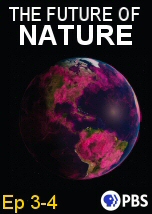
In the final two episodes, the focus shifts to forests and humanity’s defining role in the planet’s future. Ancient woodlands emerge as powerful engines of climate balance, storing vast amounts of carbon while sustaining intricate webs of life. Through striking visuals and frontline science, the documentary reveals how the health of the world’s forests is inseparable from the stability of Earth’s climate—and how their decline accelerates global risk. The story then turns inward, asking what responsibility humans bear in shaping what comes next. From indigenous stewardship to bold restoration projects, these episodes explore how human choices can either deepen the crisis or unlock nature’s capacity to heal. It’s a compelling conclusion that reframes our relationship with the natural world, showing that the future of nature is, ultimately, the future of humanity itself.
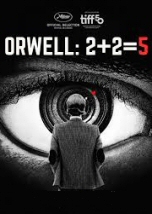
In 1949, as illness tightens its grip, George Orwell races to finish the novel that will define the modern age. This documentary traces his final months and the fierce clarity with which he distilled a lifetime of experience into a single warning about power, truth, and freedom. Drawing on letters, archives, and rare testimony, it reveals the personal cost behind the creation of the novel 1984 and the urgency that drove him to the end. The film then unpacks the ideas that erupted from that last act of vision—doublethink, Thoughtcrime, Newspeak, and the ever-watchful presence of Big Brother—showing how Orwell’s insights were born and why they matter more than ever. By connecting the writer’s life to today’s information wars and political realities, it becomes a gripping meditation on how fragile truth can be, and how easily 2+2 can be made to equal five.
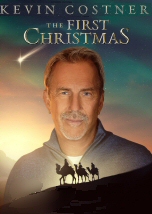
Guided by Kevin Costner, this documentary invites viewers into the sacred origins of Christmas, retelling the birth of Jesus as a human journey marked by faith, hardship, and hope. Through evocative storytelling and historical insight, it traces the fragile path taken by Mary and Joseph as they confront uncertainty, danger, and destiny, revealing the quiet courage behind a story known across centuries. Blending scripture, archaeology, and reflective narration, the film brings the ancient world to life while uncovering the spiritual meaning at the heart of the Nativity. More than a retelling, it offers a contemplative experience that reconnects the season with its deepest purpose, inviting audiences to rediscover Christmas as a story of humility, perseverance, and enduring belief.
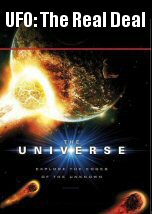
Many argue that flying saucers and other extra-terrestrial space ships continuously visit the earth. If that were true, what kinds of technologies would such alien spacecraft require? And do eyewitness reports of UFO sightings jibe with modern theories of how interstellar travel might be possible? Authors, astronomers and theoretical physicists weigh in with the blueprints for inertia-canceling devices, nuclear-powered craft, antimatter propulsion systems and even warp drives. Based on Einstein's theories and countless scientific studies, we'll find out how these visitors might bridge the vast distances between the stars. And if they could survive such hazardous journeys, are they flesh and blood or intelligent machines?
Physicist Jim Al-Khalili embarks on an extraordinary quest through 600 million years of evolution to reveal how the human brain — the most complex structure known in the universe — came to exist. With more than 100 billion neurons and 100 trillion connections, it surpasses even the stars of the Milky Way. Through breathtaking science and striking visuals, this documentary uncovers how nature transformed simple nerve cells into the ultimate thinking machine. From the first survival instincts of primates to the dawn of social intelligence, Jim explores how cooperation, relationships and empathy reshaped the brain and made us who we are. Working alongside his wife and leading researchers, he dives into fossil evidence, brain scans and the rise of artificial intelligence to answer one profound question: what makes the biological brain so unique — and can anything ever match it?
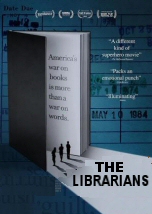
Across the United States, a growing wave of censorship is turning libraries into battlegrounds. This gripping documentary follows a group of librarians in Texas, Florida, and beyond who refuse to stay silent as book bans spread through schools and communities. What begins as a local fight over reading lists becomes a powerful defense of free thought, truth, and democracy itself. Through emotional testimonies and scenes of quiet defiance, the film reveals how the right to read is being tested like never before. As pressure mounts from political groups and extremist movements, these librarians stand their ground—facing threats, intimidation, and public outrage to protect the stories that shape us all. Their courage transforms a profession built on order and access into a movement for freedom, reminding us that knowledge, once lost, is the hardest thing to reclaim.






The story then turns inward, asking what responsibility humans bear in shaping what comes next. From indigenous stewardship to bold restoration projects, these episodes explore how human choices can either deepen the crisis or unlock nature’s capacity to heal. It’s a compelling conclusion that reframes our relationship with the natural world, showing that the future of nature is, ultimately, the future of humanity itself.