In 1994, a thirteen year old boy disappeared from San Antonio, Texas. Three and a half years later, he is found alive and well thousands of miles away in a village in southern Spain with a story of kidnapping and torture. His family is overjoyed to bring him home. But all is not quite as it seems. The boy bears many of the same distinguishing marks he always had, but why does he now have a strange accent? Why does he look so different? Any why doesn't the family seem to notice these glaring inconsistencies? It's only when an investigator starts asking questions that this strange tale takes an even stranger turn.
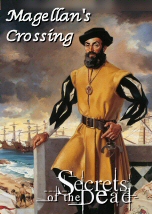
Ferdinand Magellan and Juan Sebastian Elcano set sail to gain control of the global spice trade, but end up becoming the first expedition to circumnavigate the earth. The yearslong voyage—along with the suffering, the violence and the loss of life and property—were all in pursuit of a shorter route to the so-called Spice Islands (now the Maluku Islands) and their much-coveted aromatics. The film puts in perspective the 16th century—the Age of Exploration, the Age of Discovery and the Age, problematically, of Colonialism. It also was an age of heroes. As the documentary insists, the journeys undertaken by the men whose names we learned in grade school and whose exploits straddled the 1400s and 1500s—including Ponce de Leon, Vasco da Gama, Lope de Aguirre and even Columbus—were about money, sometimes trade, sometimes plunder. But just as advances in medicine have often been propelled by war, knowledge about the world has been a byproduct of profit-seeking. Likewise, heroism.
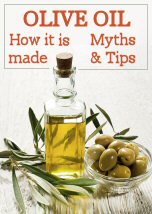
From a gift from the gods in ancient times to a fountain of health in modern times. The olive oil making process and history is explored in a journey plenty of humour and magic. The extra-virgin olive oil is the reason behind the Mediterranean diet benefits because is the unique vegetable oil that keeps its plethora of monounsaturated fats while cooking or frying. Discover how olive oil can change your life, its myths and tips. FDA Review about the Oleic Acid: https://www.fda.gov/food/cfsan-constituent-updates/fda-completes-review-qualified-health-claim-petition-oleic-acid-and-risk-coronary-heart-disease
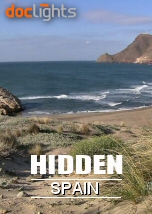
Spain is found at the crossroads between the Mediterranean and the Atlantic, between Europe and Africa, resulting in diverse landscapes, ancient cultures and magnificent wildlife. It's a hidden Spain missed by many tourists who fail to venture outside the resorts. Worlds within worlds, the medieval towns, to farming communities, desert, mountains and forests with some of the most dramatic and diverse wildlife of the continent.
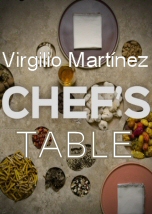
Virgilio Martínez is the chef/owner of Central, a restaurant in Lima, Peru that currently sits at number four on the World’s 50 Best Restaurants list. After a decade spent cooking in kitchens around the world, Martínez only found his true identity as a chef when he began exploring the different regions of his native Peru, from the ocean to the Andes. While some chefs are obsessed with a 'sense of place,' Martínez strives to offer his guests a sense of many places — entire ecosystems over the course of a tasting menu. Martínez always had an adventurous spirit, but growing up in Peru during the 70s and ‘80s meant that many parts of the country were closed off to him. As a teenager, he learned that pursuing a career in the kitchen would allow him the freedom to travel all over the world. The chef ended in charge of a restaurant in Madrid. This is really where Virgilio started to develop his experimental style. Martínez decided to leave Spain to go and work on opening his own restaurant in Peru. He decided to explore the idea of cooking dishes based on altitudes and ecosystems. Martínez runs Central’s kitchen with his wife, Pia León. They developed the altitude-based menu concept together. Martínez’s sister, Malena, has a science background, so he brought her on as part of the team to explore different terrains in search of ingredients that they could use at the restaurant. Virgilio remarks: 'We use 180 ingredients, and 50 percent of them are unknown.' The altitude-themed tasting menu was introduced in 2012, and the following year, Central landed at the bottom of the World’s 50 Best Restaurants list. Two years later, it soared to number four.
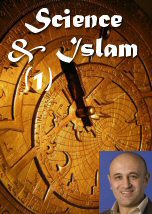
Physicist Jim Al-Khalili travels through Syria, Iran, Tunisia and Spain to tell the story of the great leap in scientific knowledge that took place in the Islamic world between the 8th and 14th centuries. Its legacy is tangible, with terms like algebra, algorithm and alkali all being Arabic in origin and at the very heart of modern science - there would be no modern mathematics or physics without algebra, no computers without algorithms and no chemistry without alkalis. For Baghdad-born Al-Khalili, this is also a personal journey, and on his travels he uncovers a diverse and outward-looking culture, fascinated by learning and obsessed with science. From the great mathematician Al-Khwarizmi, who did much to establish the mathematical tradition we now know as algebra, to Ibn Sina, a pioneer of early medicine whose Canon of Medicine was still in use as recently as the 19th century, Al-Khalili pieces together a remarkable story of the often-overlooked achievements of the early medieval Islamic scientists.







The boy bears many of the same distinguishing marks he always had, but why does he now have a strange accent? Why does he look so different? Any why doesn't the family seem to notice these glaring inconsistencies? It's only when an investigator starts asking questions that this strange tale takes an even stranger turn.