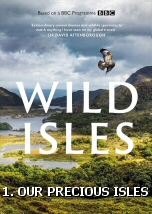
In the first episode, Sir David Attenborough reveals the unexpected wildlife riches of the British Isles, showcasing the dramatic and spectacular habitats that rival any across the globe. This journey uncovers the diversity of life in the UK's unique landscapes, from the intricate world of bumblebees to the swift lives of kingfishers. The episode captures extraordinary scenes of nature, including killer whales preying on seals, golden eagles in the Scottish mountains, the cunning tactics of woodland plants, and the perilous life of puffins evading gulls. It highlights Britain's geological diversity as a cornerstone of its natural wealth, contributing to an array of habitats and supporting a wide range of life. Britain's importance extends to being a haven for migratory birds, with our seas feeding 65% of the world's gannets and supporting the largest colony of northern gannets on Scotland's Bass Rock. The west coast of Scotland offers sanctuary to barnacle geese due to its abundant food and mild climate, though they remain vigilant against hunting sea eagles. Despite these natural treasures, Britain faces challenges as one of the most nature-depleted countries globally. Sir David Attenborough emphasizes the need to conserve and restore these wild isles for the enjoyment and benefit of future generations.
With the Doomsday Clock the closest it's ever been to midnight, Jane Corbin investigates the proliferation of nuclear weapons across the globe. She visits Los Alamos, home to the United States’ nuclear weapons development facility and the historic home of Oppenheimer’s Manhattan Project. In Scotland, she reveals the strategy behind Britain’s nuclear deterrent, and speaks to campaigners in Suffolk fighting against US weapons they fear will be based on UK soil. Jane also discovers how many of the global agreements and safeguards that have constrained the spread of nuclear weapons since the 1970s are breaking down. This is a story told by the scientists, investigators and diplomats who set the clock and have fought to ensure that the ultimate deterrent has not been used in over 70 years.
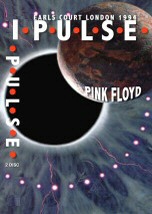
P.U.L.S.E is a Pink Floyd concert video taken from the 20 October 1994 concert at Earls Court, London. PULSE records the great psychedelic band Pink Floyd rocking out like only they can. Renowned for their hallucinatory special effects and lighting schemes, Pink Floyd goes all out at this spectacular (and very long) concert. Twenty-one of their classics are performed, including classic rock radio staples 'Dark Side of The Moon' and 'Wish You were Here". There was considerable delay in the release of the video edition of Pulse. The cause of the delays was reputed to be the continued modifications and additions to produce a high-quality release. The previous planned release date of 22 September 2005 for the two-disc DVD set was changed to 10 July 2006 for the UK and Europe, and 11 July 2006 everywhere else.
In March 2022, the Russian army was closing in on the Ukrainian capital of Kyiv, and it was expected to fall in a short period of time. But in fact, many citizens chose to remain in their beloved city and provide resistance in whatever way they could. Despite daily missile attacks and the fear of an impending urban war, they were united in their efforts to protect their freedom and democracy. This documentary looks at the people of Kyiv through the eyes of a Ukrainian filmmaker.
The fascinating history of the military force of the Soviet Union. For 70 years, the Red Army was one of the foundations of the USSR, an instrument of fear as well as admiration, a symbol of liberation as well as coercion. While everyone knows that Trotsky's name is attached to its creation, most of its past is made up of military defeats and failures, contrary to the common idea. This documentary explores its history, combining epic narrative and deconstruction of the myth.
One of the main battles of the Second World War took place inside the brain of a mathematician called Alan Turing. During the war, the allies' key objective was to crack the German army's encrypted communications code. Without a doubt, the key player in the game was this interdisciplinary scientist and a long-forgotten hero. Alan Turing's breakthroughs, his story and tragic destiny, gives us a chance to look at the Second World War from a different angle.



















Britain's importance extends to being a haven for migratory birds, with our seas feeding 65% of the world's gannets and supporting the largest colony of northern gannets on Scotland's Bass Rock. The west coast of Scotland offers sanctuary to barnacle geese due to its abundant food and mild climate, though they remain vigilant against hunting sea eagles. Despite these natural treasures, Britain faces challenges as one of the most nature-depleted countries globally. Sir David Attenborough emphasizes the need to conserve and restore these wild isles for the enjoyment and benefit of future generations.