











Last Watched

"Artic"  Sort by

D-Day: As it Happens (2)

   2013    History
D-Day: As It Happens is a 24-hour history event to be broadcast across TV, web, mobile devices and social media, telling the story of this pivotal event in 20th-century history in a completely new way. Using newly-analysed archive footage, viewers can track the progress of seven people who were there on the day, each of them a real participant in the 1944 invasion. And they can do so moment by moment in real time, encountering the twists and turns of the fighting at the same time as the D-Day seven did, and learning their fate as the action unfolds in parallel with the present, Narrated by Peter Snow, with Channel 4 presenter and former marine Arthur Williams, and experts including former British Army officer Colonel Tim Collins and front-line journalist Lorna Ward. The second programme reveals what happened to the seven real people the event is following in real time, and also rounds up the events of D-Day.
Series: D-Day

Place in Space and Time

   2014    Science
On a trip to the fortified Moroccan village of Ait-Ben-Haddou in the Atlas Mountains, Professor Brian Cox reveals how by watching the stars' motion across the night sky, it is quite natural for man to think he is at the centre of everything. That view was held for many ages, but innate human curiosity has eventually led to an understanding of mankind's true place in space and time, and an appreciation that Earth is not a focal point but a mere particle of rock in a possibly infinite expanse of space, 13.8 billion years from the beginning of the universe.
Series: Human Universe

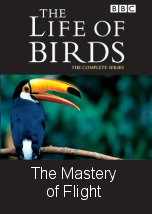
The Mastery of Flight

   1998    Nature
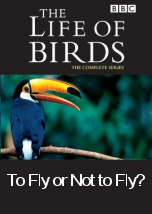
The second programme deals with the mechanics of flight. Getting into the air is by far the most exhausting of a bird's activities, and Sir Attenborough observes shearwaters in Japan that have taken to climbing trees to give them a good jumping-off point. The albatross is so large that it can only launch itself after a run-up to create a flow of air over its wings. A combination of aerodynamics and upward air currents (or thermals), together with the act of flapping or gliding is what keeps a bird aloft. Landing requires less energy but a greater degree of skill, particularly for a big bird, such as a swan. Weight is kept to a minimum by having a beak made of keratin instead of bone, a light frame, and a coat of feathers, which is maintained fastidiously. The peregrine falcon holds the record for being fastest in the air, diving at speeds of over 300 km/h. Conversely, the barn owl owes its predatory success to flying slowly, while the kestrel spots its quarry by hovering. However, the true specialists in this regard are the hummingbirds, whose wings beat at the rate of 25 times a second. The habits of migratory birds are explored. After stocking up with food during the brief summer of the north, such species will set off on huge journeys southwards. Some, such as snow geese, travel continuously, using both the stars and the sun for navigation. They are contrasted with hawks and vultures, which glide overland on warm air, and therefore have to stop overnight.
Series: The Life of Birds

Is Luck Real

   2014    Science
Do you make your own luck, or does luck make you? Some scientists believe luck is strictly a matter of statistics and probabilities…but others believe unseen forces are at work, and randomness is built into every particle of the universe. We’ll find luck, good and bad, in casinos, basketball courts, genetics labs and the subatomic world. How much does the genetic lottery rule your fate? Are lucky streaks and unfortunate accidents merely our own minds fooling us? It’s a scientific journey that will radically revise your understanding of the laws of nature and the workings of the human brain.
Series: Through the Wormhole Season 5

The Coldest War

   2014    Culture
'The Coldest War': With the polar ice caps shrinking due to global warming, new trade routes are being exposed, along with billions of dollars' worth of natural-resource reserves. The five nations bordering the Arctic are readying themselves to fight for it. The problem is that there's one non-NATO country that already considers itself rightful owner of the region: Russia. With Vladimir Putin's recent military annexation of Crimea, there's a definite possibility its aggressions will boil over, returning the international community to precarious Cold War footing. We will head north to witness NATO forces participating in the largest polar military exercise in history. 'Heroin Warfare': Since the U.S. occupation of Afghanistan, heroin production in the region has skyrocketed, making the country the number-one producer by a large margin. Though Iran, Afghanistan's neighbor, is an ultraconservative country, Afghan heroin flowing across the border has actually caused Iran to have the worst heroin use problem in the world. Suroosh Alvi gets a rare look inside Iran to meet the suffering heroin addicts, and see how the country is coping with the illegal drug trade.
Series: Vice

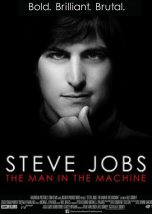
Steve Jobs Man in the Machine

   2015    History
Directed by Alex Gibney, it follows the life and work of ex-Apple CEO Steve Jobs. Gibney starts the doc by showing how much people around the world worship Steve Jobs as if he were an idol. He then provides you with a wealth of background information about Jobs' childhood, teenage and college years including how he formed Apple Inc. Fortunately, not all of the doc is hagiography because Gibney does briefly delve into the darker side of Jobs, particularly how selfish he was and mistreated those around him including his ex-wife. Jobs comes across as a charming, intelligent narcissist who knows how to captivate an audience whenever he speaks. In other words, like all great narcissists, he's a very good actor. Gibney certainly knows how to choose the right subject because Jobs' complexity makes him all the more captivating and worthy of a feature-length film. As is usually the case with Gibney's docs, this one is slickly-edited and has just the right amount of comic relief, mostly in the brief video of an young boy joyfully lists all of Apple's technological devices that Steve Jobs created. You'll catch a glimpse of what makes Jobs fallible, and find a little mildly provocative food for thought about the advancement of modern technology, i.e. how technology helps to connect us to one another yet alienates us at the same time.