












Last Watched

"Desert"  Sort by

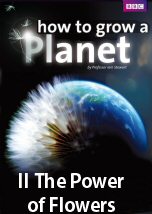
The Power of Flowers

   2012    Science
In the second episode, Professor Iain Stewart discovers how flowers have transformed our planet. He journeys to the remote islands of the South Pacific to track down the earliest flowers. In the deserts of Africa and rainforests of Vietnam, he sees how they brought brilliant colour to the most barren landscapes and sculpted the earth itself. And he learns how they drove the evolution of all animals - kick-starting our human story.
Series: How to Grow a Planet

Orthodoxy From Empire to Empire

   2011    Culture
In the third part of his journey into the history of Christianity, Professor Diarmaid MacCulloch charts Orthodoxy's extraordinary fight for survival. After its glory days in the eastern Roman Empire, it stood right in the path of Muslim expansion, suffered betrayal by crusading Catholics, was seized by the Russian tsars and faced near-extinction under Soviet communism. MacCulloch visits the greatest collection of early icons in the Sinai desert, a surviving relic of the iconoclastic crisis in Istanbul and Ivan the Terrible's cathedral in Moscow to discover the secret of Orthodoxy's endurance.
Series: A History of Christianity

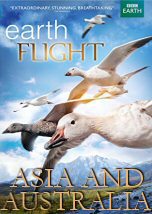
Asia and Australia

   2012    Nature
In this bird's-eye view of two continents, demoiselle cranes negotiate a dangerous Himalayan pass on their way to India while high-flying bar-headed geese take the fast track five miles above. In Rajasthan, vultures watch hunting tigers hoping for a meal and pigeons visit a temple dedicated solely to sacred rats. Pigeons are also our guide to the greatest gatherings of camels on Earth and learn to dodge buzzards around the battlements of Jodhpur Fort. 9,000 cranes overwinter in the most unlikely of spots - a barbed wire compound in the centre of a desert town. In Australia, rainbow lorikeets drop in on Sydney and patrol Australia's Gold Coast. In the outback, white cockatoos swirl in thousands and budgerigars pass Uluru (Ayers Rock) and gather in the biggest flocks ever recorded. In China, swallows and swifts visit the Great Wall and the Forbidden City of Beijing. In Japan, the country's most revered birds - Japanese cranes are fed fish by appreciative locals and are joined in strange, momentary harmony by hungry red foxes, white-tailed eagles and Steller's eagles. As peace descends, Japanese cranes dance beautifully in the snow.
Series: Earthflight

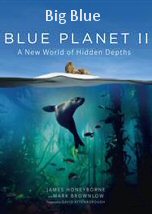
Big Blue

   2017    Nature
The big blue is the world's greatest wilderness, far from shore and many kilometres deep. It's a vast marine desert where there is little to eat and nowhere to hide. Yet it's home to some of the biggest and most spectacular creatures on earth. This episode reveals what it takes to survive in this savage and forbidding world. We witness feats of incredible endurance, moments of high drama and extraordinary acts of heart-wrenching self-sacrifice. Every animal in the big blue must find their own unique way to survive. Sperm whales have the largest brains in the world. They live for 80 years, and we are only now beginning to learn the extraordinary complexity of their language of clicks - thought to coordinate the whole family in everything from childcare to hunting. With special pressure-proof cameras, we witness record-breaking feats of endurance as they hunt for squid a kilometre down into the abyss. Only recently have we begun to solve the mystery of where baby turtles disappear to in their early years. They leave the crowded waters of the coast and head to the open ocean, where they use floating debris like logs as life rafts. Here they remain until adulthood, adrift on the high seas in relative safety away from coastal predators. Over half of all animals in the open ocean drift in currents. Jellyfish cross entire oceans feeding on whatever happens to tangle with their tentacles. The jelly-like Portuguese man-of-war can harness sail power to fish with its deadly tentacles. Sometimes there is a brief explosion of food in this marine desert, but ocean hunters must be fast to make the best of this bonanza. We witness super pods of up to 5,000 spinner dolphins racing to herd vast shoals of lanternfish, briefly caught at the surface where it is thought they spawn. New aerial footage reveals, for the first time, the truth to a centuries-old sailors' legend of the 'boiling seas' - the spectacular feeding frenzy of 90kg tuna and dolphins smashing through the lantern fish shoals turning the sea white with foam.
Series: Blue Planet II

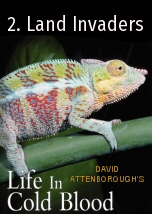
Land Invaders

   2008    Nature
From steamy jungles to dry deserts, amphibians have taken their first footsteps onto land using their bizarre life histories to break their ties with the water and invade the earth.
This episode delves into the extraordinary and intimate lives of the soft skinned amphibians. This includes the marsupial frogs, a peculiar species where the father carries his young in pouches and then gives birth. It also features warring giant salamanders over a metre long and show-off newts that offer displays just like underwater birds of paradise.
Series: Life In Cold Blood

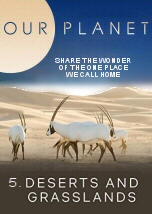
From Deserts to Grasslands

   2019    Nature    HD
A fifth of the land on our planet is covered by desert. Deserts may appear to be barren and empty, but they are of crucial importance to life. For those that can overcome their challenges they provide a vital refuge. The Grasslands are one of our planet's most productive landscapes. They support the greatest aggregations of large animals on Earth. Cameras follow desert elephants seeking sustenance, bison roaming North American grasslands and caterpillars living the good life underground.
Series: Our Planet
Tucci in Italy

Tucci in Italy

2025  Culture
Becoming Martian

Becoming Martian

2021  Technology
Mind Field Season 1

Mind Field Season 1

2017  Medicine
Art of Spain

Art of Spain

2008  Art
Secrets of the Dead

Secrets of the Dead

2017  History
Long Way Up

Long Way Up

2020  Culture
Human Universe

Human Universe

2014  History