Elvis Presley grew up to become the biggest star in music, thanks to a staggering range of influences that created a revolutionary sound in his lifelong search for self-expression. This two-part documentary reveals his creative journey from childhood through his final recording sessions in 1976. It features more than 20 new, primary source interviews with session players, producers, engineers, directors and other artists who knew him or who were profoundly influenced by him. It also features never-before-seen photos and footage from private collections worldwide, and an original score by Pearl Jam lead guitarist Mike McCready. The first part begins with his early life in Tupelo, Mississippi, and his unprecedented rise to fame over a single year.
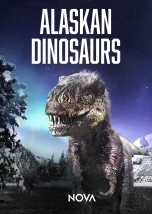
A team of intrepid palaeontologists recently discovered a lost world of dinosaurs in the unlikeliest of places — deep in the dark, snowy wilds of northern Alaska. Surprisingly, new findings indicates that dinosaurs thrived year-round and raised their young in frigid and dark conditions in the far north of the Arctic Circle. Rappelling down giant ice cliffs bordering the Colville River, the team wields chainsaws to extract fossils frozen into the permafrost. Newly found dinosaur tracks indicates that a wide variety of species once flourished there, including herds of duck-bills, horned herbivores, pterosaurs, a new type of velociraptor, and northern relatives of T-rex.
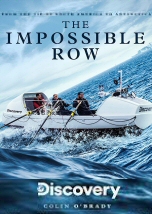
The film documents the historic journey of a team of adventurers as they strive to complete the world's first completely human powered ocean row from Cape Horn to the Antarctic Peninsula across The Drake Passage, the most dangerous 600 miles of open ocean on Earth. The expedition was captained by Icelandic explorer Fiann Paul, who was joined by a team of six record-holding explorers and athletes from four nations and three continents, including Colin O'Brady. The row pushes the entire crew to their limits, testing their physical and mental strength as they work to accomplish something many think was impossible.
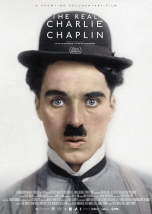
The definitive story of cinema’s most iconic figure, from an impoverished childhood in London through a spectacular rise to fame, until his scandalous fall from grace and a self-imposed exile. His stage persona and incendiary media portrayal defined how he was perceived, but his private life has always been shrouded in mystery - until now. Never-before-heard recordings, intimate home movies and newly restored classic films reveal a side to Chaplin that the world never got to see. Filmmakers Spinney and Middleton shed light on Chaplin’s family life, his contentious relation to the political commotions of the 20th century, and artistic genius.
The film brings viewers all the amazing news-breaking advances in science in technology from 2021, unfolding around the globe. Shattering barriers and questioning assumptions and turning ideas on their head. Stories that take a leap into the future or follow footprints to the past. Startling discoveries from a prehistoric nursery to a magic bullet that could contain the pandemic. Accomplishments like harnessing a star in a bottle or mapping invisible parts of the universe. Join us for an exclusive hyper-tour from earth to space.
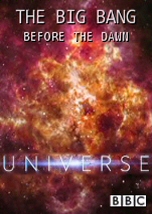
How did the universe come to be? Thanks to a series of discoveries, our most powerful space missions have unravelled 13.8 billion years of cosmic evolution and revealed the story of our universe from its birth all the way to the arrival of our nascent civilization. Our guide on this odyssey back to the dawn of time is light. Telescopes are time machines - by looking out into the distant universe, they open a window to the past. One telescope more than any other has helped us journey through the history of the universe: NASA’s Hubble Space Telescope. Remarkably, Hubble has even found one of the first galaxies ever to exist in the universe, which was born some 13.4 billion years ago. It's a discovery that hints at the beginnings of our own Milky Way. Vivid CGI brings this ancient galaxy to life, allowing us to witness for ourselves the first dawn. It was the beginning of a relationship between stars and planets that would, on a faraway world, lead to the origin of life - and ultimately to us. Hubble’s incredible discoveries have allowed scientists to piece together much of our cosmic story, but it cannot take us back to the most important moment in history: the Big Bang. For decades, the moment the universe began was the subject of pure speculation, but by combining astronomy and cosmology, scientists have finally found a way to put their theories to the test and study the momentous events that took place during the Big Bang. They can do this because the European Space Agency’s Planck space telescope has seen the afterglow of the Big Bang itself – something we call the Cosmic Microwave Background. The unparalleled detail Planck gave us has helped confirm something remarkable: the Big Bang may not be the beginning. There was a time before the dawn – a place beyond anything we can comprehend. Professor Brian Cox transports us back to the fraction of a second before the Big Bang, when the seeds of our universe were planted.




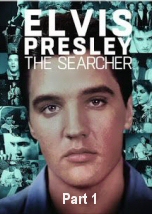





The first part begins with his early life in Tupelo, Mississippi, and his unprecedented rise to fame over a single year.