











Last Watched

"Run"  Sort by

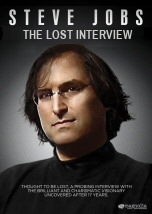
Steve Jobs the Lost Interview

   2011    Culture
In 1995, during the making of his TV series Triumph of the Nerds about the birth of the PC, Bob Cringely did a memorable hour-long interview with Steve Jobs. It was 10 years since Jobs had left Apple following a bruising struggle with John Sculley, the CEO he had brought into the company. At the time of the interview Jobs was running NeXT, the niche computer company he had founded after leaving Apple. During the interview, Jobs was at his charismatic best - witty, outspoken, visionary. In the end, only a part of the interview was used in the series and the rest was thought lost. But recently a VHS copy was found in the series director's garage. Now, cleaned up with modern technology, and put into context by Cringely.

A LEGO Brickumentary

   2014    Technology
Since the birth of their trademark toy in 1958, The LEGO Group has produced over 400 billion bricks. But more and more, LEGO bricks aren't just for kids, and some take them very seriously. Adult Fans of LEGO around the globe are unashamedly declaring their love of the brick, brick artists are creating stunning and surprising creations, and LEGO master builders are building human scale and larger structures. LEGO bricks are being used educationally, therapeutically, and have provided a universal system for human creativity and our innate desire "to build." This documentary playfully delves into the extraordinary impact of the LEGO brick, its massive global fan base, and the innovative uses for it that has sprung up around the world.

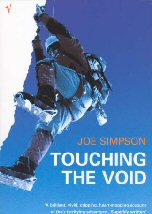
Touching the Void

   2003    Culture
In 1985, two adventurous young mountaineers, Joe Simpson and Simon Yates, set off to climb the treacherous west face of the Siula Grande in the Peruvian Andes. They were experienced climbers, and climbed "Alpine-style," climbing the mountain in "one great push," without setting up ropes or base camps ahead of time. After dealing with a snowstorm and some dangerous climbing over powder formations, they reached the summit (about 21,000 feet) on the third day. The climb down proved to be far more difficult. Simpson fell and broke his leg badly. Yates decided to try to lower Simpson down the mountain, one 300-foot section of rope at a time. The climbers had run out of gas to melt snow, so they couldn't risk stopping as night came, and a violent snowstorm began. Their plodding, painful journey hit a snag when Yates inadvertently lowered Simpson over the edge of a cliff. In the storm, the men couldn't hear each other's cries, and, Yates, uncertain as to Simpson's position, and gradually sliding down the slope himself, decided to cut the rope that connected them, sending Simpson plummeting to certain death. Miraculously, Simpson survived the fall, and was faced with the prospect of getting off the mountain alone with no food, no water, and a broken leg. In Touching the Void, filmmaker Kevin Macdonald (One Day in September) tells their story, based on Simpson's book, using contemporary interviews with the two men, and a reenactment of their climb and descent, featuring Brendan Mackey as Simpson and Nicholas Aaron as Yates

Ancient Aliens Debunked: Nazca Lines

       History
The Nazca Lines of Peru have been an important part of the Ancient Astronaut theory since its beginning. Originally Von Daniken claimed that the lines were kind of a UFO runway, or a type of alien airport, where the alien craft landed and took off. The idea that it was an airport makes no logical sense, and the symbols and rituals which were a huge part of the Nazcan culture more than explain the so called Nazca lines.
Series: Ancient Aliens

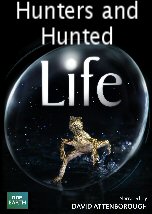
Life: Hunters and Hunted

   2009    Nature
Mammals' ability to learn new tricks is the key to survival in the knife-edge world of hunters and hunted. In a TV first, a killer whale off the Falklands does something unique: it sneaks into a pool where elephant seal pups learn to swim and snatches them, saving itself the trouble of hunting in the open sea. Slow-motion cameras reveal the star-nosed mole's newly-discovered technique for smelling prey underwater: it exhales then inhales a bubble of air ten times per second. Young ibex soon learn the only way to escape a fox - run up an almost vertical cliff face - and young stoats fight mock battles, learning the skills that make them one of the world's most efficient predators.
Series: Life

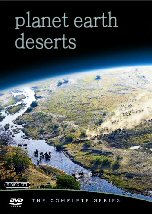
Deserts

   2007    Nature
Around 30% of the land's surface is desert, the most varied of our ecosystems despite the lack of rain. Unravel the secrets of desert survival and experience the ephemeral nature of this dynamic environment. Watch Saharan sandstorms nearly a mile high and desert rivers that run for a single day. In the Gobi Desert, rare Bactrian camels get moisture from the snow. In the Atacama, guanacos survive by licking dew off cactus spines. In the USA, the brief blooming of Death Valley triggers a plague of locusts 65km wide and 160km long. A unique aerial voyage over the Namibian desert reveals elephants on a long trek for food and desert lions searching for wandering oryx.
Series: Planet Earth
Cosmos

Cosmos

1980  Culture
Rome

Rome

  History
Big Oil vs The World

Big Oil vs The World

2022  Nature
Wild Wild Country

Wild Wild Country

2018  Culture
Kingdom of Plants

Kingdom of Plants

2012  Nature
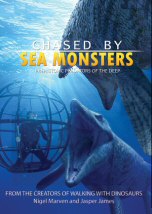
Chased by Sea Monsters

Chased by Sea Monsters

2003  Science
Wild Russia

Wild Russia

2009  Nature