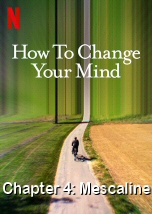
The last episode explores Mescaline, the psychoactive molecule in San Pedro and peyote cacti, a sacred medicine that Native Americans have had to fight for the right to use. At the Indigenous practices there's always an elder, someone who knows the territory very well, who's presiding. There's usually a group, a community is involved, There's always an intention, a purpose to what you're doing, and you're treating it as sacred, in order to achieve altered states of consciousness, which contribute to worship in various ways, or celebration or healing. But maybe all this is not so new to Western culture after all. In the old Greek histories of Eleusis, people who were initiated there got the drink, the kykeon, and then they had the illumination. The precise recipe is a mystery, but we know that the kykeon was a psychoactive brew that was used at the Eleusinian mysteries, a sacred annual ritual of enlightenment practiced by some of the world's greatest minds including Socrates, Plato, and Aristotle. So why did this ritual come to an end more than 1,000 years ago? Was the possibility of illumination or achieving a higher consciousness considered threatening to the powers that be? Have the drug wars been merely an extension of that fear? Psychedelics has a major part in how we can heal as a community, how we can heal as a city, and how we can heal as a country. The current renaissance of psychedelics could not come at a better time as the world confronts a crisis in mental health. But psychedelics have much to offer. The psychedelic experience changes the mind in ways that will help scientists better understand how it works. All these altered states allow us to probe what is the greatest mystery in all of nature. The emergence from mere matter of something as miraculous as consciousness. But an even bigger question is whether psychedelics might help us address the environmental crisis of how we think about our place in nature. One of the greatest gifts of psychedelics is how they reanimate the natural world, allowing us to perceive the subject, the spirit of all species, not just our own. And to feel a deeper sense of interconnectedness with nature.
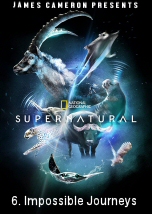
Our super friends in the animal world possess so many hidden superpowers. In the third episode we meet heat-seeking dogs, GPS-outfitted cats, and a sporty goldfish with squad goals. When we think we know them inside out, dogs surprise us with something new. what sensory superpower have dogs been hiding all this time? They have a thermal sensor in the tip of his nose. In the wild, a dog could use his thermal nose to spot the heat of a prey animal, allowing him to hunt even if his other senses were impaired. It also explains that uncanny knack for stealing a warm seat.
When animals can tap into remarkable senses and supernatural skills, crossing the globe, even moving between worlds to find a mate, safety and food, they become truly unstoppable.
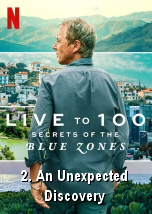
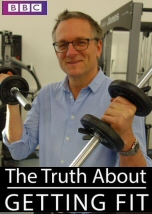
In the interesting second episode, we embark on a journey to the picturesque island of Sardinia. Here the people live in harmony with the land and with one another. Learn about this effortless lifestyle where work and play seem to be united and the result is longevity. In this episode, the documentary also explores the unexpected discovery of unusual longevity in a North American suburb. Their lifestyles, dietary habits, and sense of community contribute to the remarkable longevity observed in these regions. The importance of a plant-based diet, social connections, and positive health behaviors is highlighted, offering viewers valuable insights into leading a longer, healthier life. Join us as we uncover the unexpected secrets that may forever change the way we approach health and happiness.
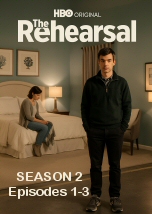
Nathan Fielder returns with a daring new season that elevates the concept of constructed reality to extraordinary extremes. This season dives even deeper into ethically charged scenarios, where real people rehearse life-altering choices inside meticulously engineered simulations. As the line between performance and authenticity dissolves, the series confronts our deepest questions about control, identity, and the limits of preparation. Disturbing, brilliant, and darkly hilarious—it’s an experience like no other. The opening three episodes raise the stakes immediately. A father struggles to reveal a devastating truth to his son—but the rehearsal begins to unravel his own sense of self. A woman prepares for a proposal that may never arrive, as emotional tension distorts her reality. And in a startling turn, Fielder inserts himself into the most personal rehearsal yet, facing consequences he may no longer be able to manage. With emotional weight, narrative twists, and biting satire, these episodes pull you in and don’t let go.
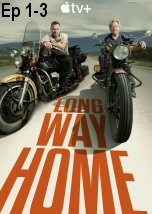
Two lifelong friends set out on an unforgettable journey across Europe like you've never seen before — not on modern machines, but on beautifully restored vintage motorbikes. From the rugged beauty of the Scottish Highlands to the icy reaches of the Arctic Circle, and down through the heart of the Baltics and continental Europe, they follow an unconventional path fueled by curiosity, friendship, and a passion for the open road. As they ride thousands of miles over two months, every detour reveals a new story, every breakdown sparks laughter, and every mile deepens their bond. This isn’t just a road trip — it’s a soulful ride through landscapes, memories, and the timeless joy of adventure. The first three episodes of this standout series follow Ewan and Charley as they set off across Europe — taking the longest, most adventurous way possible. After crossing the North Sea, they ride through the Netherlands and Germany, stopping in Charley’s mother’s hometown before continuing toward the Danish islands, where the sense of freedom begins to take hold. But the road soon turns unpredictable. In Sweden, Ewan’s bike breaks down, stranding him in unfamiliar territory. A group of local bikers steps in to help, showing that the journey is not just about distance, but about the people you meet along the way. With their support, he reaches iconic Scandinavian landmarks and new challenges, realizing that this ride is as much about resilience and friendship as it is about travel. These early episodes promise more than adventure — they deliver a soulful, cinematic ride into the heart of connection and discovery.










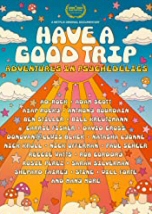




But maybe all this is not so new to Western culture after all. In the old Greek histories of Eleusis, people who were initiated there got the drink, the kykeon, and then they had the illumination. The precise recipe is a mystery, but we know that the kykeon was a psychoactive brew that was used at the Eleusinian mysteries, a sacred annual ritual of enlightenment practiced by some of the world's greatest minds including Socrates, Plato, and Aristotle. So why did this ritual come to an end more than 1,000 years ago? Was the possibility of illumination or achieving a higher consciousness considered threatening to the powers that be? Have the drug wars been merely an extension of that fear?
Psychedelics has a major part in how we can heal as a community, how we can heal as a city, and how we can heal as a country. The current renaissance of psychedelics could not come at a better time as the world confronts a crisis in mental health. But psychedelics have much to offer. The psychedelic experience changes the mind in ways that will help scientists better understand how it works. All these altered states allow us to probe what is the greatest mystery in all of nature. The emergence from mere matter of something as miraculous as consciousness. But an even bigger question is whether psychedelics might help us address the environmental crisis of how we think about our place in nature. One of the greatest gifts of psychedelics is how they reanimate the natural world, allowing us to perceive the subject, the spirit of all species, not just our own. And to feel a deeper sense of interconnectedness with nature.