The Joker, Lex Luthor, Catwoman, Doomsday, Bane. What makes them so thrillingly watchable? So terribly wonderful? So extremely vital to our super heroes and their worlds? This feature-length documentary explores these questions across seven decades of DC Comics’ hallowed Rogues’ Gallery of infamous evildoers. Narrated by esteemed film villain Christopher Lee,examines the tortured psyches of your favorite animation, comic book, game, TV and feature film baddies – both from the past and into the future – against the backdrop of culture, history and society. Insights from famed creators and storytellers, including Zack Snyder, Guillermo del Toro, Jim Lee, Geoff Johns and Richard Donner, shine a fascinating light on those malevolent, charismatic characters who thrive in the dark.
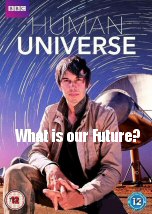
Professor Brian Cox concludes his exploration of our place in the universe by asking what next for the ape that went to space. Our future is far from certain. In Florida, Brian joins the latest efforts to protect Earth from potential catastrophic events. He joins a team of Nasa astronauts who are training for a future mission to an asteroid - should we ever discover one coming our way - under 30 feet of water in a submerged laboratory that simulates space. It is just one example of how, for our long-term survival, space exploration may well be vital. It is a view shared by Apollo 16 astronaut Charlie Duke, who tells Brian what it was like to escape the confines of the planet. It is a dream that both Nasa and now commercial companies share as they race to get humans back into deep space. But space travel, like every leap our civilisation has ever made, requires energy. Here too, scientists are hard at work attempting to safeguard our future. At the National Ignition Facility in California, Brian witnesses the world's most successful fusion experiment in action. He believes that if their mission succeeds, our civilisation will have unlocked a way to the stars that will not destroy the planet in the process. Brian concludes by returning to the top of the world in Svalbard, where he gains access to our civilisation's greatest treasure, locked away in a vault buried deep in the permafrost.
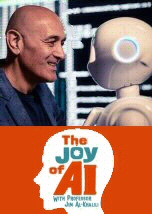
Professor Jim Al-Khalili looks at how we have created machines that can simulate, augment, and even outperform the human mind - and why we shouldn't let this spook us. He reveals the story of the pursuit of AI, the emergence of machine learning and the recent breakthroughs brought about by artificial neural networks. He shows how AI is not only changing our world but also challenging our very ideas of intelligence and consciousness.
Along the way, we'll investigate spam filters, meet a cutting-edge chatbot, look at why a few altered pixels makes a computer think it's looking at a trombone rather than a dog and talk to Demis Hassabis, who heads DeepMind and whose stated mission is to 'solve intelligence, and then use that to solve everything else'. Stephen Hawking remarked 'AI could be the biggest event in the history of our civilisation. Or the worst'. Jim argues that AI is a potent new tool that should enhance our lives, not replace us.
Their quest is to discover whether the items we throw away today have any value for tomorrow's world. In a unique science experiment, Dr George McGavin and Dr Zoe Laughlin chronicle the history of rubbish and explore how what we throw away tells us about the way we live our lives. With unprecedented access to one of the UK's largest landfill sites, the team of experts spend three days carrying out tests all over the site, revealing the secret world of rubbish. They also carry out three other 'archaeological' digs into historic landfills to chart the evolution of our throwaway society. Is mining trash for something valuable really viable? McGavin concluded: 'The idea of landfill mining is a pretty compelling vision of the future.'
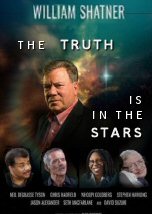
Join the original Captain Kirk, William Shatner, as he interviews renowned scientists and celebrities about the enduring influence of Star Trek on popular culture, innovation, and creativity. The film chronicles Shatner’s journey around the world interviewing scientists and film industry people about how Star Trek inspired them. Along the way he collects questions to ask and learns a bit about physics. Discover how Star Trek’s optimistic vision for the future has influenced leading minds including Prof. Stephen Hawking, Neil deGrasse Tyson, Chris Hadfield, David Suzuki, and many more.
Time travel is not forbidden by the laws of nature, but to build a time machine, we would need to understand more about those laws and how to subvert them than we do now. And every day, science does learn more. In this film Horizon meets the scientists working on the cutting edge of discovery - men and women who may discover how to build wormholes, manipulate entangled photons or build fully functioning time crystals. In short, these scientists may enable an engineer of the future to do what we have so far been only able to imagine - to build a machine that allows us travel back and forward in time at the touch of a button. It could be you! Science fiction? Watch this film.



















Narrated by esteemed film villain Christopher Lee,examines the tortured psyches of your favorite animation, comic book, game, TV and feature film baddies – both from the past and into the future – against the backdrop of culture, history and society. Insights from famed creators and storytellers, including Zack Snyder, Guillermo del Toro, Jim Lee, Geoff Johns and Richard Donner, shine a fascinating light on those malevolent, charismatic characters who thrive in the dark.