Of the Seven Wonders of the Ancient World, the Hanging Garden of Babylon is the most elusive of these constructions of classical antiquity. While traces have been found of the Great Pyramid of Gaza, the Temple of Artemis at Ephesus, the Statue of Zeus at Olympia, the Mausoleum of Halicarnassus, the Colossus of Rhodes and the Lighthouse of Alexandria, centuries of digging have turned up nothing about the lost gardens of Babylon – until now. Why, in the nearly 3,000 years since the gardens were presumably built, has no archeological evidence ever been found to support their existence? Is the Hanging Garden of Babylon a myth or a mystery to be solved? Travel with Dr. Stephanie Dalley of Oxford University’s Oriental Institute and author of The Mystery of the Hanging Garden of Babylon, to one of the most dangerous places on earth, as she sets out to answer these questions and prove not only that the gardens did exist, but also identify where they most likely were located, describe what they looked like and explain how they were constructed.
When our species first arrived in Europe, the peak of the Ice Age was approaching and the continent was already crawling with a rival: stronger, at home in the cold and even (contrary to their popular image) brainier than us. So how did the European pioneers survive first the Neanderthals and then the deep freeze as they pushed across the continent? Alice Roberts reconstructs the head of the 'first European' to come face to face with one of our ancestors; she discovers how art became crucial for survival in the face of Neanderthal competition; and what happened to change the skin colour of these European pioneers from black to white.
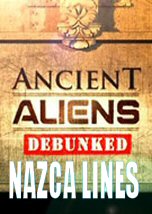
The Nazca Lines of Peru have been an important part of the Ancient Astronaut theory since its beginning. Originally Von Daniken claimed that the lines were kind of a UFO runway, or a type of alien airport, where the alien craft landed and took off. The idea that it was an airport makes no logical sense, and the symbols and rituals which were a huge part of the Nazcan culture more than explain the so called Nazca lines.
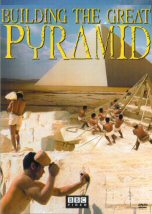
The Great Pyramid of Giza's construction is still shrouded in mystery, despite it being the only survivor among the Seven Wonders of the Ancient World. In Building the Great Pyramid, travel back 4,500 years with the BBC as they re-create the circumstances under which it may have been built, as well as the daily life of the population at that time. Expert archaeologists, Egyptologists, and scholars share their latest theories on what may have happened. The film combines dramatic reconstruction, location shooting and state-of-the-art CGI computer effects. Directed and written by Jonathan Stamp.
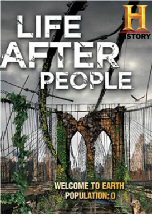
Visit the ghostly villages surrounding Chernobyl (abandoned by humans after the 1986 nuclear disaster), travel to remote islands off the coast of Maine to search for abandoned towns that have vanished from view in only a few decades, then head beneath the streets of New York to see how subway tunnels may become watery canals. A visual journey, LIFE AFTER PEOPLE is a thought provoking adventure that combines movie-quality visual effects with insights from experts in the fields of engineering, botany, ecology, biology, geology, climatology, and archaeology to demonstrate how the very landscape of our planet will change in our absence.
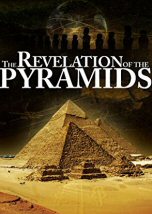
An apocryphal view on the pyramids, starting in awe at the amazing achievement of the Pharaonic architecture and sculpture, most specially at Gizeh, given Cheops's pyramid's size, weight, incredibly precise carving, four pairs of slightly shifted half sides, stunningly precisely measured shapes and symmetry. Then it questions and challenges conventional Egyptology beliefs, which it calls unproven or even impossible to verify, such as the absence of machines, a wharf duration of only 20 years or accidental equinox-orientation. Next it elaborates the theory that other major pyramid technology sites in Precolombian America, Easter Island and China can't coincidentally lie on two lines intersecting at Gizeh, even if not contemporaneous and without known contacts in their ages, and have several improbable things in common, like some of their cultures. Elaborate mathematical theories and measurements indicate the Egyptians must have known some astronomy, pi and the golden number















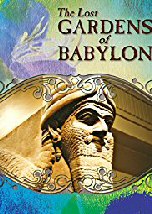




Why, in the nearly 3,000 years since the gardens were presumably built, has no archeological evidence ever been found to support their existence? Is the Hanging Garden of Babylon a myth or a mystery to be solved?
Travel with Dr. Stephanie Dalley of Oxford University’s Oriental Institute and author of The Mystery of the Hanging Garden of Babylon, to one of the most dangerous places on earth, as she sets out to answer these questions and prove not only that the gardens did exist, but also identify where they most likely were located, describe what they looked like and explain how they were constructed.