








Last Watched

"Birth"  Sort by

Extreme Orbits - Clockwork and Creation

   2012    Science
Orbits are the dynamics that drive the universe. From the smallest asteroid to the largest super-cluster, everything in the universe is in orbit. We owe our very existence to the stability of earth's orbit — it gave us life and keeps us safe. But we are the freaks. Everywhere else we look we find orbits are chaotic, unstable, and violent. Beyond our solar system we find planets that are blow-torched, stars that eat each other, and black holes that destroy everything in their path. Yet on the very largest scale, orbits are also a creative force. clashing galaxies give birth to new stars and new worlds. on the galactic scale orbits even construct the fabric of the universe itself.
Series: How the Universe Works

Over the Rainbow

   2013    Culture
With optional Hebrew subtitles. Simon Schama's history of the Jewish experience plunges into the lost world of the shtetl, the Jewish towns and villages sewn across the hinterlands of Eastern Europe which became the seedbed of a uniquely Jewish culture. Shtetl culture would make its mark on the modern world, from the revolutionary politics of the Soviet Union to the mass culture of Tin Pan Alley and Hollywood. It was also the birthplaces of Hasidism, the most visible, iconic and, arguably, most misunderstood expression of Jewish faith and fervour. This chapter of the story travels from the forests of Lithuania, where Simon's own family logged wood and fought wolves, to the streets of the Lower East Side where the sons of shtetl immigrants wrote the American songbook. With grim inevitability, the story returns to Eastern Europe in 1940 - where the genocidal mechanisms of the 'final solution' were beginning to grind the shtetl world into dust and ash.
Series: The Story of the Jews

How the Solar System was Made

   2011    Science    3D    HD
At 4.6 billion years old, the Solar System is our solid, secure home in the Universe. But how did it come to be? In this episode we trace the system's birth from a thin cloud of dust and gas. Shocked by a nearby supernova, the pull of gravity and natural rotation spun it into a flat disc from which the Sun and planets coalesced. It all happened in the space of 700 million years, during which the planets jockeyed for position, dodging the Late Heavy Bombardment of deadly asteroids and setting into the neat, stable system that we now realize might be a rarity in the universe.
Series: The Universe

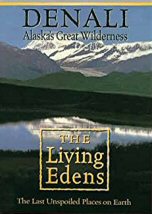
Denali: Alaska Great Wilderness

       Nature
The Indians called the frozen peak of this great Alaskan mountain range Denali, or 'the high one.' Most know it as Mount McKinley. This preserved wilderness comes to life with the thaw of spring and wildlife abounds during the brief summer, only to succumb to the grip of the long winter. Watch as 5-week-old grizzly cubs play, a moose gives birth to her calf, and a wood frog survives the deep freeze of winter. Breath-taking shots of dazzling northern lights over vast and lush wilderness make this an unforgettable Eden.
Series: The Living Edens

Reformation

   2011    History
In the fourth part of the series, Diarmaid MacCulloch makes sense of the Reformation, and of how a faith based on obedience and authority gave birth to one based on individual conscience. He shows how Martin Luther wrote hymns to teach people the message of the Bible, and how a tasty sausage became the rallying cry for Swiss Reformer Ulrich Zwingli to tear down statues of saints, allow married clergy and deny that communion bread and wine were the body and blood of Christ.
Series: A History of Christianity

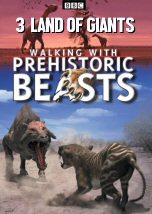
Land of Giants

       Science
25 million years ago the biggest land mammals of all time, the indricotheres, stalked the Earth. Up to seven metres tall and weighing 15 tonnes, adults were too big to be eaten by any predator of the time. Only in the first few years of its life was indricotheres vulnerable. The programme follows the fate of a calf from his traumatic birth to see whether it can survive droughts, killer hogs and hyaenodon - a predator the size of a rhino with jaws that could crush a rock.
Series: Walking with Prehistoric Beast