Journeying from pole to pole, The series 'Frozen Planet II' reveals surprising worlds that exist across the planet and the remarkable animals that make them their home. In a fragile world of beauty and hostility, nature finds a way to survive and thrive. David Attenborough explores a planet on the brink of major change. In the first episode, we begin our journey in the far south, in the most hostile place on earth, the frozen continent of Antarctica. After being raised on the ice in winter, emperor penguin chicks find themselves abandoned by their parents in spring. To survive, they must find their own way across the treacherous sea ice to the rich waters of the Southern Ocean. The waters surrounding Antarctica may be the richest of all, but they are also home to an exceptionally sophisticated predator, the killer whale. To reach their favored prey, Weddell seals, a family of killer whales have learnt to generate their own waves, washing the seals off their ice floes. It’s a technique that has been passed down over generations and is coordinated by the family matriarch, who can be over 100 years old. Leaving Antarctica and travelling north, we discover frozen habitats that are created by altitude. The greatest of these is the Himalaya, the tallest mountain range on earth, which contains so much ice and snow it is known as the third pole. In the shadow of the Himalaya lies a vast frozen grassy plain that is home to the fluffiest cat in the world, Pallas’s cat. It may have extremely dense fur, but if it’s to survive the Mongolian winter, it needs to catch lots of gerbils and voles. Easier said than done when you only have short legs and paws that are sensitive to the cold. North of the Great Steppe lies the boreal forest, which encircles the continents of North America, Europe and Asia, and remains frozen for six months of the year. Prowling these forests in the far east of Russia is the Siberian tiger, the largest cat in the world. In winter, it is on the lookout for black bears hibernating in caves, a high-risk strategy that only a cat of this size would attempt. Above the boreal forest, we cross into the Arctic Circle, where conditions become so extreme that trees can no longer grow. This is the tundra. Living here are relics of the last ice age, musk ox. In spring, their calves face a far greater danger than the cold, grizzly bears. Encounters can be brutal, but if just a few calves survive the gauntlet, the herd’s future is secure. To the north of the tundra is the Arctic Ocean, the only ocean that can completely freeze over. Living here is one of the most peculiar animals on earth, the hooded seal. Males have extraordinary inflatable noses, producing a bright red balloon out of their left nostrils. One male hopes this will make him irresistible. All of the frozen habitats share one thing in common: the threat posed by today’s climate change. Travelling to the island of Greenland, home to the largest body of ice in the northern hemisphere, we witness how global warming is melting its ice cap at faster rates than ever before, with profound consequences for global sea levels. Lastly, we visit the Arctic’s most iconic resident, the polar bear, as a mother bear struggles to provide for her cubs in a world of shrinking sea ice.
Supertramp's 'Breakfast in America' was the biggest selling album in the world in 1979. Following the album's release Supertramp embarked on a 10 month world tour which arrived in Paris at the end of November. Now, transferred and restored from the original 16mm film, this footage is available to Supertramp's legion of fans worldwide. In July 2006, the original master tapes of the album 'Supertramp: Live In Paris' were rediscovered in the Northern California barn of the band's drummer Bob Siebenberg, along with video footage. The tapes were sent to Cups 'N Strings Studios in Woodland Hills, California, for digital remastering. The tapes were initially in bad technical shape, but were successfully transferred to a digital format. The original idea was to feature heavily footage of Paris, adding a story in The Song Remains the Same. The sound was remixed by Peter Henderson and Supertramp's original sound engineer Russel Pope from the original multi-tracks.
In households across the world, pets are at the heart of family life. They share our homes, but how well do we really know them? In this series we'll dig deep into our pets' inner lives to discover the secrets they've kept hidden until now. From spectacular feats of communication to extreme athleticism, extraordinary intelligence and incredible super senses. We'll meet remarkable pets from across the globe whose owners have harnessed their hidden skills and shared them with the world and will use groundbreaking technology to reveal how amazing their brains and bodies really are. In the first episode, a base-jumping border collie, a bopping cockatoo, and racing rats show that animal intelligence can get a big boost in the right enriched environment.
Prepare yourself for a groundbreaking series that reveals a spectacular new space-based vision of our planet. Cameras in space will tell stories of life on our planet from a brand new perspective. Satellites follow an elephant family struggling through drought, reveal previously unknown emperor penguin colonies from the colour of their poo, and discover mysterious ice rings that could put seal pups in danger. Using cameras on the ground, in the air and in space, Earth from Space follows nature’s greatest spectacles, weather events and dramatic seasonal changes. This is our home, as we’ve never seen it before.
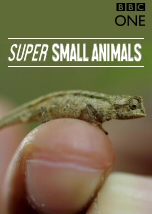
From a primate that’s no bigger than a mouse, to a chameleon that can fit on your fingertip, the natural world is full of fantastically small animals. Biologist Patrick Aryee explores the fascinating secrets behind these miniature marvels and shows that they’re not the underdogs you might think they are. Super Small Animals follows him as he meets the leading experts on these pint sized superstars, and finds out what makes them some of the most successful on the planet. First up, he reveals the huge benefits that being small can bring. There’s the little lemur whose diminutive frame helps it to exploit a unique gap in the eco-system, the tiny hummingbird that uses its size to out-maneuver the competition, and the world’s smallest seahorse that never has to leave home. He also explores why small animals are proportionally the strongest in the world, and introduces a peanut-sized beetle that can pull over a thousand times its own weight. Next he explores the challenges that animals face when they shrink in size, and the ingenious ways they overcome them. We find out how the smallest armadillo in the world manages to control its temperature in the searing desert sun, and the how the world’s smallest fish can survive in nothing more than a puddle, because it never really grows up. Patrick meets a secretive hippo that lives in the dense jungle, and looks like it’s been shrunk in the wash, and some of the world’s smallest snakes that give birth to enormous babies. He also meets a scientist that studies how really tiny spiders have a surprising trick that enables them to travel an incredible 40 miles per day, using almost no energy. Then there are the animals that refuse to be pigeon holed as small, and manage to punch way above their weight. He puts some astonishing invertebrates to the test, to see how they work together to become much bigger than the sum of their parts and meets a pint-sized predator that takes on some of the largest and most dangerous creatures on the planet, getting hands on to discover how its build helps it to be brave. Finally he uncovers the incredible lengths that deep sea anglerfish go to in order to be big and small at the same time, and has an endearing encounter with a tiny carnivore that manages to be small in just one direction. Whether their size helps them to hunt, hide or survive, all these remarkable animals prove that good things really do come in small packages.
What's worse for us: sugar or fat? To answer the hottest question in nutrition, twin doctors Chris and Xand Van Tulleken go on month-long high-fat and high-sugar diets. The effects on their bodies are shocking and surprising. But they also discover that in the debate about fat and sugar, the real enemy might have been hiding in plain sight.









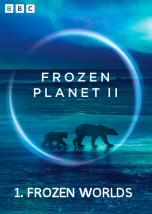




In the first episode, we begin our journey in the far south, in the most hostile place on earth, the frozen continent of Antarctica. After being raised on the ice in winter, emperor penguin chicks find themselves abandoned by their parents in spring. To survive, they must find their own way across the treacherous sea ice to the rich waters of the Southern Ocean.
The waters surrounding Antarctica may be the richest of all, but they are also home to an exceptionally sophisticated predator, the killer whale. To reach their favored prey, Weddell seals, a family of killer whales have learnt to generate their own waves, washing the seals off their ice floes. It’s a technique that has been passed down over generations and is coordinated by the family matriarch, who can be over 100 years old.
Leaving Antarctica and travelling north, we discover frozen habitats that are created by altitude. The greatest of these is the Himalaya, the tallest mountain range on earth, which contains so much ice and snow it is known as the third pole. In the shadow of the Himalaya lies a vast frozen grassy plain that is home to the fluffiest cat in the world, Pallas’s cat. It may have extremely dense fur, but if it’s to survive the Mongolian winter, it needs to catch lots of gerbils and voles. Easier said than done when you only have short legs and paws that are sensitive to the cold.
North of the Great Steppe lies the boreal forest, which encircles the continents of North America, Europe and Asia, and remains frozen for six months of the year. Prowling these forests in the far east of Russia is the Siberian tiger, the largest cat in the world. In winter, it is on the lookout for black bears hibernating in caves, a high-risk strategy that only a cat of this size would attempt.
Above the boreal forest, we cross into the Arctic Circle, where conditions become so extreme that trees can no longer grow. This is the tundra. Living here are relics of the last ice age, musk ox. In spring, their calves face a far greater danger than the cold, grizzly bears. Encounters can be brutal, but if just a few calves survive the gauntlet, the herd’s future is secure.
To the north of the tundra is the Arctic Ocean, the only ocean that can completely freeze over. Living here is one of the most peculiar animals on earth, the hooded seal. Males have extraordinary inflatable noses, producing a bright red balloon out of their left nostrils. One male hopes this will make him irresistible.
All of the frozen habitats share one thing in common: the threat posed by today’s climate change. Travelling to the island of Greenland, home to the largest body of ice in the northern hemisphere, we witness how global warming is melting its ice cap at faster rates than ever before, with profound consequences for global sea levels. Lastly, we visit the Arctic’s most iconic resident, the polar bear, as a mother bear struggles to provide for her cubs in a world of shrinking sea ice.