
Last Watched

"Fat"  Sort by

Caligula

   2013    History
Two thousand years ago one of history's most notorious individuals was born. Professor Mary Beard embarks on an investigative journey to explore the life and times of Gaius Julius Caesar Augustus Germanicus - better known to us as Caligula. Caligula has now become known as Rome's most capricious tyrant, and the stories told about him are some of the most extraordinary told about any Roman emperor. He was said to have made his horse a consul, proclaimed himself a living God, and indulged in scandalous orgies - even with his own three sisters - and that's before you mention building vast bridges across land and sea, prostituting senators' wives and killing half the Roman elite seemingly on a whim. All that in just four short years in power before a violent and speedy assassination in a back alley of his own palace at just 28-years-old." But how much of his story is true? Travelling across the Roman world - from Germany and Capri in the bay of Naples to the astonishing luxury of his life in imperial Rome - Mary attempts to peel away the myths. Some stories are difficult to get to the bottom of as they were written by hacks long after his death, but there is plenty of surviving evidence where the 'real' Caligula can be glimpsed. Such as in the extraordinary luxury of his private yachts outside Rome; in the designs he chose for his coins when he became Emperor; in an eye-witness account of Caligula's withering humour written in 41AD; the trial documents covering the mysterious death of his father when he was just seven-years-old; and even in a record of his imperial slaves - from the palace spy to his personal trainer. Piecing together the evidence, Mary puts Caligula back into the context of his times to reveal an astonishing story of murder, intrigue and dynastic family power. Above all, she explains why Caligula has ended up with such a seemingly unredeemable reputation. In the process, she reveals a more intriguing portrait of not just the monster, but the man.
Hiroshima 1 of 2

   2005    History
It was the defining moment of the 20th Century - the scientific, technological, military, and political gamble of the world's first atomic attack. This drama-documentary attempts to do what no other film has done before - to show what it is like to live through a nuclear explosion, millisecond by millisecond. Set in the three weeks from the first test explosion in New Mexico to the eventual dropping of the bomb, the action takes viewers into the room where the crucial political decisions are made; on board the Enola Gay on her fateful voyage; inside the bomb as it explodes; and on the streets of Hiroshima when disaster strikes. Parallel storylines interweave, unfolding the action from both US and Japanese perspectives, and revealing the tensions and conflicts in the actions and minds of people who were making history. Special effects recreate the reality of the mission - even going inside the workings of the bomb - and archive film replays the horrific aftermath.
Series: Hiroshima

The Brain: Mind Control

   2011    Medicine
Dr Michael Mosley traces the sinister ways the experimental psychology has used to try to control our minds. He finds that the pursuit of mind control has led to some truly horrific experiments and left many casualties in its wake. Extraordinary archive captures what happened - scientists systematically change the behaviour of children; law abiding citizens give fatal electric shocks; a gay man has electrodes implanted in his head in an attempt to turn his sexuality. Michael takes a hallucinogenic drug as part of a controlled experiment to try to understand how its mind-bending properties can change the brain. This is a scientific journey goes to the very heart of what we hold most dear - our free will, and our ability to control our own destiny.

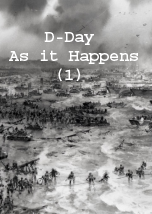
D-Day: As it Happens (1)

   2013    History
D-Day: As It Happens D-Day: As It Happens tells the story of this pivotal event in 20th-century history in a completely new way. Using newly-analysed archive footage, viewers can track the progress of seven people who were there on the day, each of them a real participant in the 1944 invasion. And they can do so moment by moment in real time, encountering the twists and turns of the fighting at the same time as the D-Day seven did, and learning their fate as the action unfolds in parallel with the present, Narrated by Peter Snow, with Channel 4 presenter and former marine Arthur Williams, and experts including former British Army officer Colonel Tim Collins and front-line journalist Lorna Ward. The first programme tells the back stories of the real people that the event is following in real time and sets out their missions over the following 24 hours. The D-Day seven include a paratrooper, a midget submariner, a nurse and a military cameraman.
Series: D-Day

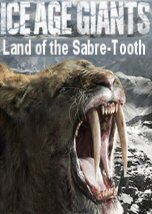
Ice Age Giants: Land of the Sabre-Tooth

   2013    Science
Professor Alice Roberts journeys 40,000 years back in time on the trail of the great beasts of the Ice Age. Drawing on the latest scientific detective work and a dash of graphic wizardry, we bring the Ice Age Giants back to life. The series begins in the 'land of the sabre-tooth'; North America, a continent that was half covered by ice that was up to two miles thick. Yet this frozen land also boasted the most impressive cast of Ice Age giants in the world. Across locations such as the Grand Canyon, the sands of Arizona and the coast of California, Alice traces the movements of Ice Age beasts like bear-sized sloths, vast mammoths and the strange beast known as the glyptodon. These leviathans all have one thing in common: they were stalked by the meanest big cat that ever prowled the Earth, armed with seven-inch teeth and hunting in packs - Smilodon fatalis, the sabre-toothed cat.
Series: Ice Age Giants

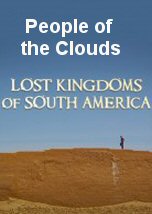
Lost Kingdoms of South America: People of the Clouds

   2013    History
Dr Jago Cooper reveals the history of some of South America's ancient civilisations. He begins with an epic journey into the remote Peruvian Andes in search of the mysterious Chachapoya people. Once numbering half a million, they were known as the 'People of the Clouds'. Dr Cooper reveals how they developed sophisticated methods of recording stories, traded in exotic goods found hundreds of miles from their territory, and had funeral traditions that challenge assumptions about ancient human behaviour. His search for evidence takes him to astonishing cliff tombs untouched for 500 years and one of the most spectacular fortresses in South America, where the fate of the Chachapoya is revealed.
Series: Lost Kingdoms of South America