Starring globally renowned figures and the world's leading scientists, 'Eating Our Way To Extinction' will take you on a journey - A powerful cinematic feature documentary that opens the lid on the elephant in the room no one wants to talk about: Unsustainable beef cattle production leads to deforestation, increased pollution and plundering of resources. Alarming and entertaining, this compelling film will make you never look at your food or the food industry in the same way again. We cannot deny the destruction of our planet any longer. The damage is clear and we have nowhere else to go! It is time to face the truth, however uncomfortable that may be – we are on borrowed time. But every day we have the power to make great food choices for our planet, palate and person.
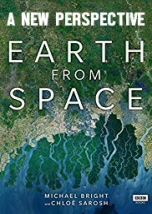
Prepare yourself for a groundbreaking series that reveals a spectacular new space-based vision of our planet. Cameras in space will tell stories of life on our planet from a brand new perspective. Satellites follow an elephant family struggling through drought, reveal previously unknown emperor penguin colonies from the colour of their poo, and discover mysterious ice rings that could put seal pups in danger. Using cameras on the ground, in the air and in space, Earth from Space follows nature’s greatest spectacles, weather events and dramatic seasonal changes. This is our home, as we’ve never seen it before.
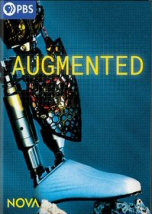
Follow the dramatic personal journey of Hugh Herr, a biophysicist working to create brain-controlled robotic limbs. At age 17, Herr’s legs were amputated after a climbing accident. Frustrated by the crude prosthetic limbs he was given, Herr set out to remedy their design, leading him to a career as an inventor of innovative prosthetic devices. Now, Herr is teaming up with an injured climber and a surgeon at a leading Boston hospital to test a new approach to surgical amputation that allows prosthetic limbs to move and feel like the real thing. Herr’s journey is a powerful tale of innovation and the inspiring story of a personal tragedy transformed into a life-long quest to help others.
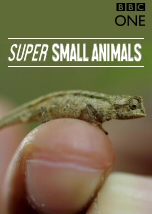
From a primate that’s no bigger than a mouse, to a chameleon that can fit on your fingertip, the natural world is full of fantastically small animals. Biologist Patrick Aryee explores the fascinating secrets behind these miniature marvels and shows that they’re not the underdogs you might think they are. Super Small Animals follows him as he meets the leading experts on these pint sized superstars, and finds out what makes them some of the most successful on the planet. First up, he reveals the huge benefits that being small can bring. There’s the little lemur whose diminutive frame helps it to exploit a unique gap in the eco-system, the tiny hummingbird that uses its size to out-maneuver the competition, and the world’s smallest seahorse that never has to leave home. He also explores why small animals are proportionally the strongest in the world, and introduces a peanut-sized beetle that can pull over a thousand times its own weight. Next he explores the challenges that animals face when they shrink in size, and the ingenious ways they overcome them. We find out how the smallest armadillo in the world manages to control its temperature in the searing desert sun, and the how the world’s smallest fish can survive in nothing more than a puddle, because it never really grows up. Patrick meets a secretive hippo that lives in the dense jungle, and looks like it’s been shrunk in the wash, and some of the world’s smallest snakes that give birth to enormous babies. He also meets a scientist that studies how really tiny spiders have a surprising trick that enables them to travel an incredible 40 miles per day, using almost no energy. Then there are the animals that refuse to be pigeon holed as small, and manage to punch way above their weight. He puts some astonishing invertebrates to the test, to see how they work together to become much bigger than the sum of their parts and meets a pint-sized predator that takes on some of the largest and most dangerous creatures on the planet, getting hands on to discover how its build helps it to be brave. Finally he uncovers the incredible lengths that deep sea anglerfish go to in order to be big and small at the same time, and has an endearing encounter with a tiny carnivore that manages to be small in just one direction. Whether their size helps them to hunt, hide or survive, all these remarkable animals prove that good things really do come in small packages.
The film documents the English heavy metal band Black Sabbath's final show of their farewell concert tour, The End Tour. The performance was held at the Genting Arena in Birmingham, England, hometown of the band's founding members: vocalist Ozzy Osbourne, guitarist Tony Iommi, bassist Geezer Butler, and drummer Bill Ward. Osbourne, Iommi, and Butler performed this final concert with session drummer Tommy Clufetos in place of Ward, as well as Adam Wakeman on keyboards and guitar. The concert opens with a performance of the song 'Black Sabbath'. The film goes on to show the band performing 'Fairies Wear Boots', 'Under the Sun/Every Day Comes and Goes', 'Into the Void', 'Snowblind', 'War Pigs', 'Hand of Doom', 'Iron Man', and 'Children of the Grave'; at the end of the setlist, the band performs the song 'Paranoid' as an encore. Interspersed with the final concert are interviews with Osbourne, Iommi, and Butler, in which they talk about their careers and past drug addictions. Additionally, Iommi's 2012 lymphoma diagnosis, which impacted the band's 2012–14 reunion tour and the recording of their 2013 album 13, is discussed. The film also features footage of 'The Angelic Sessions'—the band's final studio recordings, which took place in the days following the final show. Of these recordings, the film shows Osbourne, Iommi, and Butler performing 'The Wizard', 'Wicked World', and 'Changes'.
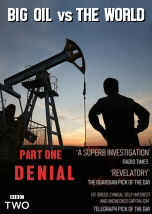
The most important story of our time. 2022 is set to be a year of unprecedented climate chaos across the planet. As the world’s leading climate scientists issue new warnings about climate change and the soaring cost of fuel highlights the world’s ongoing dependence on fossil fuels – how did we get here? The first part tells The story of what the fossil fuel industry knew about climate change more than four decades ago. Scientists who worked for the biggest oil company in the world, Exxon, reveal the warnings they sounded in the 1970s and early 1980s about how fossil fuels would cause climate change – with potentially catastrophic effects. Drawing on thousands of newly discovered documents, the film goes on to chart in revelatory and forensic detail how the oil industry went on to mount a campaign to sow doubt about the science of climate change, the consequences of which we are living through today












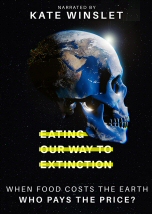

We cannot deny the destruction of our planet any longer. The damage is clear and we have nowhere else to go! It is time to face the truth, however uncomfortable that may be – we are on borrowed time. But every day we have the power to make great food choices for our planet, palate and person.