




Last Watched

"Ocean"  Sort by

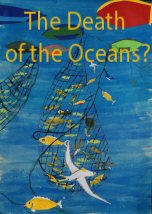
The Death of the Oceans

   2010    Nature
Sir David Attenborough reveals the findings of one of the most ambitious scientific studies of our time - an investigation into what is happening to our oceans. He looks at whether it is too late to save their remarkable biodiversity. Attenborough explores some of the ways in which we are affecting marine life - from over-fishing to the acidification of sea water. The film also uncovers the disturbing story of how shipping noise is deafening whales and dolphins, affecting their survival in the future.
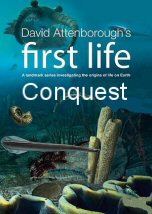
Conquest

   2010    Science
Attenborough's journey continues in Canada's Rocky Mountains, where fossils document an explosion in animal diversity never seen before or since. Travelling from there to North Africa, the rainforests of Australia and the east coast of Scotland, Attenborough discovers how animals evolved to conquer not only the oceans but also the land and air. These remote and fascinating creatures are brought to life as never before with the help of cutting-edge scientific technology and photorealistic visual effects. From the first large predators to the first legs on land, these were creatures that evolved the traits and tools that allow all animals, including ourselves, to survive to this day.
Series: First Life

Hunger at Sea

   2015    Nature
Hunger at Sea follows blue whales, sharks, sea lions, frigatebirds, dolphins and albatrosses to reveal the strategies they use to hunt for prey in the big blue. The open ocean is an immense wilderness that covers more than half the surface of our planet, yet for the most part it's a watery desert, largely devoid of life. Predators face an endless search to find and catch food, yet these great tracts of ocean are home to some of the most remarkable hunters on the planet.
Series: The Hunt

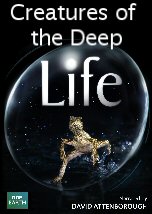
Life: Creatures of the Deep

   2009    Nature
Marine invertebrates are some of the most bizarre and beautiful animals on the planet, and thrive in the toughest parts of the oceans. Divers swim into a shoal of predatory Humboldt squid as they emerge from the ocean depths to hunt in packs. When cuttlefish gather to mate, their bodies flash in stroboscopic colours. Time-lapse photography reveals thousands of starfish gathering under the Arctic ice to devour a seal carcass. A giant octopus commits suicide for her young. A camera follows her into a cave which she walls up, then she protects her eggs until she starves. The greatest living structures on earth, coral reefs, are created by tiny animals in some of the world's most inhospitable waters.
Series: Life

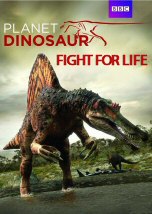
Fight for Life

   2011    Science
This episode focuses on the Jurassic period, a time when the first giant killers stalked the Earth and lurked in the seas; a time when the slightest advantage meant the difference between life and death. In North America the iconic allosaurus, an ambush hunter with a lethal bite, dominated. Not even the heavily-armoured stegosaurus was safe from this killer, and incredible evidence reveals a glimpse of a vicious battle between these two giants. Life in Jurassic oceans was no easier; in 2008, a fossil was dug out of a frozen island high in the Arctic. It was a colossal marine reptile, twice as big as most ocean predators, at 15 metres long and weighing about 45 tonnes. This was Predator X. Its skull alone was nearly twice the size of a tyrannosaurus rex's, and its bite force unmatched by anything in the Jurassic seas. The balance of power between predator and prey is a fine one, as prey continually evolves different ways to avoid predators. But for the most successful and enduring predators, the battle to survive has always been tipped in their favour
Series: Planet Dinosaur

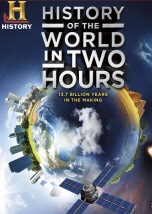
History of the World in Two Hours

   2012    History    3D    HD
Did you know that 1% of the white noise you see on old televisions is background radiation from The Big Bang? That the gold on a wedding ring comes from a star that exploded 5 billion years ago? And, that we're connected to the salt water of the first oceans through the water in our bodies? Our human story is actually 14 billion years old and the clues are all around us. This CGI-driven special will tell the history of our world in two hours, an ambitious story that will give surprising connections to our daily lives. From the formation of the earth and the emergence of life, to the advance of man and the growth of civilization, it’s a rapid-fire view of our unforgettable story.