David Attenborough reveals the extraordinary ways that some animals use colour to hide and disappear into the background. New science reveals how the Bengal tiger in central India uses its orange-black stripes to hide from its colour-blind prey. In Kenya’s Masai Mara, the zebra’s black-and-white pattern confuses predators with an extraordinary effect called motion dazzle. And on the island of Cuba, a small snail uses colourful stripes in a surprising way to hide from its enemies. Other animals use colour to trick and to deceive. On Australia’s Great Barrier Reef, a blue-striped blenny uses colours to mimic other fish and launch a sudden attack. In the grasslands of Zambia, the chick of a pin-tailed whydah mimics the patterns of its nest mates to ensure that it is not detected as an imposter. And specialist cameras reveal how a tiny crab spider uses bright ultraviolet colours to lure in its victims.
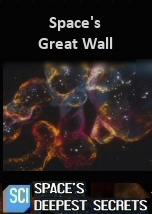
Astronomers make an extraordinary discovery out in deep space when they uncover a cosmic mega-structure that's one billion light-years long. Now, investigators race to decode the hidden forces that shape the most massive and mysterious structure known in the Universe. We dive into this space great wall's fiery birth and hunt for the weird cosmic glue that holds it together to reveal how this megastructure rewrites our understanding of the universe on an epic scale.
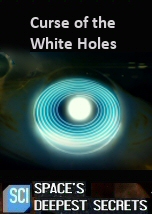
The white hole is a region of spacetime and that cannot be entered from the outside, although energy-matter, light and information can escape from it. In this sense, it is the reverse of a black hole. Einstein predicted strange cosmic phenomena known as white holes, but scientists have yet to prove they exist. Today, astronomers race to find the clues that can unlock the secrets of white holes. They investigate the tiny black holes that hide in the most ancient parts of the universe to finally find the smoking gun.
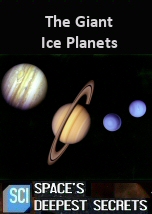
Uranus and Neptune, two of the largest, farthest and strangest planets in our solar system. These two planets break all the rules. Of all the big planets, Uranus and Neptune remain the biggest enigmas. Today, astronomers are finally unlocking why these supersized snowballs are so weird. Can an ancient mega-collision reveal what knocked Uranus onto its side? Can a missing twin world unlock why one of Neptune's moons orbits the wrong way? And what is the energy that drives the fastest winds in the solar system?
The mission of NASA's Osiris-Rex is to intercept a giant space rock and crack the mysteries of a potential killer asteroid. Can it unlock how asteroids kick-start life on Earth and reveal why they might be our ticket to other worlds? To find out, we take a ride with one of NASA's most ambitious missions to investigate a space rock in more detail than ever before, to reveal how asteroids will rewrite the past and forge the future of our solar system.
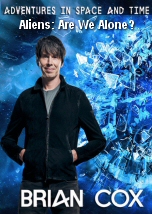
Brian Cox looks at our attempts to answer one of the most profound questions we can ask – are we alone in the universe? With scientists sending space probes to the furthest reaches of our solar system and beyond, the scientific search for alien life has begun. Inspired by a childhood love of science fiction, Brian still hopes to hear from ET. In this film, he explains why this search deserves to be taken seriously, and he explores the chances of it happening.







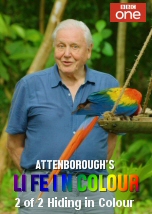





Other animals use colour to trick and to deceive. On Australia’s Great Barrier Reef, a blue-striped blenny uses colours to mimic other fish and launch a sudden attack. In the grasslands of Zambia, the chick of a pin-tailed whydah mimics the patterns of its nest mates to ensure that it is not detected as an imposter. And specialist cameras reveal how a tiny crab spider uses bright ultraviolet colours to lure in its victims.