



Last Watched

"Han"  Sort by

The Lost Worlds of Planet Earth

   2014    Science
This episode explores the palaeogeography of Earth over millions of years, and its impact on the development of life on the planet. Tyson starts by explaining that the lignin-rich trees evolved in the Carboniferous era about 300 million ago, then explains on the nature of plate tectonics that would shape the landmasses of the world and the asteroid impact that initiated the Cretaceous–Paleogene extinction event, leaving small mammals as the dominate species on earth. Earth's landmasses are expected to change in the future and postulates what may be the next great extinction event.
Series: Cosmos: A Spacetime Odyssey

The Turning Point

   2007    History
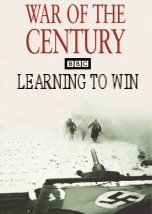
The German army launched Operation Barbarossa, the invasion of the East, with supreme confidence in its own superiority. High Command was sure that victory would come as quickly and as easily as in France. At the onset, the troops advanced rapidly and the Panzer forces under General Guderian were unbeatable. There were, however, far more casualties and more wear-and-tear on equipment than anticipated. The invading force got bogged down short of Moscow and the withdrawal from there was a severe psychological blow to the men. When an extremely severe winter set in, morale sank further. The soldiers were not equipped for such low temperatures and their guns and machinery could not cope. Hitler ordered his troops to stand firm.
Series: The Wehrmacht

In The Sign Of The Cross

   2007    History
In the fourth episode of the series, Clovis was the first Frankish king to acknowledge the Christian faith. This changed the direction of Europe's history.
Series: The Germanic Tribes

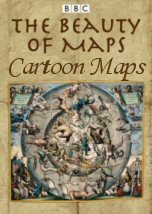
Cartoon Maps

   2010    Culture
The series concludes by delving into the world of satirical maps. How did maps take on a new form, not as geographical tools, but as devices for humour, satire or storytelling? Graphic Artist Fred Rose perfectly captured the public mood in 1880 with his General Election maps featuring Gladstone and Disraeli, using the maps to comment upon crucial election issues still familiar to us today. Technology was on the satirist's side with the advent of high-speed printing allowing for larger runs at lower cost. In 1877, when Rose produced his 'Serio Comic Map of Europe at War', maps began to take on a new direction and form, reflecting a changing world. Rose's map exploited these possibilities to the full using a combination of creatures and human figures to represent each European nation. The personification of Russia as a grotesque-looking octopus, extending its tentacles around the surrounding nations, perfectly symbolised the threat the country posed to its neighbours.
Series: The Beauty of Maps

The Immortals

   2014    Science
This episode covers the nature of how life may have developed on Earth and the possibility of life on other planets. Tyson begins by explaining how the human development of writing systems enabled the transfer of information through generations, describing how Princess Enheduanna ca. 2280 BCE would be one of the first to sign her name to her works, and how Gilgamesh collected stories, including that of Utnapishtim documenting a great flood comparable to the story of Noah's Ark. Tyson explains how DNA similarly records information to propagate life, and postulates theories of how DNA originated on Earth, including evolution from a shallow tide pool, or from the ejecta of meteor collisions from other planets. In the latter case, Tyson explains how comparing the composition of the Nakhla meteorite in 1911 to results collected by the Viking program demonstrated that material from Mars could transit to Earth, and the ability of some microbes to survive the harsh conditions of space. With the motions of solar systems through the galaxy over billions of years, life could conceivably propagate from planet to planet in the same manner. Tyson then moves on to consider if life on other planets could exist. He explains how Project Diana performed in the 1960s showed that radio waves are able to travel in space, and that all of humanity's broadcast signals continue to radiate into space from our planet. Tyson notes that projects have since looked for similar signals potentially emanating from other solar systems. Tyson then explains that the development and lifespan of extraterrestrial civilizations must be considered for such detection to be realized. He notes that civilizations can be wiped out by cosmic events like supernovae, natural disasters such as the Toba disaster, or even self-destruct through war or other means, making probability estimates difficult. Tyson describes how elliptical galaxies, in which some of the oldest red dwarf stars exist, would offer the best chance of finding established civilizations. Tyson concludes that human intelligence properly applied should allow our species to avoid such disasters and enable us to migrate beyond the Earth before the Sun's eventual transformation into a red giant.
Series: Cosmos: A Spacetime Odyssey
Leaving Neverland

Leaving Neverland

2019  Culture
Ancient Aliens

Ancient Aliens

2014  Culture
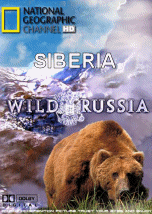
Wild Russia

Wild Russia

2009  Nature
Our Planet

Our Planet

2019  Nature
Prehistoric America

Prehistoric America

2003  Nature
Future Warfare

Future Warfare

2021  Technology
The Gene Code

The Gene Code

2011  Science