










Last Watched

"Han"  Sort by

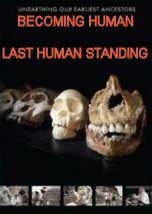
Last Human Standing

   2010    History
xamines the fate of the Neanderthals, our European cousins who died out as modern humans spread from Africa into Europe during the Ice Age. Did modern humans interbreed with Neanderthals or exterminate them? The program explores crucial evidence from the recent decoding of the Neanderthal genome. How did modern humans take over the world? New evidence suggests that they left Africa and colonized the rest of the globe far earlier, and for different reasons, than previously thought. As for Homo sapiens, we have planet Earth to ourselves today, but that's a very recent and unusual situation. For millions of years, many kinds of hominids co-existed. At one time Homo sapiens shared the planet with Neanderthals, Homo erectus, and the mysterious "Hobbits"–three-foot-high humans who thrived on the Indonesian island of Flores until as recently as 12,000 years ago. "Last Human Standing" examines why "we" survived while those other ancestral cousins died out. And it explores the provocative question: In what ways are we still evolving today?
Series: Becoming Human


War and Peace

   2013    History
World War II is a watershed event for Latino Americans with hundreds of thousands of men and women serving in the armed forces, most fighting side by side with Anglos. In the Pacific, East L.A.'s Guy Gabaldon becomes a Marine Corp legend when he singlehandedly captures more enemy soldiers than anyone in US military history. But on the home front, discrimination is not dead: in 1943, Anglo servicemen battle hip young "Zoot suitors" in racially charged riots in southern California
Series: Latino Americans

Peril and Promise

   2013    History
In the 80s the nature of the Latino Diaspora changes again. From Cuba a second wave of refugees to United States – the Mariel exodus – floods Miami . The same decade sees the sudden arrival of hundreds of thousands of Central Americans (Salvadorans, Guatemalans, and Nicaraguans) fleeing death squads and mass murders at home like activist, Carlos Vaquerano. By the early 1990s, a political debate over illegal immigration – has begun. Globalization, empowered by NAFTA, means that as U.S. manufacturers move south, Mexican workers head north in record numbers. A backlash ensues: tightened borders, anti-bilingualism, state laws to declare all illegal immigrants felons. But a sea change is underway: the coalescence of a new phenomenon called Latino American culture-as Latinos spread geographically and make their mark in music, sports, politics, business, and education.
Series: Latino Americans

Audrey Hepburn: The Fairest Lady

   1997    Art
Audrey Hepburn was a film and fashion icon of the twentieth century and one of the most beloved actresses of all time. She enchanted the world with elegance and innocent charm, and portrayed some of the most memorable characters in film. Although she was one of the few actresses to win an Emmy, Tony, Grammy, and Academy Award, Audrey was modest about her talents, often claiming she had no acting technique. She redefined glamour with elfin features and a waif-like figure that inspired timeless designs by Hubert de Givenchy.Raised in the Netherlands during World War II, Audrey never forgot her own struggles during the German occupation and dedicated her later years to helping needy children around the world, becoming an International Goodwill Ambassador for UNICEF and traveling around the world to provide aid. Audrey Hepburn is remembered as a natural talent, a timeless beauty and a great humanitarian.

The Lost Worlds of Planet Earth

   2014    Science
This episode explores the palaeogeography of Earth over millions of years, and its impact on the development of life on the planet. Tyson starts by explaining that the lignin-rich trees evolved in the Carboniferous era about 300 million ago, then explains on the nature of plate tectonics that would shape the landmasses of the world and the asteroid impact that initiated the Cretaceous–Paleogene extinction event, leaving small mammals as the dominate species on earth. Earth's landmasses are expected to change in the future and postulates what may be the next great extinction event.
Series: Cosmos: A Spacetime Odyssey