Mathematician Dr Hannah Fry explores the mystery of maths. It underpins so much of our modern world that it's hard to imagine life without its technological advances, but where exactly does maths come from? Is it invented like a language or is it something discovered and part of the fabric of the universe? It's a question that some of the most eminent mathematical minds have been wrestling with. To investigate this question, Hannah goes head first down the fastest zip wire in the world to learn more about Newton's law of gravity, she paraglides to understand where the theory of maths and its practice application collide, and she travels to infinity and beyond to discover that some infinities are bigger than others. In this episode, Hannah goes back to the time of the ancient Greeks to find out why they were so fascinated by the connection between beautiful music and maths. The patterns our ancestors found in music are all around us, from the way a sunflower stores its seeds to the number of petals in a flower. Even the shapes of some of the smallest structures in nature, such as viruses, seem to follow the rules of maths. All strong evidence for maths being discovered. But there are those who claim maths is all in our heads and something we invented. To find out if this is true, Hannah has her brain scanned. It turns out there is a place in all our brains where we do maths, but that doesn't prove its invented. Experiments with infants, who have never had a maths lesson in their lives, suggests we all come hardwired to do maths. Far from being a creation of the human mind, this is evidence for maths being something we discover. Then along comes the invention of zero to help make counting more convenient and the creation of imaginary numbers, and the balance is tilted in the direction of maths being something we invented. The question of whether maths is invented or discovered just got a whole lot more difficult to answer
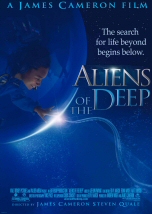
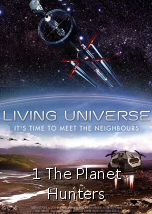
The next great voyage of human exploration has already begun: the search for life on planets orbiting distant stars. With extraordinary CGI, the world's most inspiring scientists, via extreme environments on Earth and around the solar system, the film takes viewers aboard the next generation of space ships, across the cosmos and beneath the clouds of the exo-planets to discover The Living Universe. Part 1: 'The Planet Hunters' For as long as we’ve had eyes to see and minds to wonder we’ve marveled at the stars. Since the discovery of the first so-called exoplanet in 1994, the Planet Hunters have transformed the way we see the universe. It is the year 2157, and spacecraft Artemis enters the final phase of construction.
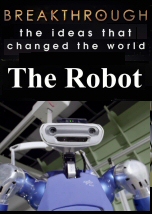
For most of our history, we humans considered ourselves unique. But now, a new, artificial species might challenge our superiority. Mechanical beings have the potential to change everything. How we got them is a story of astonishing twists and amazing turns to achieve us the machine that may turn out to be the most revolutionary technology ever conceived--the robot. Learn how robots were first conceptualized in ancient Rome and see how their use has evolved over the centuries, from the calculator to the Mars Lander. Then, take a sneak peek at what future robots will be able to do. Narrated by Patrick Stewart.
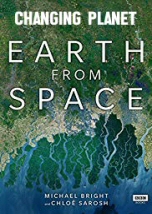
At a time when the Earth’s surface is changing faster than ever in human history, watch cities grow, forest disappear and glaciers melt. In the ever-growing grey of cities one man is feeding thousands of parakeets; in Sumatra a female orang-utan and her daughter face life in a forest under threat; while in Tanzania local people use satellites to replant a forest, securing the future for a family of chimpanzees. This is our home as we’ve never seen it before.
Earth's surface is covered in weird and wonderful patterns. The Australian outback is covered in pale spots, the work of wombats; a clearing in the endless green canopy of the Congo rainforest has been created by an incredible elephant gathering; and the twists and turns of the Amazon make a home for rehabilitated manatees. This is our home, as we've never seen it before.
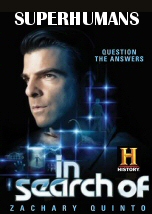
The Series 'In Search of' conducted investigations into the controversial, paranormal and mysterious. The producer's purpose is to suggest some possible explanations, but not necessarily the only ones, to the mysteries examined. The 2018 revival is presented by Zachary Quinto. In this episode, Zach wants to understand how a person can be superhuman. He meets a man who bent the metal frame of a car door with his bare hands in a moment of crisis; a man who can feel no pain; and a Shaolin warrior monk, who teaches him how to harness superhuman powers of his own.











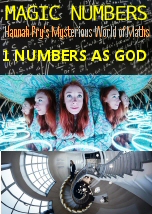






In this episode, Hannah goes back to the time of the ancient Greeks to find out why they were so fascinated by the connection between beautiful music and maths. The patterns our ancestors found in music are all around us, from the way a sunflower stores its seeds to the number of petals in a flower. Even the shapes of some of the smallest structures in nature, such as viruses, seem to follow the rules of maths. All strong evidence for maths being discovered. But there are those who claim maths is all in our heads and something we invented. To find out if this is true, Hannah has her brain scanned. It turns out there is a place in all our brains where we do maths, but that doesn't prove its invented.
Experiments with infants, who have never had a maths lesson in their lives, suggests we all come hardwired to do maths. Far from being a creation of the human mind, this is evidence for maths being something we discover. Then along comes the invention of zero to help make counting more convenient and the creation of imaginary numbers, and the balance is tilted in the direction of maths being something we invented. The question of whether maths is invented or discovered just got a whole lot more difficult to answer