This there-part series explores monumental changes in the workplace and the long-term impact on workers, employers, educators and communities. Employment is part of the American Dream. Will the future provide opportunities for jobs that sustain families and the nation? The first episode illuminates disruptions to the world of work--AI, robotics, globalization and labor practices. The COVID-19 pandemic was a new driver of change; at the pandemic's height, unemployment flipped from its lowest rate in 50 years to its highest level in a century.
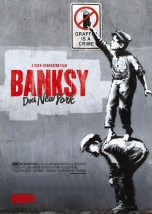
On Oct. 1, 2013, the elusive British street artist known as Banksy launched a self-proclaimed month-long residency in New York City, posting one unique exhibit a day in an unannounced location, sparking a 31-day scavenger hunt both online and on the streets for Banksy’s work. Capturing this month of madness, this featured film incorporates user-generated content, from YouTube videos to Instagram photos, from New Yorkers and Banksy hunters alike, whose responses became part of the work itself, for an exhilarating, detailed account of the uproar created by the mysterious artist. With installations spanning all five boroughs of New York City, and including a mix of stencil graffiti, sculpture, video and performance art, Banksy touched on such wide-ranging subjects as fast-food wages, animal cruelty in the meat industry, civilian casualties in Iraq and the hypocrisy of the modern art world.
This series deals with two of the deepest questions there are - what is everything, and what is nothing? In two epic, surreal and mind-expanding films, Professor Jim Al-Khalili searches for an answer to these questions as he explores the true size and shape of the universe and delves into the amazing science behind apparent nothingness. he first part, Everything, sees Professor Al-Khalili set out to discover what the universe might actually look like. The journey takes him from the distant past to the boundaries of the known universe. Along the way he charts the remarkable stories of the men and women who discovered the truth about the cosmos and investigates how our understanding of space has been shaped by both mathematics and astronomy.
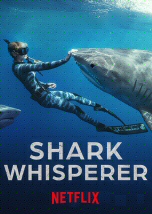
The film captures de life of Valerie Taylor, a living legend and true pioneer in both underwater filmmaking and shark research. Valerie work has became the basis for much of what we know about sharks today. Through remarkable underwater archival footage, along with interviews with Valerie herself, 'Playing with Sharks' follows this daring ocean explorer's trajectory from champion spear fisher to passionate shark protector.
This featured series is a gripping examination of the unsolved crimes of the Golden State Killer who terrorized California in the 1970's and 1980's. Sensitively handled at all turns, I’ll Be Gone in the Dark is different from your standard true crime series. Highly emotional in both a restorative cathartic, but also a genuinely upsetting way. In the first episode, the writer Michelle McNamara finds a new obsession in the 'East Area Rapist', who terrorized California in the 1970s and '80s, responsible for 50 home-invasion rapes and 12 murders.
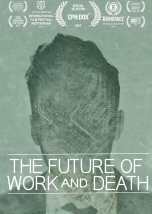
The film explores the growth of exponential technology and where it is taking us. It focuses on how future technology could significantly change the two inevitable features of the human experience; punching the clock and fading away. 'The Future of Work and Death' explores how advanced automation, AI and technological singularity could be achievable in the next 30 years. How job obsolescence and technological unemployment could consequently occur and how digital immortality can occur may not be a thing of science fiction. But what are the socio-political repercussions of these innovations and are we ready for them? Does working less mean living more and is ending ageing incumbent on us? Worldwide experts in the fields of futurology, anthropology, neuroscience and philosophy share their thoughts on these future advancements.














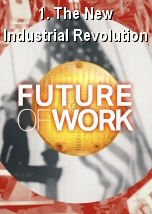







The first episode illuminates disruptions to the world of work--AI, robotics, globalization and labor practices. The COVID-19 pandemic was a new driver of change; at the pandemic's height, unemployment flipped from its lowest rate in 50 years to its highest level in a century.