











Last Watched

"Europe"  Sort by

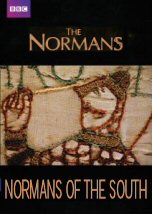
The Normans: Normans of the South

   2010    History
Professor Robert Bartlett explores the impact of the Normans on southern Europe and the Middle East. The Normans spread south in the 11th century, winning control of southern Italy and the island of Sicily. There they created their most prosperous kingdom, where Christianity and Islam co-existed in relative harmony and mutual tolerance. It became a great centre of medieval culture and learning. But events in the Middle East provoked the more aggressive side of the Norman character. In 1095, the Normans enthusiastically answered the Pope's call for holy war against Islam and joined the first crusade. They lay siege to Jerusalem and eventually helped win back the holy city from the muslims. This bloody conquest left a deep rift between Christianity and Islam which is still being felt to this day.
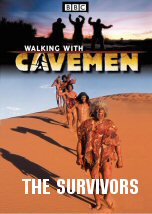
Walking with Cavemen: The Survivors

   2003    History
Nearly half a million years ago, the most advanced human yet roams Europe. Strong and powerful, Homo heidelbergensis are fierce hunters, use sophisticated tools and live in close-knit family groups. Over 200,000 years they become split into two populations by extremes of weather and environment and evolve separately into two very different species. In the North are the Neanderthals, whose physical power and resilience is the key to surviving in ice age Northern Europe. About 140,000 years ago, Africa is in the grip of a devastating drought, and something remarkable has happened to the descendants of heidelbergensis who live there. The combination of environment and chance has bred in them a unique ability that will change the course of human history. It will be this small band of southern survivors, perhaps numbering just a few tens of thousands, who will come to dominate the world and be known as Homo sapiens.
Series: Walking with Cavemen

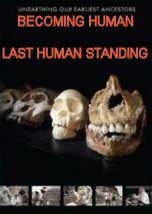
Last Human Standing

   2010    History
xamines the fate of the Neanderthals, our European cousins who died out as modern humans spread from Africa into Europe during the Ice Age. Did modern humans interbreed with Neanderthals or exterminate them? The program explores crucial evidence from the recent decoding of the Neanderthal genome. How did modern humans take over the world? New evidence suggests that they left Africa and colonized the rest of the globe far earlier, and for different reasons, than previously thought. As for Homo sapiens, we have planet Earth to ourselves today, but that's a very recent and unusual situation. For millions of years, many kinds of hominids co-existed. At one time Homo sapiens shared the planet with Neanderthals, Homo erectus, and the mysterious "Hobbits"–three-foot-high humans who thrived on the Indonesian island of Flores until as recently as 12,000 years ago. "Last Human Standing" examines why "we" survived while those other ancestral cousins died out. And it explores the provocative question: In what ways are we still evolving today?
Series: Becoming Human

In The Sign Of The Cross

   2007    History
In the fourth episode of the series, Clovis was the first Frankish king to acknowledge the Christian faith. This changed the direction of Europe's history.
Series: The Germanic Tribes

Cartoon Maps

   2010    Culture
The series concludes by delving into the world of satirical maps. How did maps take on a new form, not as geographical tools, but as devices for humour, satire or storytelling? Graphic Artist Fred Rose perfectly captured the public mood in 1880 with his General Election maps featuring Gladstone and Disraeli, using the maps to comment upon crucial election issues still familiar to us today. Technology was on the satirist's side with the advent of high-speed printing allowing for larger runs at lower cost. In 1877, when Rose produced his 'Serio Comic Map of Europe at War', maps began to take on a new direction and form, reflecting a changing world. Rose's map exploited these possibilities to the full using a combination of creatures and human figures to represent each European nation. The personification of Russia as a grotesque-looking octopus, extending its tentacles around the surrounding nations, perfectly symbolised the threat the country posed to its neighbours.
Series: The Beauty of Maps

A Savage Legacy

       History
Examines the impact of racism in the 20th century. By 1900 European colonial expansion had reached deep into the heart of Africa. Under the rule of King Leopold II, the Belgian Congo was turned into a vast rubber plantation. Men, women and children who failed to gather their latex quotas would have their limbs dismembered. The country became the scene of one of the century's greatest racial genocides, as an estimated 10 million Africans perished under colonial rule.
Series: Racism: A History
Planet Earth

Planet Earth

2007  Nature
The Dark Wizard

The Dark Wizard

2026  History
Wild Wild Country

Wild Wild Country

2018  Culture
Kylie

Kylie

2026  Art
Life

Life

2009  Nature
Knights

Knights

2015  History
The Americas

The Americas

2026  Nature
The Sky at Night

The Sky at Night

2026  Science