The unearthing of a gruesome grave filled with thousands of skeletons at the beach of Kamakura in Japan could be about to unlock the true extent of the merciless violence and mystery surrounding the true origins of one of the most feared and revered warriors of all time: the Samurai. In the Middle Ages, Kamakura was the capital of Japan. The 'Shogun', a kind of aristocratic military dictator, ruled here. This shogunate ended in 1333 with the Battle of Kamakura. A drastic event in Japanese history, because this resulted in not only political, but also social, philosophical and technical innovations. The remains of the samurai warriors who fell near Kamakura now provide scientists with detailed insights into the time of the Kamakura shogunate and the bloody conflict between the shogun and the emperor. The chilling burial ground dates back to 1333. Kamakura was one of the most heavily fortified regions of Japan. When the Emperor became angered by the growing powers of the ruling Hojo family, he sought to retake control of the region, setting the stage for a war that would change the shape of the nation. Among over 4000 sets of remains, six have a unique story to tell: the husband and wife involved in a sword fight to the death; the warrior monk; a peasant boy soldier; and members of the ruling Hojo family, captured and decapitated, with their heads displayed as trophies of victory. These remains reveal the secrets of the Samurai, their ferocious fighting skills and their merciless killing techniques.
Over the past year, Chris Hemsworth have been exploring the science of living longer, doing everything he can to hold back time. But whatever he does, sooner or later, aging and death will win. Now Chris is facing his most extreme and emotional challenge: three days in a retirement village while wearing an aging suit that turns the simplest activity into a Herculean task. He'll be carrying an extra 30 pounds around and shoes that will make him unbalanced, apart from glasses to see improperly and acoustic earmuffs. Later on, Chris is going to do a death-bed meditation. He’s testing the theory that the best way to combat aging and fear of mortality might not be to fight it but accept it,
In episodes 3 and 4, the journey intensifies as Will Smith pushes deeper into both the physical and emotional extremes of the planet. In the Amazon, he ventures into dense, unforgiving jungle in search of the elusive green anaconda, confronting fear, danger, and the raw power of one of Earth’s most mysterious predators. Guided by local experts, the expedition becomes a test of courage and trust in a world where nature sets all the rules. The adventure then shifts dramatically to the Himalayas, where the challenge is no longer survival but meaning. High above the clouds, Will explores the idea of happiness alongside monks, scientists, and mountain communities, discovering how isolation, altitude, and ancient wisdom reshape the human mind. Together, these episodes connect the wildness of nature with the inner journey of self-discovery, revealing that the greatest expedition may be the one within.
This powerful documentary examines the origins, ideology and evolution of one of the most feared organizations of Nazi Germany. It explores how the SS (Schutzstaffel) transformed from a small protective unit into a vast and ruthless machine that played a central role in the Holocaust. Through detailed analysis and historical evidence, it reveals the distorted beliefs, calculated strategies and systematic brutality that defined its actions, offering a chilling insight into how ordinary structures were turned into instruments of terror on an unprecedented scale. In the first three episodes, the focus turns to the rise of the SS and the individuals who helped shape its power. It traces how recruits were selected and why the organization appealed to certain men, uncovering the mindset behind their commitment. The story delves into the figure of Heinrich Himmler, an unlikely leader whose vision and ambition drove the expansion of the SS, as well as Reinhard Heydrich, whose cold and methodical approach made him one of the key architects of the Holocaust. Together, these episodes reveal how leadership, ideology and personal ambition combined to fuel one of history’s darkest forces.
A cult expert and her documentary filmmaker husband move into a secretive fundamentalist Mormon community linked to the polygamist FLDS movement, expecting to document a troubled religious group but soon uncovering something far more disturbing. At the center of the growing tension is Samuel Bateman, a self-proclaimed prophet who claims to be the successor to imprisoned cult leader Warren Jeffs. As the couple gains the trust of isolated followers, they uncover disturbing evidence of psychological control and a dangerous system hidden behind promises of faith and salvation. The documentary reveals the growing power of fanaticism and blind devotion inside one of America’s most controversial religious sects. In the first two episodes of the series, Christine and Tolga settle inside the isolated community and quickly become suspicious of Bateman’s growing influence over vulnerable followers. As they secretly record testimonies and gather evidence, they desperately try to convince local authorities to intervene before the situation becomes even more dangerous. Meanwhile, Bateman strengthens his control through fear, isolation, and religious manipulation, while one woman inside the group slowly begins to realize the truth behind the prophet she once trusted. Combining undercover investigation, emotional testimonies, and mounting suspense, these episodes create a gripping and deeply unsettling experience.




















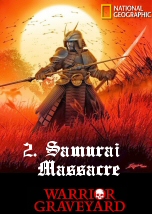





In the Middle Ages, Kamakura was the capital of Japan. The 'Shogun', a kind of aristocratic military dictator, ruled here. This shogunate ended in 1333 with the Battle of Kamakura. A drastic event in Japanese history, because this resulted in not only political, but also social, philosophical and technical innovations. The remains of the samurai warriors who fell near Kamakura now provide scientists with detailed insights into the time of the Kamakura shogunate and the bloody conflict between the shogun and the emperor.
The chilling burial ground dates back to 1333. Kamakura was one of the most heavily fortified regions of Japan. When the Emperor became angered by the growing powers of the ruling Hojo family, he sought to retake control of the region, setting the stage for a war that would change the shape of the nation. Among over 4000 sets of remains, six have a unique story to tell: the husband and wife involved in a sword fight to the death; the warrior monk; a peasant boy soldier; and members of the ruling Hojo family, captured and decapitated, with their heads displayed as trophies of victory. These remains reveal the secrets of the Samurai, their ferocious fighting skills and their merciless killing techniques.