The third assault on the tattered remains of Roman civilization came from even further North, where the melting glacial ice had created immense sheltered fjords, leaving its inhabitants little choice but the sea. These fearless navigators understood that dominion over the oceans was the key to their ambitions. Where the Romans expanded incrementally, the Vikings adopted a bolder, more aggressive approach. So was it the Dark Age which failed Europe, or the stifling uniformity of the great Roman experiment? Were the lost tribes more victim than failure? Richard Rudgley will hope to shed new light on the real secrets of the so-called Dark Age.
Hector Berrellez identifies the mysterious Cuban who interrogated Kiki Camarena: a veteran CIA operative, Felix Rodriguez, a key figure in the Iran-Contra scandal. Although warned not to take his investigation further, Hector refuses and is eventually forced into retirement. The case languishes for years, and then a new source comes forward with a shocking allegation.
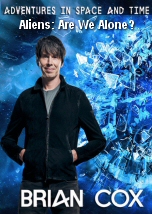
Brian Cox looks at our attempts to answer one of the most profound questions we can ask – are we alone in the universe? With scientists sending space probes to the furthest reaches of our solar system and beyond, the scientific search for alien life has begun. Inspired by a childhood love of science fiction, Brian still hopes to hear from ET. In this film, he explains why this search deserves to be taken seriously, and he explores the chances of it happening.
Frontline and service workers have borne the health consequences of the pandemic, increasing racial and economic disparities. Certain robotic and AI applications are accelerating as the value of human workers is further questioned. Determining the likely areas of job growth and training needs is difficult. Post-secondary education has become more virtual and its costs, more controversial. How can we predict job growth, training needs and the role of education in order to prepare for the work of the future?
The 1980s was an era in which a fusillade of new genres emerged, and many are still with us today, such as hip-hop and house. Dylan Jones has mined the archives to select some of the most crucial tracks in the rise of these two genres. From a young Kurtis Blow making his Top of the Pops debut to the sonic bombardment of Public Enemy and the sampling skills of Bomb the Bass, this episode showcases the evolution in rap and house music across the decade. There are rare archival interviews and stellar performances from Run-DMC, Salt 'N' Pepa, S'Express, Cookie Crew and Neneh Cherry, as well as iconic videos from Herbie Hancock, The Beastie Boys, M/A/R/R/S, Grandmaster Flash and the Furious Five, and many more.
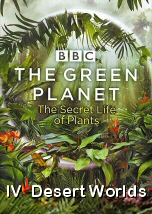
Plants that have developed to thrive in the desert, including cacti that grow in the shade of other trees and collect water in pleated trunks that expand and contract - but can also find themselves a host to other plants, like desert mistletoe. This programme also reveals how tobacco plants being eaten by caterpillars are able to summon the creatures' natural predators, and how tumbleweeds roll across the landscape, only unfurling and growing when they encounter rain.






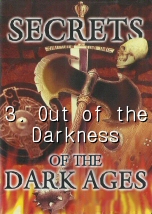

Where the Romans expanded incrementally, the Vikings adopted a bolder, more aggressive approach. So was it the Dark Age which failed Europe, or the stifling uniformity of the great Roman experiment? Were the lost tribes more victim than failure? Richard Rudgley will hope to shed new light on the real secrets of the so-called Dark Age.