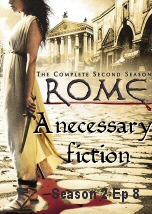
Octavian takes a new bride, Livia, and then introduces her to his family in a startling way... by having her witness the punishment he metes out to Atia and Octavia, for secretly defying the social constraints established through the facade of Octavia's marriage to Mark Antony. The vengeful Gaia carries out her plan to poison Eirene, which produces most dire consequences for Pullo, and no one else is the wiser. Meanwhile, Octavian, Antony, Maecenas, and their associates barely maintain their relationships of congenial contempt and hypocrisy, as everyone tries to figure out who has duped whom with the disappearance of the gold that was Herod's 'gift.'
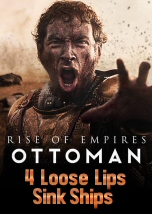
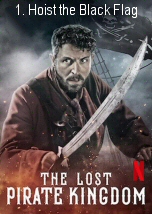
Sultan Mehmed II's siege of Constantinople enters its third week. Mehmed's artillery teams continue their relentless bombardment of Constantinople's walls. After his navy suffers a devastating defeat, Mehmed moves his ships overland to the Golden Horn in a daring, visionary feat. In the shadow of betrayal, Giustiniani attacks the Ottoman fleet.
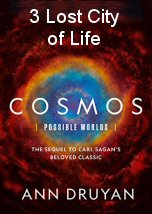
Episode 3 delves into how life began on a roiling, violent Earth and explores the story behind Victor Goldschmidt, the man who found the first clues to life's beginnings on our planet. Neil deGrasse Tyson takes viewers on a journey through space and time to witness the tenacity and creativity of life on Earth and the prospects of life throughout the universe.
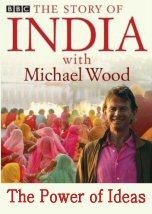
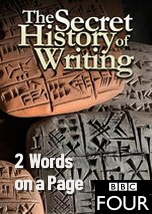
Writing itself is 5,000 years old, and for most of that time words were written by hand using a variety of tools. The Romans were able to run an empire thanks to documents written on papyrus. Scroll books could be made quite cheaply and, as a result, ancient Rome had a thriving written culture. With the fall of the Roman Empire, papyrus became more difficult to obtain. Europeans were forced to turn to a much more expensive surface on which to write: Parchment. Medieval handwritten books could cost as much as a house, they also represent a limitation on literacy and scholarship. No such limitations were felt in China, where paper had been invented in the second century. Paper was the foundation of Chinese culture and power, and for centuries how to make it was kept secret. When the secret was out, paper mills soon sprang up across central Asia. The result was an intellectual flourishing known as the Islamic Golden Age. Muslim scholars made discoveries in biology, geology, astronomy and mathematics. By contrast, Europe was an intellectual backwater. That changed with Gutenberg’s development of movable type printing. The letters of the Latin alphabet have very simple block-like shapes, which made it relatively simple to turn them into type pieces. When printers tried to use movable type to print Arabic texts, they found themselves hampered by the cursive nature of Arabic writing. The success of movable type printing in Europe led to a thousand-fold increase in the availability of information, which produced an explosion of ideas that led directly to the European Scientific Revolution and the Industrial Revolution that followed.
To help Andrew in his search for love, relationship specialist Jodi Rodgers has come to work with him - on his dating skills. Olivia hasn't given up in her search for love. Today, she's on her way to meet someone new. She's meeting Jackson. Jackson likes origami and the smell of perfume. He hates the sound of nails on a blackboard and people slurping their tea. Jimmy and Sharnae are arriving at the Gold Coast for their first-ever holiday together. And Jimmy has a surprise in store for tomorrow.
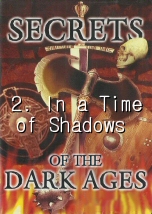
On the second part of his journey through the dark ages Richard Rudgley continues into the age of the wandering peoples, the Volkerwanderung. These Northern people enjoyed a golden age unaffected by Rome and just 30 years after the Romans relinquished Britain, the 'Anglo-Saxons' made their move. The bedraggled legions are in retreat. Walls are pulled down. Mosaics shattered. And yet there never was a people called Anglo-Saxon. We look at the lasting influence of Saxon leaders like Alfred the Great, and his blue print for social justice.











Meanwhile, Octavian, Antony, Maecenas, and their associates barely maintain their relationships of congenial contempt and hypocrisy, as everyone tries to figure out who has duped whom with the disappearance of the gold that was Herod's 'gift.'