

Last Watched

"John"  Sort by

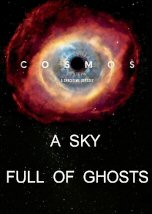
A Sky Full of Ghosts

   2014    Science
Tyson begins the episode by explaining the nature of the speed of light and how much of what is seen of the observable universe is from light emanated from billions of years in the past. Tyson further explains how modern astronomy has used such analyzes via deep time to identify the Big Bang event and the age of the universe. Tyson proceeds to describe how the work of Isaac Newton, William Herschel, and James Clerk Maxwell contributed to understanding the nature of electromagnetic waves and gravitational force, and how this work led towards Albert Einstein's Theory of Relativity, that the speed of light is a fundamental constant of the universe and gravity can be seen as distortion of the fabric of space-time. Tyson describes the concept of dark stars as postulated by John Michell which are not visible but detectable by tracking other stars trapped within their gravity wells, an idea Herschel used to discover binary stars. Tyson then describes the nature of black holes, their enormous gravitational forces that can even capture light, and their discovery via X-ray sources such as Cygnus X-1. Tyson uses the Ship of Imagination to provide a postulate of the warping of spacetime and time dilation as one enters the event horizon of the black hole, and the possibility that these may lead to other points within our universe or others, or even time travel. Tyson ends on noting that Herschel's son, John would be inspired by his father to continue to document the known stars as well as contributions towards photography that play on the same nature of deep time used by astronomers.
Series: Cosmos: A Spacetime Odyssey
City Maps

   2010    Culture
This is the story of three maps, three 'visions' of London over three centuries. The Morgan Map of 1682 was the first to show the whole of the City of London after the Great Fire of London. In 1746 John Rocque produced at the time the most detailed map ever made of London. Like Morgan's, Rocque's map is all neo-Classical beauty and clinical precision, but the London it represented had become the opposite. In engravings of the time, such as Night, the artist William Hogarth shows a city boiling with vice and corruption. Stephen Walter's contemporary image, The Island, plays with notions of cartographic order and respectability. His extraordinary London map looks at first glance to be just as precise and ordered as his hero Rocque's but, looking closer, it includes 21st century markings such as 'favourite kebab vans' and sites of 'personal heartbreak'.
Series: The Beauty of Maps

Easy Listening

   2013    Art
Series concludes with the focus shifting to the United States in the post-war years of the 1950s and beyond. Beginning with arguably the most notorious work of 20th century classical music, John Cage's 'silent' composition 4'33", it looks at how a series of maverick Americans re-invented the sound of classical music into a more simple form, bringing back harmonies and rhythms that made it increasingly popular with audiences across the world. It also examines how this music found its way into a spiritual realm, with the strain of pared-down religious composition that came to be known as 'holy minimalism'. From the Maverick concert hall in Woodstock, New York to an Orthodox cathedral in Estonia to a car park in Peckham, south London, the story is told by a stellar line-up of contributors including Philip Glass, Steve Reich, John Adams, Arvo Pärt and John Tavener.
Series: The Sound and the Fury

Johnson Nixon and Vietnam: Reversal Of Fortune

   2012    History
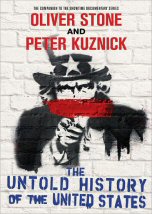
Stone opens the episode on Vietnam with a review of American intervention in Latin America. Lyndon Johnson, according to Stone, disregarded JFK’s “memo” about withdrawing troops and instead escalated. The Cataclysm in Vietnam as the war reaches a turning point - there's no going back. The betrayal by Richard Nixon.
Series: The Untold History of the United States

Invasion

   2014    Art
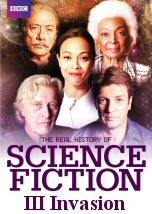
What if aliens landed on Earth? Much of science fiction explores the moment of first contact – what will people do when the aliens land? From H. G. Wells’ pioneering The War of the Worlds to Independence Day, Men in Black, and District 9, Invasion deals with our fears of alien invasions of earth. David Tennant explains the appeal of Doctor Who’s Daleks and Cybermen while John Carpenter and Chris Carter explore the rich appeal of the paranoia fuelled by hidden aliens with The Thing and The X-Files. It also asks, what if the monsters were our own creation? With the aid of rarely seen animation tests, Phil Tippett takes us behind the scenes in the creation of the dinosaurs of Jurassic Park. But not all invasions are hostile. Peter Coyote and Richard Dreyfuss discuss the creation of Spielberg’s spellbinding classics E.T. the Extra-Terrestrial and Close Encounters of the Third Kind. There is more than one kind of invasion.
Series: The Real History of Science Fiction