In a provocative documentary, environmental campaigner George Monbiot examines the disastrous impact that farming animals for meat has had on the planet. He argues that the biggest problem driving us towards global disaster is how we feed ourselves, particularly on meat George looks at alternative food sources, including synthetic meat, and a process that produces protein from just bacteria and air, and also explores revolutionary ideas that could change agriculture as we know it.
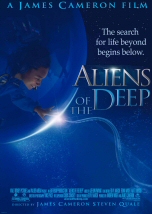
James Cameron journeys to some of the Earth's deepest, most extreme and unknown environments in search of the strange and alien creatures that live there. Joining him is a team of young NASA scientists and marine biologists who consider how these life forms represent life we may one day find in outer space not only on distant planets orbiting distant stars, but also within our own solar system. Aliens of the Deep is the result of expeditions to several hydrothermal vent sites in the Atlantic and the Pacific. These are violent volcanic regions where new planet is literally being born and where the interaction between ocean and molten rock creates plumes of super-heated, chemically-charged water that serve as oases for animals unlike anything ever discovered. Six-foot tall worms with blood-red plumes and no stomach, blind white crabs, and a biomass of shrimp capable of 'seeing' heat all compete to find just the right location in the flow of the super-heated, life-giving water or to fry.
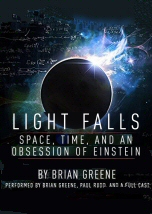
Brian Greene and an ensemble cast perform this theatrucak work tracing Albert Einstein's electrifying journey towards one of the most veautiful ideas ever conceived - the General Theory of Relativity. With state of the art animation and innovative projection techniques, Light Falls illuminates Einstein'sbreakthuroug moments, near misses, agonizing frustrations, and final emergence into the light, as one intrepid mind took on the universe... and won. Best-selling author, superstar physicist, and cofounder of the World Science Festival Brian Greene (The Elegant Universe, The Fabric of the Cosmos) and award-winning actor Paul Rudd (Ant-Man) perform this dramatic story. Featuring an original score by composer Jeff Beal, Einstein’s electrifying journey toward his greatest achievement is brought vividly to life.
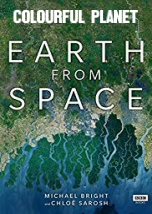
From space, Earth is a kaleidoscope. Turquoise plankton blooms trigger a feeding frenzy, China turns yellow with rapeseed flowers, and mysterious green lights appear in the ocean. Satellites give us a new perspective on its greatest and most beautiful spectacles allowing us to make new discoveries We can watch landscapes change through the seasons and marvel in the scale of their transformations. Satellite cameras capture a kaleidoscope of extraordinary colours surprising and constantly changing, created by natural phenomena, by animals and by people. These colours are revealing new insight into the health of our fragile planet, transforming our understanding of our colourful home.
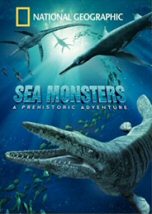
The setting alternates between prehistory and modern day times in which scientists study the fossilized remains of the creatures in the film. In 2009, a group of paleontologists discover a rare fossil in Kansas. The fossil was previously exposed by a summer rain, and it appears to be a marine reptile, tracing back over 70 million years. It was a female Dolichorhynchops and will be the inspiration for telling the story of Dolly, who travels the Kansas Inland Sea, 80 million years ago during the late Cretaceous period with her family. The film brings to life some of the most bizarre, ferocious and fascinating creatures to ever inhabit the ocean, incluing Tylosaurus, Xiphactinus, Cretoxyrhina, and Ammonite. It combines animation with recreations in a 3D prehistoric adventure. A journey to the bottom of the ancient oceans dramatizes awe-inspiring creatures.
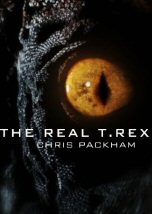
Chris Packham goes on an investigative journey into the mysteries of planet Earth's super predator - Tyrannosaurus rex. The latest groundbreaking paleontological discoveries combined with studies of modern animals are redefining this iconic dinosaur. Tackling everything from the way he looked, moved, socialized - even down to his terrifying roar - Chris strips away Hollywood myths to uncover the amazing truth, and utilizing the latest CGI wizardry, he rebuilds the most authentic T rex ever seen from the bones up.




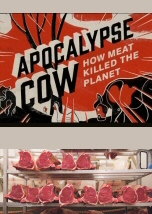





George looks at alternative food sources, including synthetic meat, and a process that produces protein from just bacteria and air, and also explores revolutionary ideas that could change agriculture as we know it.