




Last Watched

"Ocean"  Sort by

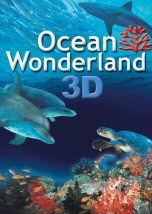
Ocean Wonderland 3D

   2003    Nature    3D    HD
The mission of the film is to underline the crucial ecological role of coral reefs play in maintaining the well being of our planet, and to point out and warn against the dangers that are destroying the world's coral reefs. Entirely filmed using digital technology, thanks to it, the film was shot almost entirely with natural light, thus showing the underwater world as it exactly is. This is the closest you can get to dive without being there. Shot on the Great Barrier Reef in Australia and in the Bahamas, it brings to you the amazing beauty of the many varieties of coral and the immense diversity of the marine life thriving there.
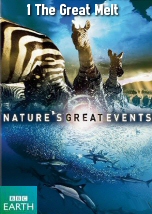
The Great Melt

   2009    Nature
Every year, around the world, seasonal changes transform entire landscapes and draw in millions of creatures as these great events unfold. This fantastic series combines the epic scale of Planet Earth and the intimate, emotional stories of charismatic animals as they struggle to survive. Using state of the art technology, these programmes capture the Earth's most dramatic and epic wildlife spectacles and the intimate stories of the animals caught up in them.
The Great Melt: The summer melt of Arctic ice, opening up nearly three million square miles of ocean and land, provides opportunities for millions of animals, including beluga whales, families of Arctic foxes, vast colonies of seabirds, and the fabled Arctic unicorn, the narwhal. For polar bears, however, it is the toughest time of year. Why? How will they survive? A mother polar bear and her cub make their first journey together onto the sea ice. They are looking for ringed seals, their favourite prey. It is a serious business but the cub just wants to play. The melting ice makes it harder for them to hunt and threatens their survival. In a unique aerial sequence, the migration of narwhal with their distinctive unicorn-like tusks is filmed for the first time. The whales' journey is risky as they travel along giant cracks in the ice. If the ice were to close above them, they would drown. Hundreds of beluga whales gather in the river shallows. They rub themselves on smooth pebbles in one of the most bizarre summer spectacles. Guillemot chicks take their first flights from precipitous sea cliff nests to the sea 300 metres below. They attempt to glide to safety but many miss their target. Their loss is a bonus for the hungry Arctic fox family waiting below. As the melt comes to an end the bears gather, waiting for the sea to freeze again. Two 400kg males square up to each other to spar.
Series: Nature Great Events

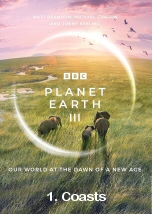
Planet Earth III: Coasts

   2023    Nature
Discover amazing landscapes, the most amazing fights of animals on our planet, from the highest mountains to the deepest oceans, from the darkest caves to the hottest deserts with new technology. In the first episode, Sir David Attenborough explores the dangerous frontiers created by the world's coasts, where animals fight for survival amidst constant change. Cape fur seals, sea angels, lions, archer fish, flamingos and green turtles feature.
Series: Planet Earth III

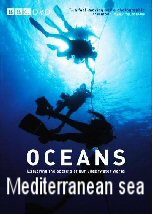
The Mediterranean Sea

   2009    Nature
The sparkling blue waters of the Mediterranean Sea are home to over 700 varieties of fish and almost 10 per cent of the world's marine species. Its coastline is one of the most densely populated in the world and the human pressure on this sea is magnified each summer with the influx of holiday makers. Western civilisation developed around these shores but now human activity is having a profound effect on this endangered sea.
Series: Oceans

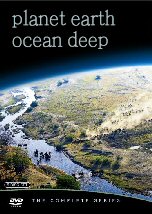
Ocean Deep

   2006    Nature
Life goes to extraordinary lengths to survive this immense realm. A 30 tonne whale shark gorges on a school of fish and the unique overhead heli-gimbal camera reveals common dolphins rocketing at more than 30km an hour. Descending into the abyss, deep sea octopus fly with wings and vampire squid use bioluminescence to create an extraordinary colour display. The first ever time-lapse footage taken from 2,000m down captures eels, crabs and giant isopods eating a carcass, completely consuming it within three hours.
Series: Planet Earth

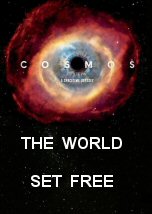
The World Set Free

   2014    Nature
This episode explores the nature of the greenhouse effect (discovered by Joseph Fourier and Svante Arrhenius), and the evidence demonstrating the existence of global warming from humanity's influence. Tyson begins by describing the long-term history of the planet Venus; based on readings from the Venera series of probes to the planet, the planet had once had an ocean and an atmosphere, but due to the release of carbon dioxide from volcanic eruptions, the runaway greenhouse effect on Venus caused the surface temperatures to increase and boiled away the oceans. Tyson then notes the delicate nature of the amount of carbon dioxide in the atmosphere can influence Earth's climate due to the greenhouse effect, and that levels of carbon dioxide have been increasing since the start of the 20th century. Evidence has shown this to be from mankind's consumption of oil, coal, and gas instead of from volcanic eruptions due to the isotopic signature of the carbon dioxide. The increase in carbon dioxide has led to an increase in temperatures, in turn leading to positive feedback loops of the melting polar ice caps and dethawing of the permafrost to increase carbon dioxide levels. Tyson then notes that humans have discovered means of harvesting solar power, such as Augustin Mouchot's solar-driven motor in the 19th century, and Frank Shuman's solar-based steam generator in the 1910's. Tyson points out that in both cases, the economics and ease of using cheap coal and oil caused these inventions to be overlooked at the time. Today, solar and wind-power systems would be able to collect enough solar energy from the sun easily. Tyson then compares the motivation for switching to these cleaner forms of energy to the efforts of the Space race and emphasizes that it is not too late for humanity to correct its course.
Series: Cosmos: A Spacetime Odyssey
Chemistry

Chemistry

2010  Science
All or Nothing: Arsenal

All or Nothing: Arsenal

2022  Culture
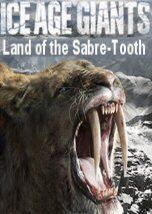
Ice Age Giants

Ice Age Giants

2013  Science
In the Age of AI

In the Age of AI

2019  Technology
Earthflight

Earthflight

2012  Nature
Mammals

Mammals

2024  Nature