In 1799, the German scientist Alexander von Humboldt embarked on a perilous journey of discovery across South America. It would take him to the deepest jungle near the Orinoco and to the heights of the Andes. His aim was twofold: to conduct the first scientific survey of South America and to discover how the natural world actually works — at a time when most scientists believed that the world was created less than 6,000 years ago. He later became a leading scientific figure and champion of the abolitionist movement in the US. This extremely visual docudrama follows Humboldt’s extraordinary path. Travelling in Humboldt’s footsteps is historian Andrea Wulf, whose book on Humboldt became a worldwide bestseller. For good reason, since Humboldt’s ideas on the planet’s fragile web of life are as important today as they were 220 years ago.
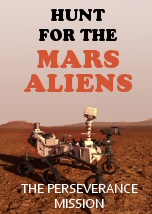
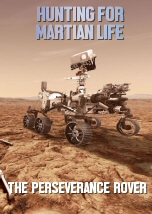
NASA's brand-new Mars rover is on the hunt for alien life, and with the help of cutting-edge engineering, scientists embark on a search for fossilized remains, which might prove the Red Planet was once home to a vast ocean and extraterrestrial life. Perseverance carries seven scientific instruments to study the Martian surface at Jezero crater. It carries several cameras and two microphones. The rover is accompanied by the helicopter Ingenuity, which will help Perseverance to scout for locations to study.
Meet Perseverance, NASA's latest rover, as it heads to Mars to answer one question: did life exist on the red planet? On the way, it will lay the foundation for human exploration of our closest neighbour. Today, Mars is hostile to life. It's too cold for water to stay liquid on the surface, and the thin atmosphere lets through high levels of radiation, potentially sterilizing the upper part of the soil. But it wasn't always like this. Some 3.5 billion years ago or more, water was flowing on the surface. It carved channels still visible today and pooled in impact craters. A thicker carbon dioxide atmosphere would have blocked more of the harmful radiation. The Mars 2020/Perseverance rover is designed to better understand the geology of Mars and seek signs of ancient life. The mission will collect and store a set of rock and soil samples that could be returned to Earth in the future. It will also test new technology to benefit future robotic and human exploration of Mars, as the Ingenuity Helicopter.
Filmed over four years, Our Planet is an eight-part series that combines the spectacular photography of Planet Earth with an unprecedented look at the planet's remaining wilderness areas and their animal inhabitants. With a cornucopia of visual wonder and environmental advocacy, the series explores more of this beautiful, blue marble while presenting an urgent call to action to its inhabitants. In the words of David Attenborough: 'This series will celebrate the natural wonders that remain, and reveal what we must preserve to ensure people and nature thrive'. The first episode explores the planet's breathtaking diversity -- from seabirds carpet-bombing the ocean to wildebeests eluding the wild dogs of the Serengeti.
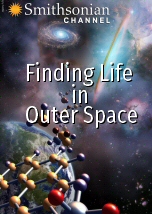
Over billions of years, planet Earth has become home to an amazing interdependent ecosystem, containing a dizzying variety of animals and plants. But how did life here begin? And does it exist anywhere outside of our solar system? We uncover the secrets of our world by tracking the evolution of the cosmos itself, from the Big Bang onwards. Follow scientists responsible for some of the major breakthroughs in understanding the origins of life and witness how their discoveries are fundamentally changing the way we perceive the universe.
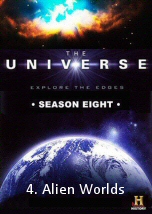
We are the generation of human beings that are going to know whether or not we're alone in the universe. This episode explores the search of exoplanets, from ancient Greek philosophers to the discoveries made possible with the Kepler Telescope. Unbelievable new worlds, planets made of diamond, planets of raining glass, worlds in collision, some plunging into stars, and others that just might harbor life. Thanks to today's planet hunters, our views of the universe and of our place in it are undergoing one of the greatest revolutions in scientific history.
















This extremely visual docudrama follows Humboldt’s extraordinary path. Travelling in Humboldt’s footsteps is historian Andrea Wulf, whose book on Humboldt became a worldwide bestseller. For good reason, since Humboldt’s ideas on the planet’s fragile web of life are as important today as they were 220 years ago.