



Last Watched

"Ray"  Sort by

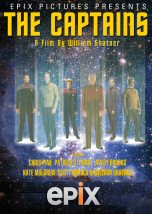
The Captains

   2011    Art
Follow actor William Shatner through interviews with the other actors who have portrayed starship Enterprise captains in five other incarnations of the Star Trek franchise. Shatner's subjects discuss their lives and careers before, during and after their tenure with Star Trek. With the use of conversations and archival footage, they explore the pressures, stigmas and sacrifices that accompanied their roles and their larger careers. During the process of the film and with help from the other Captains, Sir Patrick Stewart, Avery Brooks, Kate Mulgrew, Scott Bakula and Chris Pine, Shatner overcomes his disdain and learns to embrace his best known character, Captain James T. Kirk.
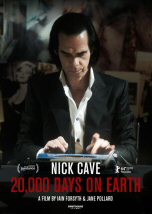
20,000 Days on Earth

   2014    Art
Drama and reality combine in a fictitious 24 hours in the life of musician and international culture icon Nick Cave. With startlingly frank insights and an intimate portrayal of the artistic process, this film examines what makes us who we are and celebrates the transformative power of the creative spirit. An inventive, lyrical ode to creativity, 20,000 Days On Earth features musician and cultural icon Nick Cave. Fusing drama and reality by weaving the journey of a fictional day in Cave’s life, the film is an intimate portrayal of the artistic process.

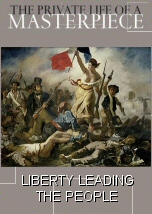
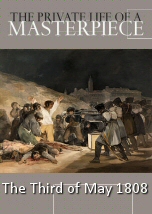
The Third of May 1808

   2004    Art
Arguably the most powerful painting about war ever achieved. It portrays the slaughter of civilians after Napoleonic troops entered Madrid in 1808. The programme reveals the historical truths behind the painting and shows exactly how Goya achieved this masterpiece of protest. he painting's content, presentation, and emotional force secure its status as a groundbreaking, archetypal image of the horrors of war. Although it draws on many sources from both high and popular art, The Third of May 1808 marks a clear break from convention. Diverging from the traditions of Christian art and traditional depictions of war, it has no distinct precedent, and is acknowledged as one of the first paintings of the modern era.
According to the art historian Kenneth Clark, The Third of May 1808 is 'the first great picture which can be called revolutionary in every sense of the word, in style, in subject, and in intention'. Discover how Goya used drawings by authentic witnesses to depict a real firing squad.
Series: The Private Life of a Masterpiece

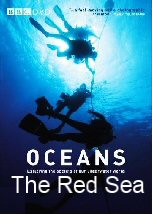
The Red Sea

   2009    Nature
The Red Sea is one of the youngest oceans in the world and one of the warmest. The northern region, with its diverse array of marine life, is one of the most visited dive locations on earth while the southern end remains virtually unexplored. It's a global hotspot for marine biology and an important trade route throughout human history, linking the trade goods of India and the Far East with the markets of Egypt and Europe.
Series: Oceans

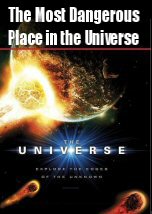
The Most Dangerous Place in the Universe

   2007    Science
Take a tour of the cosmic hot zones--black holes, galaxy mergers, gamma ray bursts and magnetars. Super black holes can literally lasso Earth out of the solar system. A clash between two galaxies can result in a ritual called galactic cannibalism. Magnetars are a cosmic magnetic force so strong it could wipe out data on every credit card.
Series: The Universe

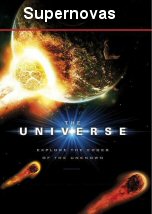
Supernovas

   2008    Science
A stellar explosion, the supernova is the sensational death of a star. It can shine as bright as 100 billion Suns and radiate as much energy as the Sun would emit over 10 billion years. Jets of high-energy light and matter are propelled into space and can cause massive Gamma Ray Bursts and emit intense X-ray radiation for thousands of years. Astronomers believe that this process creates the very building blocks of planets, people and plants. Meet the world's leading Supernova hunters, and take a look at recorded supernovas throughout history.
Series: The Universe