Guided by Stanley Tucci, this documentary journeys into the heart of Italy to reveal the country as it truly is, complex, contradictory, and deeply rooted in its culinary traditions. Through food, Tucci uncovers stories of history, identity, and innovation, showing how every dish reflects centuries of culture, migration, and local pride. What emerges is not a postcard Italy, but a living, evolving nation where cuisine is a language spoken by everyone. In the first three episodes, Tucci immerses himself in Tuscany, savoring the artistry of its cuisine while exploring Florence and Siena, where Renaissance creativity still shapes the table. He then heads north to Italy’s industrial regions, discovering cutting-edge gastronomy and futuristic farming, from high-tech agricultural labs to unexpected gourmet food found at service stations. Finally, in the German-speaking Alpine north, he explores a dual cultural identity through mountain dishes, skiing traditions, and glacial river fishing, revealing how history, borders, and landscape have forged a cuisine unlike any other in Italy.
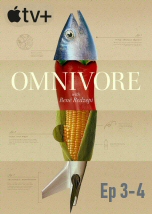
In episodes 3 and 4, a seemingly simple ingredient becomes the invisible force that has shaped civilizations, fueled exploration, and quietly dictated the fate of empires. From ancient trade routes to modern industry, salt emerges not just as a seasoning, but as a powerful driver of human history and survival. At the same time, the story shifts to something far more familiar yet equally unsettling: the global dominance of a single type of banana. What appears to be abundance hides a fragile system built on uniformity, where one disease could wipe out a staple food relied upon by millions. As the journey unfolds, the narrative exposes the hidden cost of convenience and monoculture, revealing how the loss of biodiversity is not a distant ecological concern but an immediate threat to our food security and future. With striking connections between past and present, these episodes invite you to rethink what you eat, where it comes from, and how something as ordinary as salt or a banana could hold the key to understanding the balance—and imbalance—of our world.
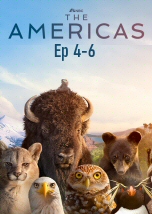
In the next three episodes the journey moves into three radically different worlds where survival depends on mastering water, ice and extreme seasonal change. In the Amazon, giant river otters hunt as a family, black caimans ambush newly hatched turtles, army ants sweep through the forest in highly organized raids and a harpy eagle guards a vulnerable chick high above the jungle floor. The rainforest emerges as a vast living system, shaped by rivers, floods, towering trees and countless species competing for food, space and the chance to raise their young. The story then heads north to Alaska and Canada, where polar bears wait for sea ice, wolves struggle through blizzards, hares evade lynx and immense caribou herds cross dangerous meltwater rivers during their ancient migrations. Finally, along the Gulf Coast, flooded swamps and subtropical wetlands become the stage for black bears, alligators, manatees, burrowing owls and one of America’s rarest wild cats, the ocelot. From the frozen Arctic to the humid marshes of Louisiana, Florida and Texas, these episodes reveal how animals adapt to landscapes that can change completely from one season to the next.
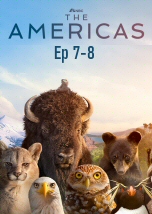
In episodes 7 and 8 of the series, the journey moves from the towering Andes to the tropical Caribbean, revealing two worlds where wildlife survives through astonishing specialization. In the Andes, spectacled bears guide their cubs down perilous cliffs, rare marvelous spatuletail hummingbirds fight and dance for mates, frogs endure freezing nights high beside retreating glaciers, torrent ducks master near-boiling mountain rivers, and thousands of flamingos gather at toxic high-altitude lakes in spectacular courtship displays. The Caribbean offers an entirely different struggle for survival. Sailfish coordinate high-speed attacks on sardine shoals, sperm whales dive into the deep around Dominica, millions of red crabs cross Cuba’s forests on their migration to the sea, and animals on isolated islands develop remarkable ways to exploit scarce resources. On Isla Jicarón, white-faced capuchins even learn to use stones as tools to crack nuts, showing how intelligence and adaptation can make the difference between survival and failure in paradise.

















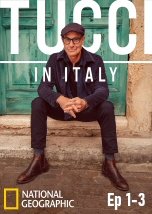
In the first three episodes, Tucci immerses himself in Tuscany, savoring the artistry of its cuisine while exploring Florence and Siena, where Renaissance creativity still shapes the table. He then heads north to Italy’s industrial regions, discovering cutting-edge gastronomy and futuristic farming, from high-tech agricultural labs to unexpected gourmet food found at service stations. Finally, in the German-speaking Alpine north, he explores a dual cultural identity through mountain dishes, skiing traditions, and glacial river fishing, revealing how history, borders, and landscape have forged a cuisine unlike any other in Italy.