Professor Brian Cox journeys across the vastness of time and space revealing epic moments of sheer drama that changed the universe forever. The series begins this epic exploration of the cosmos with a hymn to the great luminous bodies that bring light and warmth to the universe: the stars. It is estimated that there are two hundred trillion stars in the universe, each playing their part in an epic story of creation- a great saga that stretches from the dawn of time, with the arrival of the first star, through diverse generations until the arrival of our own star, the sun, and a civilization that has grown up in its light.
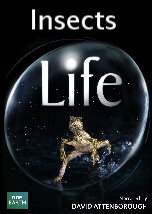
There are 200 million insects for each of us. They are the most successful animal group ever. Their key is an armoured covering that takes on almost any shape. Darwin's stag beetle fights in the tree tops with huge curved jaws. The camera flies with millions of monarch butterflies which migrate 2000 miles, navigating by the sun. Super slow motion shows a bombardier beetle firing boiling liquid at enemies through a rotating nozzle. A honey bee army stings a raiding bear into submission. Grass cutter ants march like a Roman army, harvesting grass they cannot actually eat. They cultivate a fungus that breaks the grass down for them. Their giant colony is the closest thing in nature to the complexity of a human city.
The story of the longest surviving and certainly the loudest genre of rock, heavy metal. With no sign of disappearing, metal has been the most controversial and misunderstood of all rock genres. With Black Sabbath as the undisputed Godfathers, we follow their highs and lows, and, along the journey, meet Deep Purple, Judas Priest, Iron Maiden and Metallica.
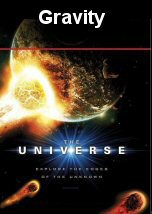
Gravity is the most powerful and exacting force in the universe. It is pervasive and penetrating. Gravity binds us together, its reach hangs stars in the sky and its grip crushes light. Gravity holds planets together, and leashes them to their suns. Without gravity, stars, comets, moons, nebulae, and even the Earth itself would not exist. Explore how science and humanity discovered, overcame and utilized gravity. Learn what it takes to propel objects into the heavens, to ride a wave or to ski down a slope. Take a front row seat as an astronaut subjects himself to the weightless wonders of the specially modified aircraft used to train astronauts known as the "Vomit Comet."
Beginning with the separation of the fuzzy thinking and pious fraud of astrology from the careful observations of astronomy, Sagan follows the development of astronomical observation. Beginning with constellations and ceremonial calendars (such as those of the Anasazi), the story moves to the debate between Earth and Sun-centered models: Ptolemy and the geocentric worldview, Copernicus' theory, the data-gathering of Tycho Brahe, and the achievements of Johannes Kepler (Kepler's laws of planetary motion and the first science-fiction novel).
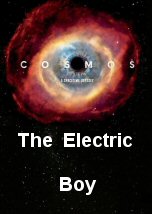
This episode provides an overview of the nature of electromagnetism, as discovered through the work of Michael Faraday. Tyson explains how the idea of another force of nature, similar to gravitational forces, had been postulated by Isaac Newton before. Tyson continues on Faraday, coming from poor beginnings, would end up becoming interested in studying electricity after reading books and seeing lectures by Humphry Davy at the Royal Institution. Davy would hire Faraday after seeing extensive notes he had taken to act as his secretary and lab assistant. After Davy and chemist William Hyde Wollaston unsuccessfully tried to build on Hans Christian Ørsted's discovery of the electromagnetic phenomena to harness the ability to create motion from electricity, Faraday was able to create his own device to create the first electric motor by applying electricity aligned along a magnet. Davy, bitter over Faraday's breakthrough, put Faraday on the task of improving the quality of high-quality optical glass, preventing Faraday from continuing his research. Faraday, undeterred, continued to work in the Royal Institution, and created the Christmas Lectures designed to teach science to children. Following Davy's death, Faraday returned to full time efforts studying electromagnetism, creating the first electrical generator by inserting a magnet in a coil of wires.
Tyson continues to note that despite losing some of his mental capacity, Faraday concluded that electricity and magnetism were connected by unseen fields, and postulated that light may also be tied to these forces. Using a sample of the optical glass that Davy had him make, Faraday discovered that an applied magnetic field could affect the polarization of light passing through the glass sample (a dielectric material), leading to what is called the Faraday effect and connecting these three forces. Faraday postulated that these fields existed across the planet, which would later by called Earth's magnetic field generated by the rotating molten iron inner core, as well as the phenomena that caused the planets to rotate around the sun. Faraday's work was initially rejected by the scientific community due to his lack of mathematical support, but James Clerk Maxwell would later come to rework Faraday's theories into the Maxwell's equations that validated Faraday's theories. Their combined efforts created the basis of science that drives the principles of modern communications today.









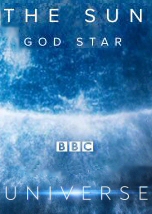



The series begins this epic exploration of the cosmos with a hymn to the great luminous bodies that bring light and warmth to the universe: the stars. It is estimated that there are two hundred trillion stars in the universe, each playing their part in an epic story of creation- a great saga that stretches from the dawn of time, with the arrival of the first star, through diverse generations until the arrival of our own star, the sun, and a civilization that has grown up in its light.