The centre of our galaxy is home to an invisible monster of unimaginable power – a supermassive black hole named Sagittarius A star, with four million times the mass of the Sun. Recent astronomical breakthroughs have confirmed not only that black holes like Sagittarius A star exist, but that these bizarre invisible objects may be the ultimate galactic protagonists. Stunning CGI takes us back to witness the fiery origins of our galaxy’s black hole 13.6 billion years ago, when the early universe was home to colossal blue stars, and when they ran out of fuel, they collapsed under their own enormous mass, crushing down into an object so small and so dense it punched a hole in the fabric of the universe. Over billions of years, Sagittarius A star feasted on nearby gas, stars, and through cataclysmic mergers with other black holes. A breakthrough discovery by Nasa’s Fermi gamma-ray telescope has shown that our black hole had the power to sculpt the entire galaxy, creating vast bubbles of gas above and below our galaxy and even protecting stars systems as ours. In a mind-bending conclusion, Brian Cox reveals how our modern understanding of black holes is challenging our concepts of reality to the breaking point. In trying to understand the fate of objects that fall into Sagittarius A star, scientists have come to a stunning conclusion: space and time, concepts so foundational to how we experience the world around us, are not as fundamental as we once thought.
The meteoric rise of renewable energy has consequences for our electricity supply. While coal and gas fired power stations can generate electricity whenever you need it, renewables are intermittent by nature. So we need a backup plan for when the wind stops or the sun goes down. All over the world, engineers and scientists are racing to solve one key problem; how to safely and efficiently store electricity at a huge scale but at a low cost. The quest is producing some truly remarkable ideas and this episode details three of them.
As summer spreads across our planet, honey bees toil, snow geese breed, tadpoles awaken and lions stalk wildebeest in search of lush grass. Our planet is solar-powered. But due to the Earth's tilt, it doesn't strike its surface evenly. This solar energy arrives in varying amounts at different times of the year. The huge increase that comes with summer also triggers countless migrations.
In the captivating second part of “Our Universe”, chapters 4 to 6 are presented together in an unmissable journey through the cosmos and life on Earth. These episodes delve deep into the elements that formed our world, the essential role of water, and the unseen forces that shape our lives. They offer an enthralling exploration of our place in the Universe. Dive in to experience this profound story of existence, from stardust to soulmates. In the fourth chapter, we uncover how the elements essential to life were forged in the hearts of stars. Following a green sea turtle’s quest across the ocean for these elements, this episode reminds us that life is built from the remnants of ancient stars. The fifth chapter takes us back to the miraculous arrival of water on Earth, exploring how this vital substance transformed a barren landscape into a thriving blue planet. In the final chapter we witness gravity’s grand influence on life, following two king penguins as their journey of attraction and survival unfolds against the cosmic force that binds us all.











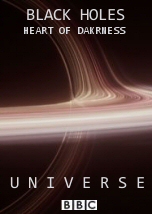







Stunning CGI takes us back to witness the fiery origins of our galaxy’s black hole 13.6 billion years ago, when the early universe was home to colossal blue stars, and when they ran out of fuel, they collapsed under their own enormous mass, crushing down into an object so small and so dense it punched a hole in the fabric of the universe. Over billions of years, Sagittarius A star feasted on nearby gas, stars, and through cataclysmic mergers with other black holes. A breakthrough discovery by Nasa’s Fermi gamma-ray telescope has shown that our black hole had the power to sculpt the entire galaxy, creating vast bubbles of gas above and below our galaxy and even protecting stars systems as ours.
In a mind-bending conclusion, Brian Cox reveals how our modern understanding of black holes is challenging our concepts of reality to the breaking point. In trying to understand the fate of objects that fall into Sagittarius A star, scientists have come to a stunning conclusion: space and time, concepts so foundational to how we experience the world around us, are not as fundamental as we once thought.