







Last Watched

"Han"  Sort by

We Are Legion The Story of the Hacktivists

   2012    Culture
The film takes us inside the complex culture and history of Anonymous. The film explores early hacktivist groups like Cult of the Dead Cow and Electronic Disturbance Theater, and then moves to Anonymous’ own raucous and unruly beginnings on the website 4Chan. Through interviews with current members – some recently returned from prison, others still awaiting trial – as well as writers, academics and major players in various “raids,” WE ARE LEGION traces the collective’s breathtaking evolution from merry pranksters to a full-blown, global movement, one armed with new weapons of civil disobedience for an online world.
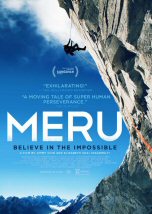
Meru

   2015    Culture
In the high-stakes game of big-wall climbing, the Shark’s Fin on Mount Meru may be the ultimate prize. Sitting at the headwaters of the sacred Ganges River in Northern India, the Shark’s Fin has seen more failed attempts by elite climbing teams over the past 30 years than any other ascent in the Himalayas. To undertake Meru, says Jon Krakauer, the bestselling author of Into Thin Air, "You can’t just be a good ice climber. You can’t just be good at altitude. You can’t just be a good rock climber. It’s defeated so many good climbers and maybe will defeat everybody for all time. Meru isn’t Everest. On Everest you can hire Sherpas to take most of the risks. This is a whole different kind of climbing."

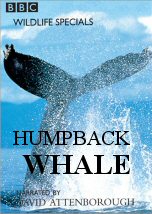
Humpback Whale

   2006    Nature
Few sounds are more beautiful or moving than the underwater songs of the humpback whale. Male whales compete with their songs, which often last for 10 minutes at a time, and can be repeated for hours on end. Whales separated by thousands of miles of sea will sing almost identical songs. Researchers have found that the songs change throughout the breeding months, following a mysterious pattern repeated across the waves. Whales also use sound to hunt. To catch herring, humpback whales release a stream of bubbles to form a shimmering, circular fishing net. Emitting a repetitive loud scream, they scare the fish into a tight ball, then lunge out of the water to swallow the shoal whole. Now it seems that the long-held image of the gentle giant must change to one of a ferocious and opportunistic hunter.

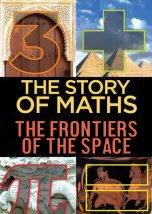
The Story of Maths The Frontiers of Space

   2008    Science
In the third episode we will see Europe by the 17th century taking over from the Middle East as the powerhouse of mathematical ideas. Great strides had been made in understanding the geometry of objects fixed in time and space. The race was on to discover the mathematics to describe objects in motion. This programme explores the work of Rene Descartes, Pierre Fermat, Isaac Newton, Leonard Euler and Carl Friedrich Gauss. Du Sautoy proceeds to describes René Descartes realisation that it was possible to describe curved lines as equations and thus link algebra and geometry. He talks with Henk J. M. Bos about Descartes. He shows how one of Pierre de Fermat’s theorems is now the basis for the codes that protect credit card transactions on the internet. He describes Isaac Newton’s development of math and physics crucial to understanding the behaviour of moving objects in engineering. He covers the Leibniz and Newton calculus controversy and the Bernoulli family. He further covers Leonhard Euler, the father of topology, and Gauss' invention of a new way of handling equations, modular arithmetic. The further contribution of Gauss to our understanding of how prime numbers are distributed is covered thus providing the platform for Bernhard Riemann's theories on prime numbers. In addition Riemann worked on the properties of objects, which he saw as manifolds that could exist in multi-dimensional space.
Series: The Story of Maths

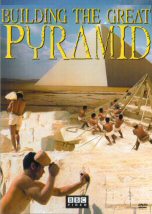
Building the Great Pyramid

       History
The Great Pyramid of Giza's construction is still shrouded in mystery, despite it being the only survivor among the Seven Wonders of the Ancient World. In Building the Great Pyramid, travel back 4,500 years with the BBC as they re-create the circumstances under which it may have been built, as well as the daily life of the population at that time. Expert archaeologists, Egyptologists, and scholars share their latest theories on what may have happened. The film combines dramatic reconstruction, location shooting and state-of-the-art CGI computer effects. Directed and written by Jonathan Stamp.

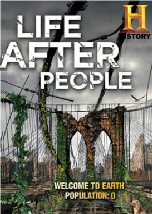
Life After People

   2008    Nature
Visit the ghostly villages surrounding Chernobyl (abandoned by humans after the 1986 nuclear disaster), travel to remote islands off the coast of Maine to search for abandoned towns that have vanished from view in only a few decades, then head beneath the streets of New York to see how subway tunnels may become watery canals. A visual journey, LIFE AFTER PEOPLE is a thought provoking adventure that combines movie-quality visual effects with insights from experts in the fields of engineering, botany, ecology, biology, geology, climatology, and archaeology to demonstrate how the very landscape of our planet will change in our absence.
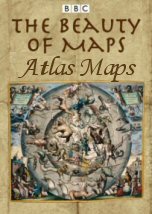
The Beauty of Maps

The Beauty of Maps

2010  History
Leaving Neverland

Leaving Neverland

2019  Culture
The Story of Us

The Story of Us

2018  Culture
Walking with Cavemen

Walking with Cavemen

2003  History
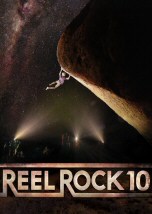
Reel Rock

Reel Rock

2015  Culture
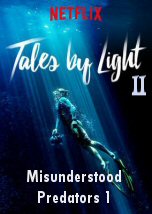
Tales by Light Season 2

Tales by Light Season 2

2017  Nature
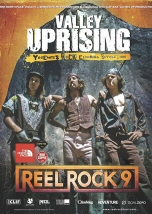
Reel Rock

Reel Rock

2014  Culture