



Last Watched

"Rat"  Sort by

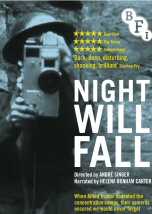
Night Will Fall

   2014    History
Researchers discover film footage from World War II that turns out to be a lost documentary shot by Alfred Hitchcock and Sidney Bernstein in 1945 about German concentration camps liberated by allied troops. When Allied forces liberated the Nazi concentration camps in 1944-45, their terrible discoveries were recorded by army and newsreel cameramen, revealing for the first time the full horror of what had happened. Making use of British, Soviet and American footage, the Ministry of Information’s Sidney Bernstein (later founder of Granada Television) aimed to create a documentary that would provide lasting, undeniable evidence of the Nazis’ unspeakable crimes. He commissioned a wealth of British talent, including editor Stewart McAllister, writer and future cabinet minister Richard Crossman – and, as treatment advisor, his friend Alfred Hitchcock. Yet, despite initial support from the British and US Governments, the film was shelved, and only now, 70 years on, has it been restored and completed by Imperial War Museums. This eloquent, lucid documentary by André Singer (executive producer of the award-winning The Act of Killing) tells the extraordinary story of the filming of the camps and the fate of Bernstein’s project, using original archive footage and eyewitness testimonies.
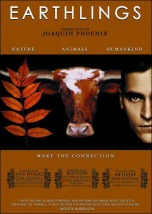
Earthlings

   2005    Nature
A feature length documentary about humanity's absolute dependence on animals (for pets, food, clothing, entertainment, and scientific research) but also illustrates our complete disrespect for these so-called 'non-human providers'. With an in-depth study into pet stores, puppy mills and animals shelters, as well as factory farms, the leather and fur trades, sports and entertainment industries, and finally the medical and scientific profession, the film uses hidden cameras and never before seen footage to chronicle the day-to-day practices of some of the largest industries in the world, all of which rely entirely on animals for profit. Powerful, informative and thought-provoking, EARTHLINGS is by far the most comprehensive documentary ever produced on the correlation between nature, animals, and human economic interests. There are many worthy animal rights films available, but this one transcends the setting.

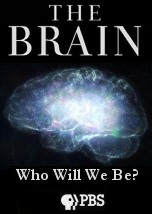
Who Will We Be

   2015    Medicine
In ‘Who will we be?’ Dr. David Eagleman journeys into the future, and asks what’s next for the human brain, and for our species. We stand at a major turning point, one where we might take control of our own development. We face a future of uncharted possibilities in which our relationship with our own body, our relationship with the world, the very basic nature of who we are is set to be transformed. For thousands of generations, humans have lived the same life cycle over and over. We are born, we control a fragile body, we experience a limited reality, and we die. But science and technology are giving us tools to transcend that evolutionary story. Our brains don't have to remain as we have inherited them. We are capable of extending our reality, of inhabiting new bodies, and possibly shedding our physical forms altogether. And we are discovering the tools to shape our own destiny. Who we become is up to us.
Series: The Brain with David Eagleman

Growing

   1994    Nature
The second episode is about how plants gain their sustenance. Sunlight is one of the essential requirements if a seed is to germinate, and Attenborough highlights the cheese plant as an example whose young shoots head for the nearest tree trunk and then climb to the top of the forest canopy, developing its leaves en route. Using sunshine, air, water and a few minerals, the leaves are, in effect, the "factories" that produce food. However, some, such as the begonia, can thrive without much light. To gain moisture, plants typically use their roots to probe underground. Trees pump water up pipes that run inside their trunks, and Attenborough observes that a sycamore can do this at the rate of 450 litres an hour — in total silence. Too much rainfall can clog up a leaf's pores, and many have specially designed 'gutters' to cope with it. However, their biggest threat is from animals, and some require extreme methods of defence, such as spines, camouflage, or poison. Some can move quickly to deter predators: the mimosa can fold its leaves instantly when touched, and the Venus flytrap eats insects by closing its leaves around its prey when triggered. Another carnivorous plant is the trumpet pitcher that snares insects when they fall into its tubular leaves. Attenborough visits Borneo to see the largest pitcher of them all, Nepenthes rajah, whose traps contain up to two litres of water and have been known to kill small rodents.
Series: The Private Life of Plants

The Social Struggle

   1995    Nature
Fourth episode examines how plants either share environments harmoniously or compete for dominance within them. Attenborough highlights the 1987 hurricane and the devastation it caused. However, for some species, it was that opportunity for which they had lain dormant for many years. The space left by uprooted trees is soon filled by others who move relatively swiftly towards the light. The oak is one of the strongest and longest-lived, and other, lesser plants nearby must wait until the spring to flourish before the light above is extinguished by leaves. Tropical forests are green throughout the year, so brute force is needed for a successful climb to the top of the canopy: the rattan is an example that has the longest stem of any plant. As its name suggests, the strangler fig 'throttles' its host by growing around it and cutting off essential water and light. Some can take advantage of a fallen tree by setting down roots on the now horizontal trunk and getting nutriment from the surrounding moss and the fungi on the dead bark. The mountain ash (eucalyptus regnans) grows so tall, that regeneration becomes a considerable problem. It is easily flammable, so its solution is to shed its seeds during a forest fire and sacrifice itself. It therefore relies on the periodic near-destruction of its surroundings in order to survive. Attenborough observes that catastrophes such as fire and drought, while initially detrimental to wildlife, eventually allow for deserted habitats to be reborn.
Series: The Private Life of Plants

Catastrophes that Changed the Planets

   2011    Science
The planets of our solar system have experienced epic catastrophes throughout their long history, both raining down from outside and bubbling up from within. We'll voyage back in time to investigate the violent events that profoundly shaped the planets, including earth itself. We'll witness stunning revelations about what transformed Mars into a barren, hostile desert... The disaster that changed Venus from temperate to hellish... The impact that blew away Mercury's mantle, turning it into a planetary core... A colossal disturbance that rearranged the orbits of the gas giants... Titanic impacts on Jupiter... And how a lost moon may finally explain Saturn's rings.
Series: The Universe
Leaving Neverland

Leaving Neverland

2019  Culture
Ancient Apocalypse

Ancient Apocalypse

2022  History
Prehistoric America

Prehistoric America

2003  Nature
The Making of the Mob

The Making of the Mob

2016  History
Shine a Light

Shine a Light

2008  Art
The Dinosaurs

The Dinosaurs

2026  Science