

Last Watched

"Man"  Sort by

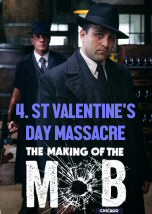
St Valentine Day Massacre

   2016    History
Al Capone moves back to Chicago and takes over two floors of the city's finest hotel, the Lexington. With a thriving business and Chicago politicians in his back pocket, Capone soon reaches a level of celebrity normally reserved for athletes and entertainers. As Capone's profile grows, he begins to indulge in all that the Roaring '20s have to offer, including cocaine. While Capone enjoys his reign at the top of the Chicago underworld, Irish gangster Bugs Moran seeks to take him down as revenge for the deaths of his partners Dean O'Banion and Hymie Weiss. On March 7, 1928, Moran orders a hit on one of Capone's top associates, Jack McGurn, the man who took out Hymie Weiss. McGurn survives but Capone decides to retaliate by taking out Moran and as many of his men as possible - all at once. On February 14, 1929, Capone's men dress as law enforcement and raid the liquor buy. They order Moran's men to face the wall for handcuffing, but while their backs are turned, Capone's men shoot all of them. Firing 70 rounds of ammunition in less than 10 seconds, the assassins carry out the biggest gangland hit in American history that will come to be known as the St. Valentine's Day Massacre. Through a stroke of luck, Moran avoids the massacre, but knows he's been defeated.
Series: The Making of the Mob
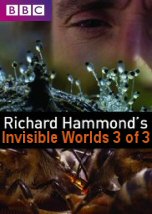
Off the Scale

   2012    Science
The human eye can see extraordinary detail, but the eye of a needle held at arm's length is pretty much at the limit of our vision. Anything smaller is simply invisible, at least to the naked eye. But what if we could see this hidden world all around us in greater detail and magnification than ever before? How different would our familiar surroundings then seem? Richard Hammond explores the astonishing miniature universe all around us, revealing that small is not only beautiful, it can also be very, very powerful. From seeing the microscopic changes to ice crystals that can trigger an avalanche to watching in horror the invisible aftermath of a sneeze on a commuter train and learning how the surface of an ordinary-looking plant hides an astounding secret that will make walking on the moon safer, Richard harnesses cutting-edge technologies to transport the viewer into a spectacular micro realm.
Series: Invisible Worlds

Top Science Stories of 2016

   2016    Science
From the detection of gravitational waves generated in space over a billion years ago, to discoveries in genetics here on Earth, we've collected the most compelling science breakthroughs and advances of 2016. Thanks to magnificent, hard-working scientists and researchers around the world, science keeps marching ever forward. And this year saw some discoveries that are absolutely brimming with the promise of greater discoveries, breakthroughs and quality of life in the future.
Series: Top Science Stories

Top Science Stories of 2017

   2017    Science
Take a look back at many of the most fascinating science stories of 2017, a year full of stunning advancements in individual fields of study, from astronomy to biology, geology to history – when we piece these discoveries together we see the year in a new light.
Series: Top Science Stories

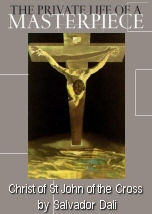
Christ of St John of the Cross by Salvador Dali

       Art
Salvador Dali's strange crucifixion is often called the greatest religious painting of the 20th century. Yet its artist was a notorious blasphemer some of whose work had outraged the Catholic Church. The Christ of St John of the Cross by Salvador Dali is the first of two extraordinary crucifixions painted by Dali in the early 1950s. The painting is based on a 'cosmic dream' Dali is said to have had, in which the nucleus of the atom was a figure of Christ himself.
The painting offers a surrealist view of the crucifixion of Christ, and is based on a drawing by the 16th century Spanish friar Saint John of the Cross. But Dali's vision was somewhat unique, using an unusual artistic perspective in which Christ is seen from above. His Christ of St. John of The Cross was inspired by a weird mix of Spanish mysticism and nuclear physics, with his Christ being modelled by a Hollywood stuntman. It's also a masterpiece of painting technique.
Series: The Private Life of a Masterpiece

The Great Melt

   2009    Nature
Every year, around the world, seasonal changes transform entire landscapes and draw in millions of creatures as these great events unfold. This fantastic series combines the epic scale of Planet Earth and the intimate, emotional stories of charismatic animals as they struggle to survive. Using state of the art technology, these programmes capture the Earth's most dramatic and epic wildlife spectacles and the intimate stories of the animals caught up in them.
The Great Melt: The summer melt of Arctic ice, opening up nearly three million square miles of ocean and land, provides opportunities for millions of animals, including beluga whales, families of Arctic foxes, vast colonies of seabirds, and the fabled Arctic unicorn, the narwhal. For polar bears, however, it is the toughest time of year. Why? How will they survive? A mother polar bear and her cub make their first journey together onto the sea ice. They are looking for ringed seals, their favourite prey. It is a serious business but the cub just wants to play. The melting ice makes it harder for them to hunt and threatens their survival. In a unique aerial sequence, the migration of narwhal with their distinctive unicorn-like tusks is filmed for the first time. The whales' journey is risky as they travel along giant cracks in the ice. If the ice were to close above them, they would drown. Hundreds of beluga whales gather in the river shallows. They rub themselves on smooth pebbles in one of the most bizarre summer spectacles. Guillemot chicks take their first flights from precipitous sea cliff nests to the sea 300 metres below. They attempt to glide to safety but many miss their target. Their loss is a bonus for the hungry Arctic fox family waiting below. As the melt comes to an end the bears gather, waiting for the sea to freeze again. Two 400kg males square up to each other to spar.
Series: Nature Great Events
Leaving Neverland

Leaving Neverland

2019  Culture
Rotten

Rotten

2018  Nature
Mind Field

Mind Field

2019  Medicine
The Art of Germany

The Art of Germany

2010  Art
Planet Earth

Planet Earth

2007  Nature