











Last Watched

"Biology"  Sort by

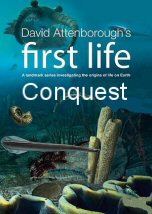
Conquest

   2010    Science
Attenborough's journey continues in Canada's Rocky Mountains, where fossils document an explosion in animal diversity never seen before or since. Travelling from there to North Africa, the rainforests of Australia and the east coast of Scotland, Attenborough discovers how animals evolved to conquer not only the oceans but also the land and air. These remote and fascinating creatures are brought to life as never before with the help of cutting-edge scientific technology and photorealistic visual effects. From the first large predators to the first legs on land, these were creatures that evolved the traits and tools that allow all animals, including ourselves, to survive to this day.
Series: First Life

Life: Primates

   2009    Nature
Intelligence and adaptability allow primates to tackle the many challenges of life, and this is what makes our closest relatives so successful. This resourcefulness has enabled primates to conquer an incredible diversity of habitat. Hamadryas baboons live on the open plains of Ethiopia in groups up to 400 strong. Strength in numbers gives them some protection from potential predators. But, should their path cross with other baboon troops, it can lead to all-out battle, as males try to steal females from one another, and even settle old scores. Japanese macaques are the most northerly-dwelling primates and they experience completely different challenges. Some beat the freezing conditions by having access to a thermal spa in the middle of winter. But this privilege is only for those born of the right female bloodline. For western lowland gorillas, it's the male silverback that leads his family group in the rich forests of the Congo basin. He advertises his status to all with a powerful chest-beating display. Most primates are forest dwellers, and one of the strangest is the tarsier – the only purely carnivorous primate. As it hunts for insects the tarsier leaps from tree to tree in the dead of night, using its huge forward-facing eyes to safely judge each jump. Good communication is essential for success in primate society.
Series: Life

One Voice in the Cosmic Fugue

   1980    Science
Sagan discusses the story of the Heike crab and artificial selection of crabs resembling samurai warriors, as an opening into a larger discussion of evolution through natural selection (and the pitfalls of intelligent design). Among the topics are the development of life on the Cosmic Calendar and the Cambrian explosion; the function of DNA in growth; genetic replication, repairs, and mutation; the common biochemistry of terrestrial organisms; the creation of the molecules of life in the Miller-Urey experiment; and speculation on alien life (such as life in Jupiter's clouds). In the Cosmos Update ten years later, Sagan remarks on RNA also controlling chemical reactions and reproducing itself and the different roles of comets (potentially carrying organic molecules or causing the Cretaceous–Paleogene extinction event).
Series: Cosmos

Through the Wormhole Season 6: Are We Here for a Reason

   2015    Science
Evolution tells us that all life exists for only one purpose: to reproduce. But is that all there is? How could such a simple imperative lead us to create great art and civilizations? A new theory suggests that instead of passing on genes, our ultimate purpose is to process and pass on information. We are the universe figuring itself out. Scientists dig deep into DNA, chemistry, technology and engineering to find the meaning of life. One thing is certain: living is easier if you find a reason for living.
Series: Through the Wormhole Season 6

The Silk Spinners

   2005    Nature
Silk is the invertebrates' great invention, used in a range of ways from from the protective stalks of lacewing eggs to the amazing hanging threads of New Zealand's 'glow worms'. Spiders, though, have taken silk-spinning to extremes. The common wolf spider has no web, but the female is a gentle parent, encasing her eggs in silk and carrying the precious bundle wherever she goes. The bolas spider uses a ball of sticky silk soaked in a copy of moth pheromone to lure its prey. Millions of communal spiders live and feed together in a vast, towering web - an arachnophobe's nightmare.
Series: Life in the Undergrowth

Surviving

   1995    Nature
the final episode deals with plants that live in hostile environments. Attenborough visits Ellesmere Island, north of the Arctic Circle, to demonstrate that even in a place that is unconducive to life, it can be found. Algae and lichens grow in or on rock, and during summer, when the ice melts, flowers are much more apparent. However, they must remain close to the ground to stay out of the chilling wind. In the Tasmanian mountains, plants conserve heat by growing into 'cushions' that act as solar panels, with as many as a million individual shoots grouped together as one. Others, such as the lobelia in Mount Kenya, have a 'fur coat' of dense hairs on their leaves. The saguaro cactus in the Sonoran Desert flourishes because of its ability to retain vast amounts of water, which can't be lost through leaves because it has none. Many desert dwellers benefit from an accelerated life cycle, blooming rapidly within weeks after rainfall. Conversely, Mount Roraima is one of the wettest places on Earth. It is a huge sandstone plateau with high waterfalls and nutrients are continuously washed away, so plants have to adapt their diet if they are to survive. A bladderwort is shown invading a bromeliad. Inhabitants of lakes have other problems to contend with: those that dominate the surface will proliferate, and the Amazon water lily provides an apt illustration. Attenborough ends the series with an entreaty for the conservation of plant species.
Series: The Private Life of Plants
Leaving Neverland

Leaving Neverland

2019  Culture
Earthflight

Earthflight

2012  Nature
The Universe

The Universe

2011  Science
Human

Human

2025  History
Cosmos

Cosmos

1980  Science