

Last Watched

"City"  Sort by

Absolute Zero Conquest of Cold

   2007    Technology
This scientific detective tale tells the story of a remarkable group of pioneers who wanted to reach the ultimate extreme: absolute zero, a place so cold that the physical world as we know it doesn't exist, electricity flows without resistance, fluids defy gravity and the speed of light can be reduced to 38 miles per hour. Absolute zero became the Holy Grail of temperature physicists and is considered the gateway to many new technologies, such as nano-construction, neurological networks and quantum computing. The possibilities, it seems, are limitless. The first episode Chronicles the major discoveries leading towards the mastery of cold, beginning with King James I's court magician, Cornelius Drebbel, who managed to air condition the largest interior space in the British Isles in 1620. Other stories will include the first "natural philosopher," Robert Boyle, a founder of the Royal Society in Great Britain; the Grand Duke Ferdinand II de Medici's involvement in the creation of the first thermometer; the establishment of the laws of thermodynamics by three young scientists, Sadi Carnot, James Joule and William Thomson; and Michael Faraday's critical achievement in liquefying several other gases which set the stage for the commercial application of cold to refrigeration and air conditioning.
Series: Absolute Zero
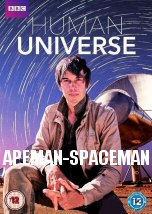
Apeman - Spaceman

   2014    History
Professor Brian Cox examines how it was that in a universe made of stars, rocks and endless space, a conscious civilisation was born. His latest adventure takes him from a submerged space station in Star City on the outskirts of Moscow, to Ethiopia, high above in the Great Rift Valley, where he encounters the geladas, mankind's distant ancestors. Despite once being Africa's most successful primate, a species who at one time roamed across the entire continent, these days they are found in one just place in the remote Ethiopian Highlands. Cox investigates why these ancestors retreated, yet modern mankind has expanded across the planet.
Series: Human Universe

The Lost Pyramids of Caral

   2002    History
The magnificent ancient city of pyramids at Caral in Peru is a thousand years older than the earliest known civilisation in the Americas and, at 2,627 BC, is as old as the pyramids of Egypt. Many now believe it is the fabled missing link of archaeology - a 'mother city'. If so, then these extraordinary findings could finally answer one of the great questions of archaeology: why did humans become civilised?" For over a century, archaeologists have been searching for what they call a mother city. Civilisation began in only six areas of the world: Egypt, Mesopotamia, India, China, Peru and Central America. In each of these regions people moved from small family units to build cities of thousands of people. They crossed the historic divide, one of the great moments in human history. Why? To find the answer archaeologists needed to find a mother city - the first stage of city-building. Caral, is so much older than anything else in South America that it is a clear candidate to be the mother city. It also is in pristine condition. Nothing has been built on it at all. Instead laid out before the world is an elaborate complex of pyramids, temples, an amphitheatre and ordinary houses. Scientists developed a number of theories. Some said it was because of the development of trade, others that it was irrigation. Some even today believe it was all because of aliens. Gradually an uneasy consensus emerged. The key force common to all civilisations was warfare. Crucially, there is not the faintest trace of warfare at Caral; no battlements, no weapons, no mutilated bodies. Instead, Ruth's findings suggest it was a gentle society, built on commerce and pleasure. In one of the pyramids they uncovered beautiful flutes made from condor and pelican bones. They have also found evidence of a culture that took drugs and perhaps aphrodisiacs. Most stunning of all, they have found the remains of a baby, lovingly wrapped and buried with a precious necklace made of stone beads.

Birth of the British Novel

   2011    Art
Author Henry Hitchings explores the lives and works of Britain's radical and pioneering 18th-century novelists who, in just 80 years, established all the literary genres we recognise today. It was a golden age of creativity led by Daniel Defoe, Jonathan Swift, Henry Fielding, Laurence Sterne, Fanny Burney and William Godwin, amongst others. Robinson Crusoe, Gulliver's Travels, Tom Jones and Tristram Shandy are novels that still sparkle with audacity and innovation. On his journey through 18th-century fiction, Hitchings reveals how the novel was more than mere entertainment, it was also a subversive hand-grenade that would change British society for the better. He travels from the homes of Britain's great and good to its lowliest prisons, meeting contemporary writers like Martin Amis, Will Self, Tom McCarthy and Jenny Uglow on the way.

London: The Modern Babylon

   2012    Culture
Julien Temple's epic time-travelling voyage to the heart of his hometown. From musicians, writers and artists to dangerous thinkers, political radicals and above all ordinary people, this is the story of London's immigrants, its bohemians and how together they changed the city forever. Reaching back to the dawn of film in London at the start of the 20th century, the story unfolds through film archive, voices of Londoners past and present and the flow of popular music across the century; a stream of urban consciousness, like the river which flows through its heart. It ends now, as London prepares to welcome the world to the 2012 Olympics.

Ants: Secret Power of the Nature

   2011    Nature
In this documentary we will be transported into the world of ants. What animal has achieved immortality? What animal is the most warlike? What animal has the greatest supercity on the planet? Not man but ants. They are the real success story. It is only their tiny size and our vanity that allows us to hold onto the myth of our supremacy. Ants rule the planet. They are found in more habitats from far northern Finland to the sweltering tropics. The largest colony known of these insects is in Japan, where 306 million ants, with 1 million queens, in 45,000 colonies spread over 270 hectares. The fiercest warriors on earth are the slave maker ants. Other ants have barracks and sentry posts to protect themselves against surprise attack.