











Last Watched

"Climate"  Sort by

Our Home

   2009    Nature
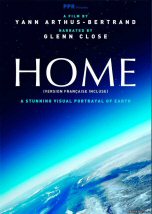
More than a film, it was conceived as a gift to the public and has been a major event all over the globe. Since World Environment Day, June 5, 2009, when it was released worldwide across all media platforms more than 400 million people have watched the film. Home is truly an astounding cinematic experience - a soulful voyage, a feast for the eyes, a thought-provoking and unforgettable journey. Directed by Yann Arthus-Bertrand
The Southern Ocean

   2009    Nature
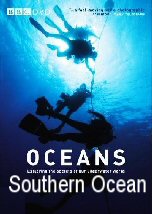
The Southern Ocean, which circles the globe without being blocked by land, is home to the Antarctic Circumpolar Current (ACC), the longest of the world's ocean currents. Also known as the "channel", it connects the Indian, Atlantic and Pacific Ocean basins and exerts a powerful influence over the Earth's climate. The ACC carries 150 times more water around Antarctica than the flow of all the world's rivers combined.
Series: Oceans

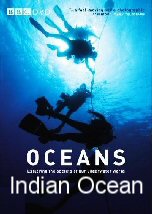
The Indian Ocean

   2009    Nature
The Indian Ocean is the third largest body of water on Earth at more than 6,000 miles wide and covering 13% of the world's surface. It is home to 5,000 species of fish, many of which only exist in the Indian Ocean. But it is also an ocean under threat from global issues such as over-fishing and climate change, which make this an ocean on the edge.
Series: Oceans

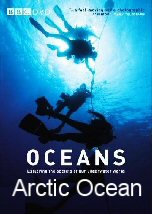
The Arctic Ocean

   2009    Nature
With much of it covered in ice all year round and with no daylight from October to March, the Arctic Ocean is one of the world's most remarkable oceans. Its home to a multitude of unique life forms, all highly adapted to cope with the extreme and seasonal conditions. The impacts of climate change are more strongly felt here than anywhere else in the world.
Series: Oceans

Ice

   2007    Nature
Our icy adventure begins with host Dr. Iain Stewart in the Alps, where he goes down an ice crevasse to show viewers how snowfall develops into expansive masses. Then, we see how ice can shape the earth's topography giving rise to features like Yosemite National Park and Manhattan Island, in NY. Finally, journey to Greenland and see how ice sheets and glaciers are melting at a phenomenal rate that is likely to accelerate over the coming years, changing the world as we know it.
Series: Earth, The Power of the Planet

The Oceans

   2007    Nature
Earth’s oceans help make our planet different from every other planet in the solar system. As far as we know, no other place is the right temp for liquid water, the most essential ingredient for life to exist. The oceans are Earth’s primary stabilizing force, and their immense power helps to shape the appearance and behavior of the entire planet and everything living on it. And they are also the planet's great unknown - their deepest points have been visited less than the surface of the moon.
Series: Earth, The Power of the Planet
Ice Age Giants

Ice Age Giants

2013  Science
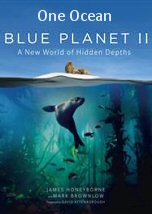
Blue Planet II

Blue Planet II

2017  Nature
The Human Body

The Human Body

1998  Medicine
Chemistry

Chemistry

2010  Science
Cosmos

Cosmos

1980  Culture