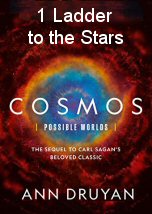
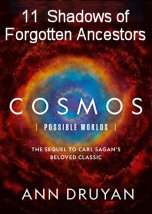
Following the wildly successful 'Cosmos: A Spacetime Odyssey,' Neil deGrasse Tyson returns as host to translate more revelations of science into a lavish transporting experience, taking audiences on a series of spiritual voyages of exploration. The show reveals previously uncharted realms, including lost worlds, worlds yet to come, and the worlds that humans may one day inhabit. Ann Druyan, original creative collaborator to Carl Sagan, whose iconic docuseries 'Cosmos' provided inspiration for this series, serves as executive producer alongside Seth MacFarlane. Episode 1 takes viewers on a wild ride with the Ship of Imagination in an adventure spanning billions of years into the evolution of life.
When Homo sapiens, which means 'wise ones,' discovered and controlled fire hundreds of thousands of years ago, everything changed. Fire allowed us to cook food and heat dwellings, and it served as a focal point for storytelling and sharing cultural identity among community members. We don't yet have established parameters for what it means to be 'distinctly human,' It would seem the only thing that separates us from other animals, Neil deGrasse Tyson ponders, is our neurotic need to feel 'special'. Against the backdrop of the Halls of Extinction, Tyson insists that there must be a clear distinction between ourselves and animals that justifies our eating them, wearing them and even bringing an end to their species. From the birth of the devil in ancient Persia to a searing story of saintliness among macaque monkeys, this episode is an exploration of human potential for change. It concludes with the story of how one of history's greatest monsters was transformed into one of its shining lights.
This remarkable science-history series investigates the blistering pace of human endeavour in space exploration, computing, energy, resources, Earth science and our understanding of the evolution of life itself. Across the last 50 years, humans have set a blistering pace and scientific discovery. We've crossed the boundaries of our solar system, made machines that can learn harnessed the power of the sun and built life from scratch. It's a period like no other in history, where human endeavour is changing everything: this is The Great Acceleration. As we race toward the future, we must examine the journey. In the first episode, Dr Shalin Naik explores the ambitious space shuttle mission that began in the '70s plus the future colonization of Mars. Over the past 50 years, space has become central to everything, from communications to entertainment to climate modelling. And as private enterprise enters space exploration, our understanding of the universe will only continue to expand. We will know if we can survive on other objects - the moon, maybe Mars, maybe even some of the moons of Jupiter and Saturn. Deep space is the last and infinite frontier. That's what we do as human beings. We explore, we learn, we make discoveries, from the moment we're born to the moment we die.
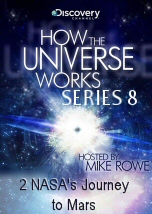
NASA is on a mission to send humans to Mars within just 15 years, but to reach this next frontier of space exploration, experts must discover new technology and cutting-edge science that protects astronauts from the Red Planet's deadliest killers.
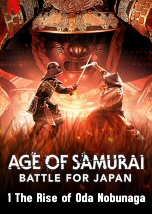
This brilliant docuseries is an exploration of the feudal Japan from 1551 to 1616 , during the final phase of the Sengoku period (The Age of Warring States), when several powerful daimyo (warlords) fought to become absolute ruler. It features reenactments of historical events and commentary by voice-over artist Hiro Kanagawa and outstanding historians. In the first episode, Oda Nobunaga becomes head of the Oda clan upon the death of his father, but this causes problems with family members who compete for control.
Science may soon make the dream of traveling to Mars a reality, but how will we live once we get there? How will we manage our basic human needs of food, water, and shelter on a planet known for its barren surface conditions, high radiation levels, and toxic dirt?








Episode 1 takes viewers on a wild ride with the Ship of Imagination in an adventure spanning billions of years into the evolution of life.