The tale of one of China's most famous dynasties begins with the amazing story of Hongwu, a peasant rebel who founded one of greatest eras in Chinese history. The film takes us to his great capital Nanjing, with its 21 miles of walls, each brick stamped with the name of the village that made it. Following the trail, we go to the Bao family village and see the villagers act a Ming murder story. Like many authoritarian states, the Ming were obsessive about architecture. We see the giant fortifications of the Great Wall, the ritual enclaves of the Forbidden City in Beijing and travel with bargeman Mr Hu down the Grand Canal, China's great artery of commerce right up to the present day. We then hear about Admiral Zheng He's voyages to Africa and the Gulf decades before Columbus, watch the construction of an ocean-going wooden boat 250ft long, and hitch a ride on a replica Ming junk in the South China Sea. As state prosperity grew, so did a rising middle class. Wood looks at Ming culture in Suzhou, the 'Venice of China'. Staying in a merchant's house, he discovers the silk, ceramic and lacquer-making industries, and visits one of the most beautiful gardens in the city. Then on to Macao and the arrival of Jesuit missionary Matteo Ricci, who hoped to convert China to Christianity. In the cathedral in Beijing, we learn more about these fateful exchanges with the west. Finally in Shaoxing, we visit the house of the 'Ming Proust' and at grassroots the Zhao family in Fujian where the film ends in an elegiac mood with the fall of the Ming in 1644.
Above all, 'In Search of Beethoven' addresses the central myth of Beethoven's life and work -- that of the heroic, tormented figure battling to overcome the tragic fate of being struck down by deafness in his prime; a man who searched for his elusive, eternal 'immortal beloved,' yet was never to attain lasting happiness.
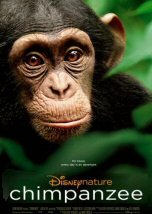
A young common chimpanzee nicknamed Oscar is part of a close-knit tribe of chimpanzees. They occupy a forest territory which is rich in native fruits, nuts, and figs, among other things. The chimps hunt small tree monkeys, and they also eat termites collected with primitive tools made from sticks. They also use rocks as tools to crack nuts. Oscar is tended by his mother, nicknamed Isha, and from her he begins learning many things about how to survive in the jungle. In the chaos of an attempted raid by a rival gang of chimpanzees led by 'Scar', Isha is injured and separated from the group and her son. This twist of fate leaves Oscar to fend for himself with a little help from an unexpected ally.
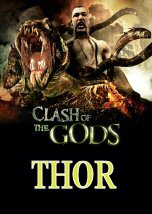
Idolized in ancient Norse mythology as the protector god, Thor battles evil ogres and a giant serpent bent on destroying mankind. It's the quintessential fight for survival that culminates in a final showdown between good and evil. But was the rise and fall of the hero Thor ancient code for something greater? Today, new discoveries unlock the hidden truth behind the Norse god of Thunder. Able to wield thunder from his hammer, Thor was the most revered of the Norse gods, from fending humanity from the giants that brought calamity, to his pursuit of the Midgard Serpent. Though, his fate is told to sealed during Ragnarok, it is actually the invasion of Christianity that proves far more damning to this mighty god.
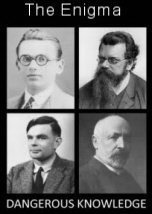
brilliant mathematicians whose genius has profoundly affected us, but which tragically drove them insane and eventually led to them all committing suicide. Kurt Gödel, the introverted confidant of Einstein, proved that there would always be problems which were outside human logic. His life ended in a sanatorium where he starved himself to death. Finally, Alan Turing, the great Bletchley Park code breaker, father of computer science and homosexual, died trying to prove that some things are fundamentally unprovable.
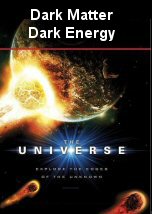
Scientists have no idea what it is, but Dark Matter and Dark Energy make up 96% of the Universe. Dark Matter is everywhere. It passes through everything we know on earth at billions of particles every second, yet no one has ever gotten a direct detection of this mysterious dark substance. An even more bewildering force is Dark Energy, which is rapidly pushing apart our Universe. Discovered only ten years ago, scientists are struggling to comprehend its unusual characteristics and answer the ultimate question; what is the fate of our Universe? Using cutting-edge computer graphics watch as the universe is brought down to earth.



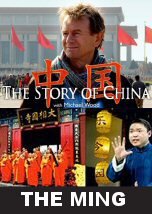





Like many authoritarian states, the Ming were obsessive about architecture. We see the giant fortifications of the Great Wall, the ritual enclaves of the Forbidden City in Beijing and travel with bargeman Mr Hu down the Grand Canal, China's great artery of commerce right up to the present day. We then hear about Admiral Zheng He's voyages to Africa and the Gulf decades before Columbus, watch the construction of an ocean-going wooden boat 250ft long, and hitch a ride on a replica Ming junk in the South China Sea.
As state prosperity grew, so did a rising middle class. Wood looks at Ming culture in Suzhou, the 'Venice of China'. Staying in a merchant's house, he discovers the silk, ceramic and lacquer-making industries, and visits one of the most beautiful gardens in the city. Then on to Macao and the arrival of Jesuit missionary Matteo Ricci, who hoped to convert China to Christianity. In the cathedral in Beijing, we learn more about these fateful exchanges with the west. Finally in Shaoxing, we visit the house of the 'Ming Proust' and at grassroots the Zhao family in Fujian where the film ends in an elegiac mood with the fall of the Ming in 1644.