


Last Watched

"Hunt"  Sort by

Neanderthal 2

       History
Long ago, two species of human beings coexisted on Earth until competition drove one of them to extinction. This program, set in the southwest of France 35,000 years ago, reconstructs the life in the Neanderthal world at the time Cro-Magnons first entered the scene. All aspects of Neanderthal clan life are examined, including tool- and weapon-making, hunting and gathering, health and healing, childbirth, rituals, and making fire. Footage of skeletal remains and the scholarly research of eminent paleontologist Chris Stringer and Oxford University's Paul Pettitt support the documentary.
Series: Neanderthal
Cooked: Fire

   2016    Culture
As he tries his hand at baking, brewing and braising, acclaimed food writer Michael Pollan explores how cooking transforms food and shapes our world. In the first espisode, with help from Aboriginal hunters and a barbecue pit master, Pollan shows how fire shaped human gastronomy, and weighs our duty to the animals we eat.
Series: Cooked

Life: Reptiles and Amphibians

   2009    Nature
Reptiles and amphibians look like hang-overs from the past. But they overcome their shortcomings through amazing innovation. The pebble toad turns into a rubber ball to roll and bounce from its enemies. Extreme slow-motion shows how a Jesus Christ lizard runs on water, and how a chameleon fires an extendible tongue at its prey with unfailing accuracy. The camera dives with a Niuean sea snake, which must breed on land but avoids predators by swimming to an air bubble at the end of an underwater tunnel. In a TV first, Komodo dragons hunt a huge water-buffalo, biting it to inject venom, then waiting for weeks until it dies. Ten dragons strip the carcass to the bone in four hours.
Series: Life

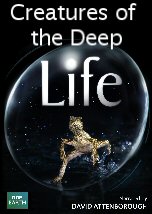
Life: Creatures of the Deep

   2009    Nature
Marine invertebrates are some of the most bizarre and beautiful animals on the planet, and thrive in the toughest parts of the oceans. Divers swim into a shoal of predatory Humboldt squid as they emerge from the ocean depths to hunt in packs. When cuttlefish gather to mate, their bodies flash in stroboscopic colours. Time-lapse photography reveals thousands of starfish gathering under the Arctic ice to devour a seal carcass. A giant octopus commits suicide for her young. A camera follows her into a cave which she walls up, then she protects her eggs until she starves. The greatest living structures on earth, coral reefs, are created by tiny animals in some of the world's most inhospitable waters.
Series: Life

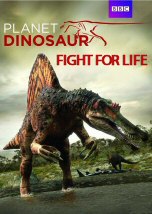
Fight for Life

   2011    Science
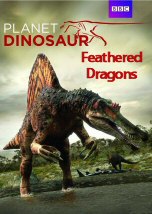
This episode focuses on the Jurassic period, a time when the first giant killers stalked the Earth and lurked in the seas; a time when the slightest advantage meant the difference between life and death. In North America the iconic allosaurus, an ambush hunter with a lethal bite, dominated. Not even the heavily-armoured stegosaurus was safe from this killer, and incredible evidence reveals a glimpse of a vicious battle between these two giants. Life in Jurassic oceans was no easier; in 2008, a fossil was dug out of a frozen island high in the Arctic. It was a colossal marine reptile, twice as big as most ocean predators, at 15 metres long and weighing about 45 tonnes. This was Predator X. Its skull alone was nearly twice the size of a tyrannosaurus rex's, and its bite force unmatched by anything in the Jurassic seas. The balance of power between predator and prey is a fine one, as prey continually evolves different ways to avoid predators. But for the most successful and enduring predators, the battle to survive has always been tipped in their favour
Series: Planet Dinosaur

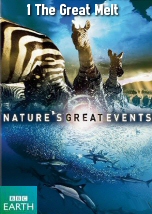
The Great Melt

   2009    Nature
Every year, around the world, seasonal changes transform entire landscapes and draw in millions of creatures as these great events unfold. This fantastic series combines the epic scale of Planet Earth and the intimate, emotional stories of charismatic animals as they struggle to survive. Using state of the art technology, these programmes capture the Earth's most dramatic and epic wildlife spectacles and the intimate stories of the animals caught up in them.
The Great Melt: The summer melt of Arctic ice, opening up nearly three million square miles of ocean and land, provides opportunities for millions of animals, including beluga whales, families of Arctic foxes, vast colonies of seabirds, and the fabled Arctic unicorn, the narwhal. For polar bears, however, it is the toughest time of year. Why? How will they survive? A mother polar bear and her cub make their first journey together onto the sea ice. They are looking for ringed seals, their favourite prey. It is a serious business but the cub just wants to play. The melting ice makes it harder for them to hunt and threatens their survival. In a unique aerial sequence, the migration of narwhal with their distinctive unicorn-like tusks is filmed for the first time. The whales' journey is risky as they travel along giant cracks in the ice. If the ice were to close above them, they would drown. Hundreds of beluga whales gather in the river shallows. They rub themselves on smooth pebbles in one of the most bizarre summer spectacles. Guillemot chicks take their first flights from precipitous sea cliff nests to the sea 300 metres below. They attempt to glide to safety but many miss their target. Their loss is a bonus for the hungry Arctic fox family waiting below. As the melt comes to an end the bears gather, waiting for the sea to freeze again. Two 400kg males square up to each other to spar.
Series: Nature Great Events