Guided by Stanley Tucci, this documentary journeys into the heart of Italy to reveal the country as it truly is, complex, contradictory, and deeply rooted in its culinary traditions. Through food, Tucci uncovers stories of history, identity, and innovation, showing how every dish reflects centuries of culture, migration, and local pride. What emerges is not a postcard Italy, but a living, evolving nation where cuisine is a language spoken by everyone. In the first three episodes, Tucci immerses himself in Tuscany, savoring the artistry of its cuisine while exploring Florence and Siena, where Renaissance creativity still shapes the table. He then heads north to Italy’s industrial regions, discovering cutting-edge gastronomy and futuristic farming, from high-tech agricultural labs to unexpected gourmet food found at service stations. Finally, in the German-speaking Alpine north, he explores a dual cultural identity through mountain dishes, skiing traditions, and glacial river fishing, revealing how history, borders, and landscape have forged a cuisine unlike any other in Italy.
An extraordinary journey into the powerful natural forces that shape our planet, this visually stunning documentary series reveals how extreme weather, oceans, landscapes, and atmospheric phenomena combine to create some of Earth’s most spectacular events. Using breathtaking aerial footage and immersive close-up filming, the series brings viewers closer than ever to the beauty, danger, and raw power of nature. In the first two episodes, the documentary explores the spectacular lightning storms of Arizona, the giant waves of Nazaré, the power of storm clouds, hail, downbursts and tornado-like winds, the ocean forces that build monstrous waves, the cloud ‘tablecloth’ over Table Mountain in Cape Town, and the rare circular rainbows at Victoria Falls. It is a journey through extreme weather, dramatic locations and the hidden natural forces that create some of the most spectacular scenes on Earth.
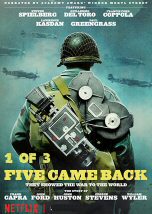
In episodes 11 and 12, the Allies try to turn victory in North Africa into a direct road toward Nazi Germany, only to discover that Italy will be anything but the “soft underbelly” Winston Churchill imagined. From Sicily to Salerno, Anzio, Monte Cassino and the long road to Rome, the campaign becomes a grinding test of endurance, strategy and sacrifice. What was hoped to be a swift breakthrough into the heart of Hitler’s Reich turns into months of mud, mountains, shattered towns and devastating losses, revealing the brutal cost of forcing open a new front in Europe. The story then rises into the skies, where another deadly battle is being fought above the continent. Allied bomber crews fly from England into the heart of Nazi-occupied Europe, facing freezing altitude, flak, fear and the lethal power of the German Luftwaffe. As B-17s, fighter escorts and air commanders struggle to win control of the air, every mission becomes a gamble between destruction and survival. Together, these episodes show a war closing in on Germany from the ground and from the sky, where courage, technology and human endurance collide on a terrifying scale.
In episodes 13 and 14, the war reaches a decisive new stage as the Allies prepare to launch Operation Overlord and open the long-awaited second front in Nazi-occupied France. Behind the invasion of Normandy lies an enormous gamble of planning, deception, weather, timing and nerve, with Dwight D. Eisenhower carrying the weight of one of the most dangerous military decisions in history. From the beaches of D-Day to the struggle to break through Hitler’s Atlantic Wall, the episode captures the fear, scale and sacrifice of the operation that begins the liberation of Western Europe. The story then moves to World War II’s often overlooked Asian theater, where Allied forces and Japan fight across jungles, mountains, plains and impossible supply routes. In Burma, India and China, commanders such as Joseph Stilwell, William Slim and Lord Mountbatten face a brutal war of disease, exhaustion, monsoon terrain and relentless Japanese resistance. From the Burma Road and the deadly airlift over the Hump to the fighting at Myitkyina, Imphal and Saipan, these episodes reveal a vast and punishing conflict far from Europe’s headlines, where survival itself becomes a battle and victory demands endurance on a staggering scale.
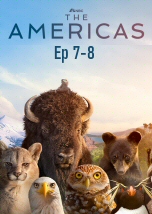
In episodes 7 and 8 of the series, the journey moves from the towering Andes to the tropical Caribbean, revealing two worlds where wildlife survives through astonishing specialization. In the Andes, spectacled bears guide their cubs down perilous cliffs, rare marvelous spatuletail hummingbirds fight and dance for mates, frogs endure freezing nights high beside retreating glaciers, torrent ducks master near-boiling mountain rivers, and thousands of flamingos gather at toxic high-altitude lakes in spectacular courtship displays. The Caribbean offers an entirely different struggle for survival. Sailfish coordinate high-speed attacks on sardine shoals, sperm whales dive into the deep around Dominica, millions of red crabs cross Cuba’s forests on their migration to the sea, and animals on isolated islands develop remarkable ways to exploit scarce resources. On Isla Jicarón, white-faced capuchins even learn to use stones as tools to crack nuts, showing how intelligence and adaptation can make the difference between survival and failure in paradise.
























In the first three episodes, Tucci immerses himself in Tuscany, savoring the artistry of its cuisine while exploring Florence and Siena, where Renaissance creativity still shapes the table. He then heads north to Italy’s industrial regions, discovering cutting-edge gastronomy and futuristic farming, from high-tech agricultural labs to unexpected gourmet food found at service stations. Finally, in the German-speaking Alpine north, he explores a dual cultural identity through mountain dishes, skiing traditions, and glacial river fishing, revealing how history, borders, and landscape have forged a cuisine unlike any other in Italy.