By August 1949 the USSR became the world's second superpower, thanks to its spies who had stolen America's atomic secrets. But by March 1953, Stalin is dead and KGB chief, Beria, is executed later the same year. Nikita Kruschev tries to reduce the power of the security service, splitting it into several sections...but it doesn't last and, soon, the KGB is back. In the USSR, countless KGB operatives spied on opponents of the regime at home, guarded the state and party leadership, and abroad tried to find out as much as possible about the intentions of the NATO countries and, if possible, to sabotage them.
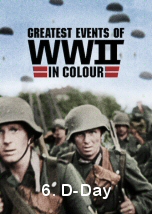
The Allies plan for years how to break through Hitler’s Atlantic Wall in France. The deception operations are some of the most elaborate of the war, including a huge inflatable army in Kent. The D-Day fleet is the biggest assembled in history, with over 160,000 men crossing the channel to land on five Normandy beaches, each with differing success. But landing is just the beginning, what follows is one of the bloodiest and most extraordinary battles of WWII.
We learn as much from victory as we do from loss. We employ strategies to gain the advantage, unconventional methods to overwhelm adversaries. One dedicated force steeped in mystique has always been part of war. Special operations, elite and unseen. Their presence felt by lethal attack. From the biblical era to the future of warfare, the battle environment is reshaped and redefined by special operations. Special Operations soldiers have come out of the trenches and are entering new domains of warfare.
Dive with David Attenborough into a world where a single life can last a thousand years. See things no eye has ever seen, and discover the dramatic, beautiful plant life of Earth. In the first episode, Sir David Attenborough shows how more kinds of plants are crammed together in the tropical rainforests than anywhere else on Earth. The result is astonishing beauty and intense competition - a plant battleground. New filming techniques allow us to enter the plants’ world and see it from their perspective and on their timescale. From fast-growing trees to flowers that mimic dead animals, this is a journey into a magical world that operates on a different timescale to our own.
In the third episode, during cleanup at the plant, insiders claim that cost-cutting measures and intimidation tactics create a danger war force than the accident itself. Several state and federal government agencies mounted investigations into the crisis, the most prominent of which was the President's Commission on the Accident at Three Mile Island, headed by chairman John G. Kemeny. The investigation strongly criticized Babcock & Wilcox, Met Ed, Graphics processing unit, and the Nuclear Regulatory Commission for lapses in quality assurance and maintenance, inadequate operator training, lack of communication of important safety information, poor management, and complacency. Kemeny said that the procedures and that the control room were greatly inadequate for managing an accident.
The last chapter explains how the 2010s became another lost decade in the fight against climate change – as the move to natural gas delayed a transition to more renewable sources of energy. Engineer Tony Ingraffea, in the 1980s, helped develop a new technique for extracting gas and oil from shale rock, which ultimately became known as 'Fracking'. It was to unleash vast new reserves of fossil fuels and was promoted as a cleaner energy source. But Ingraffea explains how he later came to regret his work when he realized that gas could be even worse for climate change than coal and oil. Dar-Lon Chang, a former ExxonMobil engineer, speaks for the first time on camera alleging that as the company increased its natural gas operations, it was not sufficiently monitoring methane leaks that were contributing to climate change. Now, after a year of unprecedented wildfires, drought and other climate-related disasters, multiple lawsuits are being brought in US courts in efforts to hold Big Oil legally accountable for the climate crisis.






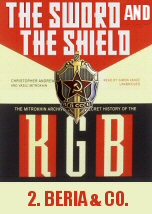



In the USSR, countless KGB operatives spied on opponents of the regime at home, guarded the state and party leadership, and abroad tried to find out as much as possible about the intentions of the NATO countries and, if possible, to sabotage them.