






Last Watched

"Ray"  Sort by

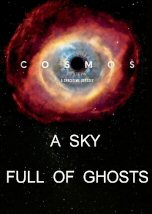
A Sky Full of Ghosts

   2014    Science
Tyson begins the episode by explaining the nature of the speed of light and how much of what is seen of the observable universe is from light emanated from billions of years in the past. Tyson further explains how modern astronomy has used such analyzes via deep time to identify the Big Bang event and the age of the universe. Tyson proceeds to describe how the work of Isaac Newton, William Herschel, and James Clerk Maxwell contributed to understanding the nature of electromagnetic waves and gravitational force, and how this work led towards Albert Einstein's Theory of Relativity, that the speed of light is a fundamental constant of the universe and gravity can be seen as distortion of the fabric of space-time. Tyson describes the concept of dark stars as postulated by John Michell which are not visible but detectable by tracking other stars trapped within their gravity wells, an idea Herschel used to discover binary stars. Tyson then describes the nature of black holes, their enormous gravitational forces that can even capture light, and their discovery via X-ray sources such as Cygnus X-1. Tyson uses the Ship of Imagination to provide a postulate of the warping of spacetime and time dilation as one enters the event horizon of the black hole, and the possibility that these may lead to other points within our universe or others, or even time travel. Tyson ends on noting that Herschel's son, John would be inspired by his father to continue to document the known stars as well as contributions towards photography that play on the same nature of deep time used by astronomers.
Series: Cosmos: A Spacetime Odyssey
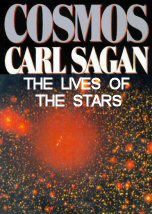
The Lives of the Stars

   1980    Science
The simple act of making an apple pie is extrapolated into the atoms and subatomic particles (electrons, protons, and neutrons) necessary. Many of the ingredients necessary are formed of chemical elements formed in the life and deaths of stars (such as our own Sun), resulting in massive red giants and supernovae or collapsing into white dwarfs, neutron stars, pulsars, and even black holes. These produce all sorts of phenomena, such as radioactivity, cosmic rays, and even the curving of spacetime by gravity. Cosmos Update mentions the supernova SN 1987A and neutrino astronomy.
Series: Cosmos

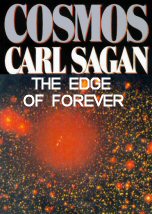
The Edge of Forever

   1980    Science
Beginning with the origins of the universe in the Big Bang, Sagan describes the formation of different types of galaxies and anomalies such as galactic collisions and quasars. The episodes moves further into ideas about the structure of the Universe, such as different dimensions (in the imaginary Flatland and four-dimensional hypercubes), an infinite vs. a finite universe, and the idea of an oscillating Universe (similar to that in Hindu cosmology). The search into other ideas such as dark matter and the multiverse is shown, using tools such as the Very Large Array in New Mexico. Cosmos Update shows new information about the odd, irregular surfaces of galaxies and the Milky Way perhaps being a barred spiral galaxy
Series: Cosmos

Hiding in the Light

   2014    Science
This episode explores the wave theory of light as studied by mankind, noting that light has played an important role in scientific progress, with such early experiments from over 2000 years ago involving the camera obscura by the Chinese philosopher Mozi. Tyson describes the work of the 11th century Arabic scientist Ibn al-Haytham, considered to be one of the first to postulate on the nature of light and optics leading to the concept of the telescope, as well as one of the first researchers to use the scientific method. Tyson proceeds to discuss the nature of light as discovered by mankind. Work by Isaac Newton using diffraction through prisms demonstrated that light was composed of the visible spectrum, while findings of William Herschel in the 19th century showed that light also consisted of infrared rays. Joseph von Fraunhofer would later come to discover that by magnifying the spectrum of visible light, gaps in the spectrum would be observed. These Fraunhofer lines would later be determined to be caused by the absorption of light by electrons in moving between atomic orbitals when it passed through atoms, with each atom having a characteristic signature due to the quantum nature of these orbitals. This since has led to the core of astronomical spectroscopy, allowing astronomers to make observations about the composition of stars, planets, and other stellar features through the spectral lines, as well as observing the motion and expansion of the universe, and the existence of dark matter.
Series: Cosmos: A Spacetime Odyssey
Audrey Hepburn: The Fairest Lady

   1997    Art
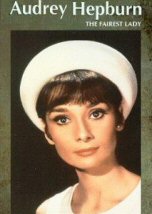
Audrey Hepburn was a film and fashion icon of the twentieth century and one of the most beloved actresses of all time. She enchanted the world with elegance and innocent charm, and portrayed some of the most memorable characters in film. Although she was one of the few actresses to win an Emmy, Tony, Grammy, and Academy Award, Audrey was modest about her talents, often claiming she had no acting technique. She redefined glamour with elfin features and a waif-like figure that inspired timeless designs by Hubert de Givenchy.Raised in the Netherlands during World War II, Audrey never forgot her own struggles during the German occupation and dedicated her later years to helping needy children around the world, becoming an International Goodwill Ambassador for UNICEF and traveling around the world to provide aid. Audrey Hepburn is remembered as a natural talent, a timeless beauty and a great humanitarian.

Unafraid of the Dark

   2014    Science
Tyson describes the discovery of cosmic rays by Victor Hess through high-altitude balloon trips. Swiss Astronomer Fritz Zwicky, in studying supernovae, postulated that these cosmic rays originated from these events instead of electromagnetic radiation. Also tells how Vera Rubin observed that the rotation of stars at the edges of observable galaxies did not follow expected rotational behavior leading to consider the existence of dark matter. This further led to the discovery of dark energy to account for the increasing rate of expansion of the universe. Tyson then describes the interstellar travel of the two Voyager probes. Tyson tells the Carl Sagan's role in the Voyager program, including creating the Voyager Golden Record to encapsulate humanity and Earth's position in the universe. Tyson concludes the series by emphasizing Sagan's message on the human condition in the vastness of the cosmos, and to encourage viewers to continue to explore and discover what else the universe has to offer.
Series: Cosmos: A Spacetime Odyssey
Evolution

Evolution

2004  Science
Big Oil vs The World

Big Oil vs The World

2022  Nature
The Story of India

The Story of India

2007  History
The Jinx

The Jinx

2015  History
Life on Our Planet

Life on Our Planet

2023  Science