



Last Watched

"Rome"  Sort by

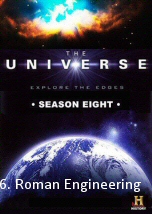
Roman Engineering

   2016    History
Millions of tourists photograph the ancient monuments of Rome every year. But is there more to them than people guess? There's new evidence that these ruins were once machines, designed by Rome's emperors to connect their power with the sun. Did Roman emperors harness the power of the universe to awe and terrify the people of Rome? We uncover the last, great mysteries of the ancient world's greatest empire.
Series: The Universe Season 8

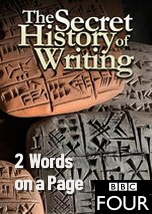
Words on a Page

   2020    History
Writing itself is 5,000 years old, and for most of that time words were written by hand using a variety of tools. The Romans were able to run an empire thanks to documents written on papyrus. Scroll books could be made quite cheaply and, as a result, ancient Rome had a thriving written culture. With the fall of the Roman Empire, papyrus became more difficult to obtain. Europeans were forced to turn to a much more expensive surface on which to write: Parchment. Medieval handwritten books could cost as much as a house, they also represent a limitation on literacy and scholarship.
No such limitations were felt in China, where paper had been invented in the second century. Paper was the foundation of Chinese culture and power, and for centuries how to make it was kept secret. When the secret was out, paper mills soon sprang up across central Asia. The result was an intellectual flourishing known as the Islamic Golden Age. Muslim scholars made discoveries in biology, geology, astronomy and mathematics. By contrast, Europe was an intellectual backwater.
That changed with Gutenberg’s development of movable type printing. The letters of the Latin alphabet have very simple block-like shapes, which made it relatively simple to turn them into type pieces. When printers tried to use movable type to print Arabic texts, they found themselves hampered by the cursive nature of Arabic writing. The success of movable type printing in Europe led to a thousand-fold increase in the availability of information, which produced an explosion of ideas that led directly to the European Scientific Revolution and the Industrial Revolution that followed.
Series: The Secret History of Writing

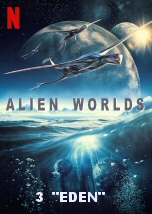
Eden

   2020    Science
Planets beyond our solar system are known to astronomers as exoplanets. They are at trillions of miles from Earth and yet, it might be possible to detect a faint signature of life in them. From the light of the stars they orbit that passes through the atmosphere of an exoplanet, it is possible to capture the chemical fingerprint of the elements in that atmosphere.
The fictional world Eden is orbiting not one star, but two. The light from its twin stars powers photosynthesis, pumping more oxygen into the atmosphere than in Earth, allowing life to thrive. Grazers are constantly alert to danger, because the canopy is home to predators perfectly evolved to live among the trees. In Episode 3, another topic are fungi and the role they could play on exoplanets. Ecologist Thomas Crowther talks about the role mycelial networks play in the Rothiemurchus forest in Scotland.
Series: Alien Worlds

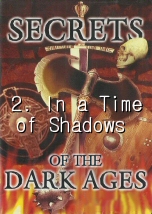
In a Time of Shadows

       History
On the second part of his journey through the dark ages Richard Rudgley continues into the age of the wandering peoples, the Volkerwanderung. These Northern people enjoyed a golden age unaffected by Rome and just 30 years after the Romans relinquished Britain, the 'Anglo-Saxons' made their move. The bedraggled legions are in retreat. Walls are pulled down. Mosaics shattered. And yet there never was a people called Anglo-Saxon. We look at the lasting influence of Saxon leaders like Alfred the Great, and his blue print for social justice.
Series: Barbarians: Secrets of the Dark Ages

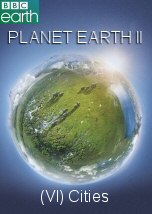
Planet Earth II Cities

   2016    Nature    HD
Cities are growing at a faster rate than any other habitat on Earth. They may seem an unlikely place for animals to thrive, but they can be a world of surprising opportunity. Leopards prowl the streets of Mumbai, peregrine falcons hunt amongst New York's skyscrapers, and a million starlings perform spectacular aerial dances over Rome. In Jodhpur, langurs are revered as religious deities and in Harar, locals live in harmony with wild hyenas. Many animals, however, struggle to cope in the urban jungle. As the architects of this environment, can humans choose to build cities that are homes for both them and wildlife?
Series: Planet Earth II

Earth Death Orbit

   2019    Science
We're unlocking the secrets of our planet's voyage and discovering that earth's journey affects us all. The Earth is extremely dynamic. It is spinning on its axis, it's whirling about the sun and it's corkscrewing throughout the this galaxy. And there is the fact than Andromeda and the Milky Way are currently 2.5 million light-years apart, but they're hurtling towards each other at over 250,000 miles an hour. A collision is inevitable. As stars, dust, and gas swirl around each other, gravitational interactions could slingshot our solar system out into intergalactic space.
Series: How the Universe Works Series 8
Chemistry

Chemistry

2010  Science
Cosmos: Possible Worlds

Cosmos: Possible Worlds

2020  Science
Modern Masters

Modern Masters

2024  Art
Top Gear

Top Gear

2012  Technology
Dark Net

Dark Net

2016  Technology