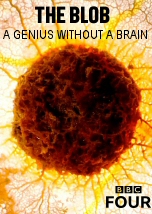
Not an animal, nor a plant, nor fungi, the blob is one giant single cell whose amazing capacities are leading pioneer scientists to a very new world – that of brainless intelligence. More commonly known as slime mould, this extraordinary one-billion-year-old organism challenges our understanding in many different fields. This fascinating documentary follows top experts from Europe, Japan and the US on a scientific investigation into this most surprising organism.
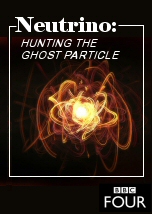
Inside the world-renowned physics laboratory Fermilab, a team of scientists are constructing an audacious experiment to hunt for a mysterious new ‘ghost’ neutrino. If they find it, this could transform our understanding of the nature and fabric of our universe. The problem is, these tiny particles are almost impossible to detect. Elsewhere, physicists conduct experiments in some of the most extreme environments on the planet: from deep mine shafts in South Dakota to vast ice fields at the South Pole. In these unlikely places supersized neutrino detectors hope to unlock the universe’s deepest secrets. Could neutrinos overturn the most precise theory of particle physics that humans have ever written down? Could they even be a link to a hidden realm of new particles that permeate the cosmos – so called dark matter? Scientists at Fermilab are edging towards the truth.
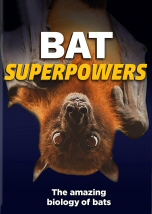
Could the source of the world’s deadliest viruses hold the secret to a healthier and longer life? Bats have a sinister reputation as potential sources for some of the deadliest disease outbreaks: Ebola, MERS, SARS, and most recently, the virus behind the COVID-19 global pandemic. Yet scientists are discovering new evidence that bats are biological marvels and may hold a key to longevity. They’re resistant to the diseases they carry and have freakishly long lifespans for their tiny size. So, what’s their secret? And what else can we learn from their peculiar biology? From caves in Thailand and Texas to labs around the globe, the films meets the scientists who are decoding the superpowers of the bat.
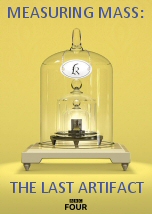
Just outside Paris, inside a hi-tech vault, and encased in three vacuum-sealed bell jars, rests a small metallic cylinder about the diameter of a golf ball. It may not look like much, but it is one of the most important objects on the planet. It affects nearly every aspect of our lives including the food we eat, the cars we drive, even the medicines we take. It is the Kilogramme, the base unit of mass in the International System of Units. Yet over time, its mass has mysteriously eroded by the weight of an eyelash. A change that, unbeknownst to most, unleashed a crisis with potentially dire consequences. The film follows the ensuing high-stakes, two-year race to redefine the weight of the world, and tells the story of one of the most important objects on the planet.
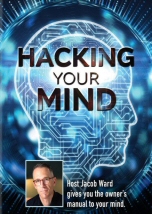
Jacob Ward travels the globe to investigate Decision Science. We imagine our conscious minds make most decisions but in reality we go through much of our lives on 'Autopilot'. And marketers and social media companies rely on it. The first part offers you the owner’s manual for this autopilot. The second part, 'Weapons of Influence', explores how politicians, social media companies and corporate marketers use big data to hack decision-making system. The third part, 'Us vs. Them', shows how this autopilot biases fuel the nation's divisions and how to overcome them. The last part, 'The Wings of Angels', explores why hacking for good is an important scientific discovery; how people can hack their own minds to improve their lives and change the world for the better.
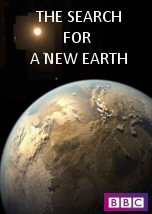
Planet Earth has been home to humankind for over 200,000 years, but with a population of 7.3 billion and counting and limited resources, this planet might not support us forever. Professor Stephen Hawking thinks the human species will have to populate a new planet within 100 years if it is to survive. With climate change, pollution, deforestation, pandemics and population growth, our own planet is becoming increasingly precarious. In this landmark film Professor Hawking, alongside engineer and radio astronomy expert Professor Danielle George and a former student, Christophe Galfard, join forces to find out if, and how, humans can reach for the stars and relocate to different planets. Travelling the globe, they meet top scientists, technologists and engineers who are working to answer our biggest questions: is there another planet out there that we could call home? How will we travel across the vast distances of space to get there? How will we survive the journey? And how will we set up a new human civilization on an alien world? Travelling the globe, they meet top scientists, technologists and engineers who are working to answer our biggest questions: is there another planet out there that we could call home? How will we travel across the vast distances of space to get there? How will we survive the journey? And how will we set up a new human civilization on an alien world? Taking in the latest advances in astronomy, biology and rocket technology from the Atacama Desert to the wilds of the Arctic, viewers will discover a whole world of cutting edge research. This programme shows that Professor Hawking’s ambition isn’t as fantastical as it sounds - and that science fiction is closer to science fact than we ever thought.








This fascinating documentary follows top experts from Europe, Japan and the US on a scientific investigation into this most surprising organism.