











Last Watched

"Second"  Sort by

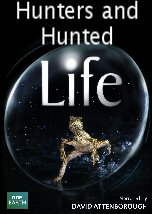
Life: Hunters and Hunted

   2009    Nature
Mammals' ability to learn new tricks is the key to survival in the knife-edge world of hunters and hunted. In a TV first, a killer whale off the Falklands does something unique: it sneaks into a pool where elephant seal pups learn to swim and snatches them, saving itself the trouble of hunting in the open sea. Slow-motion cameras reveal the star-nosed mole's newly-discovered technique for smelling prey underwater: it exhales then inhales a bubble of air ten times per second. Young ibex soon learn the only way to escape a fox - run up an almost vertical cliff face - and young stoats fight mock battles, learning the skills that make them one of the world's most efficient predators.
Series: Life
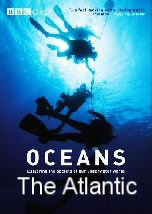
The Atlantic

   2009    Nature
The Atlantic is the second largest ocean on the planet. It is the resting place of the Titanic, home to the mysterious Bermuda Triangle and is the youngest of the Earth's great oceans. It reaches depths of 8,500 metres. Oceans investigates this influential body of water from a group of islands in its western reaches - the Bahamas.
Series: Oceans

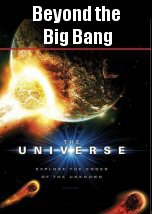
Beyond the Big Bang

   2007    Science
The universe began with a massive expansion, billions and billions of years ago, and it continues to expand with every passing second. The idea that the universe, and man's very existence, began with a "Big Bang" is no longer a topic of debate among most scientists--it is essentially taken as fact.
Series: The Universe

Dark Matter and Dark Energy

   2008    Science
Scientists have no idea what it is, but Dark Matter and Dark Energy make up 96% of the Universe. Dark Matter is everywhere. It passes through everything we know on earth at billions of particles every second, yet no one has ever gotten a direct detection of this mysterious dark substance. An even more bewildering force is Dark Energy, which is rapidly pushing apart our Universe. Discovered only ten years ago, scientists are struggling to comprehend its unusual characteristics and answer the ultimate question; what is the fate of our Universe? Using cutting-edge computer graphics watch as the universe is brought down to earth.
Series: The Universe

Neptune and Uranus

   2011    Science
Uranus and Neptune: The 'ice giants'. Strap yourselves in for an incredible voyage to the most remote and intriguing planets of all. There has never been a better time to boldly go where no human has gone before to follow in the footsteps of our robot pioneers and visit the planets of the Solar System. Ever wanted to be an astronaut? Imagine heading into the Ice Zone, the frigid, dark realm beyond the orbit of Saturn. So far from the Sun, you wouldn't expect much to be happening here. From orbit, Uranus appears sedate and calm. But why is the planet on its side? And Neptune: The second blue planet, and the last world in our Solar System. But something is driving its wild winds. And what about its Great Dark Spot? this planet just changes its spots. Leopards don't, but Neptune does.
Series: A Traveler Guide to the Planets

Peril and Promise

   2013    History
In the 80s the nature of the Latino Diaspora changes again. From Cuba a second wave of refugees to United States – the Mariel exodus – floods Miami . The same decade sees the sudden arrival of hundreds of thousands of Central Americans (Salvadorans, Guatemalans, and Nicaraguans) fleeing death squads and mass murders at home like activist, Carlos Vaquerano. By the early 1990s, a political debate over illegal immigration – has begun. Globalization, empowered by NAFTA, means that as U.S. manufacturers move south, Mexican workers head north in record numbers. A backlash ensues: tightened borders, anti-bilingualism, state laws to declare all illegal immigrants felons. But a sea change is underway: the coalescence of a new phenomenon called Latino American culture-as Latinos spread geographically and make their mark in music, sports, politics, business, and education.
Series: Latino Americans